 Pregnancy
15 Weeks Pregnant: Baby Development, Symptoms, Size, and Appointments
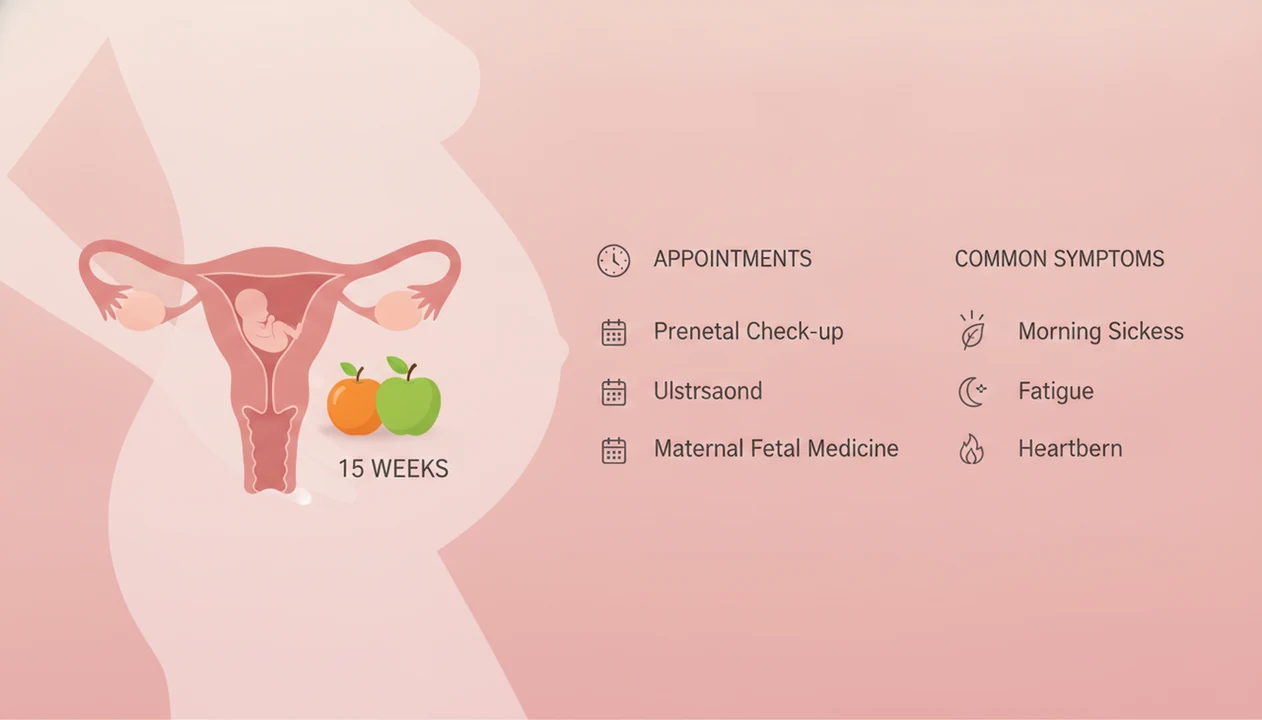
Quick Answers at Week 15
At 15 weeks pregnant, your baby is about the size of an apple or orange, and the main takeaway is that early second-trimester growth, movement practice, and screening conversations are underway.
- Baby size: about 4 inches crown to rump and roughly 2 to 3 ounces
- Symptoms: growing belly, round ligament pain, heartburn, constipation, nasal congestion, headaches, breast tenderness, skin changes, changing energy
- Appointments: routine prenatal checks may include blood pressure, weight, symptom review, urine testing when used, Doppler heartbeat, and screening discussions
- Ultrasound: a detailed anatomy scan is usually scheduled for about 18 to 22 weeks, though ultrasound may be used earlier if clinically needed
Week 15 at a Glance
| Topic | Week 15 |
|---|---|
| Baby size | Often compared with an apple or orange; about 4 inches crown to rump and 2 to 3 ounces |
| Ultrasound | The anatomy scan is usually still ahead, commonly around 18 to 22 weeks |
| Symptoms | Rounder belly, mild pulling or round ligament pain, heartburn, constipation, nasal congestion, headaches, and breast or skin changes |
| Appointments | Routine prenatal visit, Doppler heartbeat check, and discussion of quad screening or amniocentesis when appropriate |
| Key milestone | Stronger bones, more coordinated movements, early reflexes, and lanugo or scalp hair pattern development may be progressing |
TL;DR
At week 15, baby is roughly apple- or orange-sized, and many people are settling into the early second trimester. The most useful focus is tracking symptoms, keeping prenatal care on schedule, and asking about screening and the upcoming anatomy ultrasound.
- Baby measures about 4 inches crown to rump and weighs around 2 to 3 ounces.
- Symptoms at week 15 may include a growing belly, round ligament pain, congestion, heartburn, constipation, and changing energy.
- Many clinicians use this stage to review fetal heartbeat, routine checks, and second-trimester screening options.
What Does 15 Weeks Pregnant Mean?
Being 15 weeks pregnant means you are in the early second trimester, about three and a half months into pregnancy, with dating counted from the first day of your last menstrual period. In other words, 15 weeks gestation is the pregnancy age used in prenatal care, while fetal age is slightly younger.
By this stage, implantation and early gestational sac development happened weeks ago, the placenta is well established, and hCG is no longer the main day-to-day marker used to judge how pregnancy is progressing. For broader timing context, see the pregnancy week-by-week guide.
How Is Baby Developing During Week 15?
During week 15, the baby’s skeleton is continuing to harden, facial features are becoming more defined, and small movements are becoming more coordinated. Many clinicians describe this as an active development phase, even though most people do not yet feel consistent movement.
The baby may practice swallowing amniotic fluid, make tiny reflexive motions, and continue early sensory development while the eyes remain closed. Fine hair called lanugo may begin to appear, and the scalp hair pattern is forming; a pregnancy tracker can help you record dates, symptoms, and questions for your OB-GYN or midwife.
How Big Is Baby at Week 15?
At week 15, baby is often compared with an apple or orange, measuring roughly 4 inches from crown to rump and weighing about 2 to 3 ounces. Normal size varies, and ultrasound measurements are interpreted by a qualified clinician in context rather than by fruit comparisons alone.
If your dates are uncertain, your care team may review menstrual history, earlier ultrasound information, or both. A due date calculator can help with general planning, but your healthcare provider’s dating is the reference used for medical decisions.
What Symptoms Are Common at Week 15?
Symptoms at week 15 commonly include a rounder lower belly, mild pulling sensations, round ligament pain, bloating, heartburn, constipation, nasal congestion, headaches, breast tenderness, and skin darkening. Many people feel more energy in the second trimester, but fatigue or nausea can still happen and does not automatically mean something is wrong.
Gentle movement, hydration, fiber-rich foods, and rest may support comfort, while persistent or severe symptoms should be discussed with a clinician. If you are pregnant 15 weeks and feeling excited one moment and uncertain the next, that mix is understandable; short relaxation practices such as pregnancy meditation may support stress management without replacing medical care.
What Appointments and Screening Happen Around Week 15?
Appointments around week 15 commonly involve blood pressure, weight, symptom review, urine testing when used by the practice, and listening for the fetal heartbeat with a Doppler. Many clinicians also discuss second-trimester screening, including quad screening, and diagnostic testing such as amniocentesis when indicated by age, history, results, or preference.
ACOG and NHS guidance commonly emphasize individualized counseling, because screening choices depend on medical history, dating, local protocols, and personal values. The detailed anatomy ultrasound is usually scheduled for about 18 to 22 weeks, so this is a practical time to ask how results will be communicated and whether reminder tools like a best pregnancy app feature list could help you stay organized.
What Should You Do During Week 15?
This week, focus on taking prenatal vitamins as directed, getting enough folic acid, noting new symptoms, and preparing questions for your next prenatal visit. It is also reasonable to review exercise, work, travel, dental care, and medication questions with your OB-GYN or midwife.
You can look back at 14 weeks pregnant or read ahead to 16 weeks pregnant to see how second-trimester changes may progress. Searches for early pregnancy week 15 often refer to early second-trimester concerns rather than the implantation phase, so use week-by-week pages as education alongside individualized guidance.
If you are thinking about birth preparation, gradual planning is enough for now. Research suggests structured relaxation and coping tools may help some people manage stress; options such as hypnobirthing can complement regular prenatal care but should not replace it.
Limitations & Safety
This content is general pregnancy education and cannot diagnose symptoms, replace prenatal care, or account for every individual risk factor.
- Contact your healthcare provider promptly for heavy bleeding, severe abdominal pain, fever, fainting, chest pain, severe headache, vision changes, or fluid leakage.
- Call your clinician if vomiting prevents you from keeping fluids down, pain is persistent, or you feel that something is not right.
- Screening and testing options depend on your medical history, local guidelines, gestational dating, and personal preferences.
- If you have a high-risk pregnancy, multiples, prior pregnancy complications, or chronic medical conditions, follow your clinician’s individualized advice.
- Educational size comparisons and symptom lists are not a substitute for assessment by your pregnancy care team.
Frequently Asked Questions
How many months is 15 weeks pregnant?
At week 15, you are about three and a half months into pregnancy and in the second trimester. Pregnancy months are approximate because calendar months do not divide evenly into weeks.
Can you feel the baby move at 15 weeks pregnant?
Some people may feel early fluttering around this stage, especially if they have been pregnant before. Many clinicians note that clear, regular movement is more often felt later, commonly around 18 to 22 weeks, and not feeling it yet can be normal.
What size is baby at week 15?
Baby is commonly compared with an apple or orange at this stage. Average measurements are about 4 inches crown to rump and roughly 2 to 3 ounces, though individual growth varies.
What symptoms are common at 15 weeks pregnant?
Common symptoms include a growing belly, mild pulling or round ligament pain, heartburn, constipation, nasal congestion, headaches, and breast or skin changes. Some people feel more energetic in the second trimester, while others still have fatigue or nausea.
What appointments or tests happen around 15 weeks pregnant?
A routine prenatal visit may include blood pressure, weight, symptom review, urine testing depending on the practice, and a Doppler heartbeat check. Your clinician may also discuss quad screening, amniocentesis when indicated, and scheduling the anatomy scan for about 18 to 22 weeks.
Is an ultrasound expected at 15 weeks gestation?
An ultrasound is not always scheduled at this stage if pregnancy is progressing normally and dating is already clear. Many practices plan the detailed anatomy scan for 18 to 22 weeks, though ultrasound may be used earlier for symptoms, dating questions, or specific clinical reasons.
When should I call a clinician during week 15?
Call promptly for heavy bleeding, severe abdominal pain, fever, fainting, chest pain, severe headache, vision changes, fluid leakage, persistent pain, or vomiting that prevents fluids from staying down. ACOG and NHS guidance commonly encourage contacting your care team whenever symptoms feel severe, unusual, or worrying.