 Pregnancy
14 Weeks Pregnant: What to Expect This Week
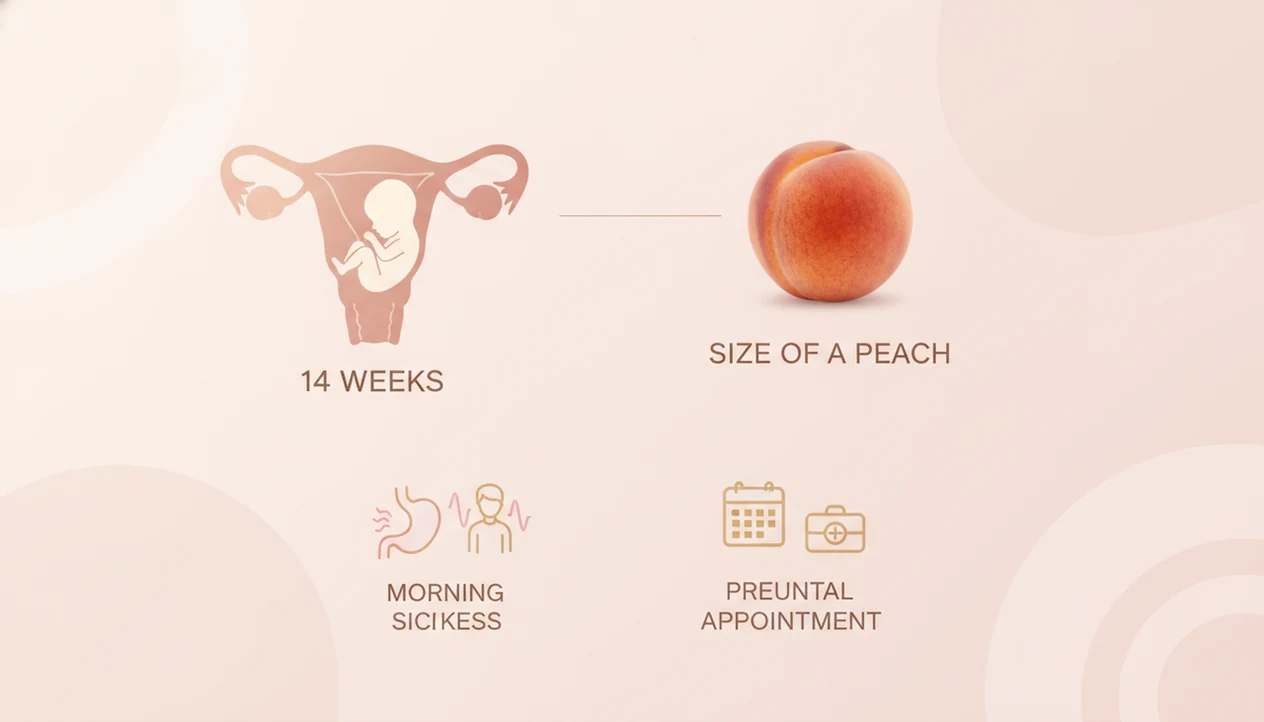
Quick Answers at Week 14
At 14 weeks pregnant, your baby is about peach- or lemon-sized and the main takeaway is that early second-trimester growth is accelerating while many symptoms may begin to ease.
- Baby size: about 3.4 inches crown to rump and around 1.5 ounces
- Symptoms: less nausea, more energy, round ligament pain, headaches, constipation, congestion, mood changes
- Appointments: routine prenatal check may include blood pressure, weight, urine testing, symptom review, and possibly a Doppler heartbeat check
- Ultrasound: not always scheduled this week; the detailed anatomy scan is more commonly planned for about 18 to 22 weeks
Week 14 at a Glance
| Topic | Week 14 |
|---|---|
| Baby size | Often compared with a peach or lemon; roughly 3.4 inches crown to rump and about 1.5 ounces |
| Ultrasound | May be used for dating or specific concerns, but the anatomy scan is usually later |
| Symptoms | Nausea may ease; headaches, constipation, congestion, breast tenderness, and round ligament twinges can occur |
| Appointments | Possible prenatal visit with blood pressure, weight, urine sample, symptom review, and screening discussion |
| Key milestone | Early second trimester begins, with more coordinated movement, lanugo, and ongoing organ development |
TL;DR
At 14 weeks pregnant, you are in the early second trimester and the baby is commonly about the size of a peach or lemon. The main priorities are staying consistent with prenatal care, tracking symptoms, and preparing for upcoming screening or the anatomy scan.
- Baby development includes more coordinated movement, facial reflexes, urine production, and fine body hair called lanugo.
- Symptoms at week 14 may improve, but headaches, constipation, congestion, breast tenderness, and round ligament discomfort are still common.
- A visit around this stage may include routine checks and a discussion with your OB-GYN or midwife about next tests.
What does 14 weeks pregnant mean?
At 14 weeks pregnant, you are in the early second trimester and about 12 weeks past conception by standard pregnancy dating. Clinicians count pregnancy from the first day of your last menstrual period, so 14 weeks gestation does not mean the embryo or fetus has existed for exactly 14 weeks.
If you are pregnant 14 weeks and comparing dates, small differences can happen because ovulation, implantation, menstrual cycle length, and ultrasound measurements do not always line up perfectly. For a broader timeline, see the pregnancy week-by-week guide, or compare this stage with 13 weeks pregnant and 15 weeks pregnant.
How is your baby developing at week 14?
During week 14, your baby is becoming more coordinated, with a more upright head, a lengthening neck, and tiny muscles that can make reflexive facial expressions. The arms are moving closer to final proportion, the kidneys are making urine, and the intestines continue settling into place.
Many clinicians describe this part of early pregnancy week 14 as a period of rapid refinement rather than brand-new organ formation. Fine hair called lanugo may begin covering the skin, bones are hardening, the liver and spleen are active, and the placenta is increasingly supporting hormone production and nutrient exchange as pregnancy progresses.
How big is the baby at 14 weeks?
At week 14, the baby is commonly compared with a peach or lemon, measuring roughly 3.4 inches from crown to rump and weighing about 1.5 ounces. Size estimates vary because fetal position, dating accuracy, equipment, and normal growth differences can affect measurements.
Your uterus is also growing upward out of the pelvis, which may make the lower abdomen feel firmer or make a small bump more noticeable. If your due date still feels uncertain, a due date calculator can estimate timing, but your OB-GYN or midwife may rely on menstrual dating or ultrasound for medical decisions.
What symptoms are common during week 14?
Symptoms at week 14 often include improving nausea and energy, but breast tenderness, headaches, constipation, bloating, increased vaginal discharge, nasal congestion, gum sensitivity, mood shifts, and round ligament pulling can still happen. Research suggests hormone changes, including shifts in hCG and other pregnancy hormones, may be one reason some first-trimester symptoms start to ease around this stage.
Bump size varies widely, especially between a first pregnancy and later pregnancies, and that variation is usually not a reliable sign of how the baby is growing. Hydration, fiber-rich foods, gentle movement, and rest may help common discomforts; you can also use a pregnancy tracker to note patterns before your next visit. It is normal to feel excited, uncertain, or overwhelmed when symptoms change and the pregnancy starts to feel more real.
What appointments and tests happen around this stage?
A prenatal visit around this stage commonly includes blood pressure, weight, a urine sample, symptom review, and possibly listening for the fetal heartbeat with a Doppler. ACOG and NHS guidance commonly emphasize individualized prenatal care, so your schedule may differ based on medical history, local practice, and earlier results.
Your clinician may review first-trimester screening, discuss carrier screening, or plan second-trimester blood tests and the detailed anatomy ultrasound. Not everyone has an ultrasound this week; earlier imaging may have confirmed the gestational sac and dating, while the anatomy scan is more often scheduled around 18 to 22 weeks unless symptoms or risk factors make earlier imaging useful.
What practical steps can help this week?
This week is a good time to keep steady habits: take prenatal vitamins with folic acid as directed, review medicines and supplements with your clinician, and write down questions about exercise, work, travel, sleep, sex, and prenatal testing. Many clinicians also recommend planning simple meals and snacks, staying hydrated, and choosing movement that feels safe and sustainable for your body.
If stress is building, small routines can help without needing to make pregnancy feel like a project. For guided support, explore pregnancy meditation or compare tools in the best pregnancy app guide.
Limitations & Safety
The key safety point is that this page is educational and cannot replace care from a qualified clinician who knows your pregnancy and medical history.
- Call your maternity unit, OB-GYN, midwife, or healthcare professional for heavy bleeding, severe abdominal pain, fever, fainting, or persistent vomiting with signs of dehydration.
- Seek urgent care for chest pain, trouble breathing, one-sided leg swelling, severe headache, vision changes, or symptoms that feel sudden or extreme.
- Contact your clinician if you have leaking fluid, painful urination, worsening depression or anxiety, or any symptom that concerns you.
- Pregnancy dating, test schedules, ultrasound timing, and screening options vary by country, clinic, medical history, and individual risk factors.
Frequently Asked Questions
How many months is 14 weeks pregnant?
At this stage, you are generally considered to be in the fourth month of pregnancy and the early second trimester. Month counting varies because calendar months are not exactly four weeks long, so clinicians usually use weeks of gestation for accuracy.
Can I feel the baby move at 14 weeks pregnant?
Most people do not feel clear fetal movement yet. Many clinicians say first noticeable movements are more often felt between about 16 and 22 weeks, sometimes earlier in a second or later pregnancy.
What size is the baby at 14 weeks pregnant?
The baby is often compared with a peach or lemon. A typical estimate is about 3.4 inches crown to rump and around 1.5 ounces, though normal variation is expected.
Is it normal for symptoms to improve at 14 weeks pregnant?
Yes, it is common for nausea and fatigue to ease as the second trimester begins. Symptoms can still fluctuate, and new discomforts such as constipation, headaches, congestion, or round ligament pain may appear.
Will I have an appointment or ultrasound at week 14?
You may have a routine prenatal appointment, depending on your care schedule. It often includes blood pressure, weight, urine testing, symptom review, and possibly a heartbeat check, while the detailed anatomy ultrasound is usually scheduled later, often around 18 to 22 weeks.
What should I ask my OB-GYN or midwife during week 14?
Ask about screening results, upcoming blood tests, the anatomy scan, safe exercise, medications, supplements, and any symptoms that worry you. Many clinicians encourage bringing a written list because visits can feel quick, especially when several testing options are being discussed.