 Pregnancy
27 Weeks Pregnant
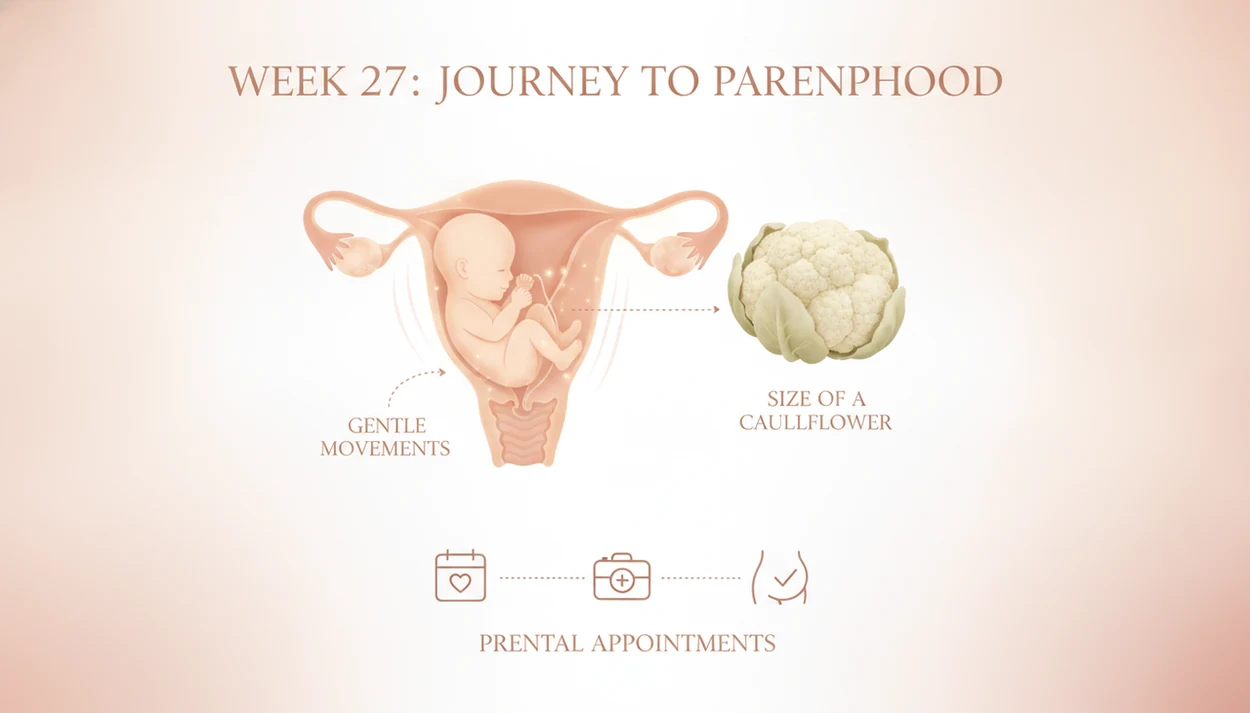
Quick Answers at Week 27
At 27 weeks pregnant, your baby is about cauliflower-sized—roughly 14 to 15 inches long and around 2 pounds—and the main focus is stronger movement, routine screening, and preparing for the third trimester.
- Baby size: about 14 to 15 inches from head to heel and around 2 pounds
- Symptoms: heartburn, backache, pelvic pressure, leg cramps, constipation, mild swelling, sleep disruption, Braxton Hicks
- Appointments: routine prenatal visit, glucose screening window, possible anemia check, Rh-negative planning, Tdap discussion
- Ultrasound: not routine for everyone this week, but may be used for growth, placenta, fluid, or symptom concerns
Week 27 at a Glance
| Topic | Week 27 |
|---|---|
| Baby size | Often about the size of a head of cauliflower, around 14 to 15 inches and about 2 pounds |
| Ultrasound | Usually only if your OB-GYN or midwife wants to check growth, placenta position, fluid, or symptoms |
| Symptoms | Heartburn, back or pelvic discomfort, leg cramps, constipation, sleep changes, mild swelling, and Braxton Hicks |
| Appointments | Blood pressure, fundal height, fetal heartbeat, glucose screening, anemia screening, and vaccine planning may be discussed |
| Key milestone | Baby’s lungs, brain, nervous system, and movement coordination continue developing quickly |
| Movement | Many people can recognize a usual daily movement pattern and should call promptly if it clearly decreases |
TL;DR
At 27 weeks pregnant, your baby is roughly cauliflower-sized, with stronger movements, maturing lungs, and more noticeable sleep-wake patterns. This is a common time for glucose screening, anemia checks, Tdap planning, and getting ready for the third trimester.
- Baby is often about 14 to 15 inches long and around 2 pounds.
- Common symptoms include heartburn, backache, pelvic pressure, leg cramps, mild swelling, and sleep disruption.
- Contact your clinician promptly for reduced fetal movement, bleeding, fluid leakage, severe pain, or regular painful contractions.
What does 27 weeks pregnant mean?
At 27 weeks gestation, you are near the end of the second trimester, about 13 weeks from a 40-week due date, and pregnancy dating is still based on the first day of your last menstrual period.
Your baby’s conception age is usually about two weeks less than the pregnancy week, which is why dating can feel confusing. Long after implantation and the early gestational sac stage, your care team now watches growth, movement, your blood pressure, and how the placenta is supporting the pregnancy rather than relying on hCG trends alone. If your dates feel unclear, a due date calculator can help you review timing to discuss with your clinician.
It is normal to feel excited, uncertain, or overwhelmed as the third trimester gets closer.
How big is baby at week 27?
At week 27, many babies measure about 14 to 15 inches from head to heel and weigh around 2 pounds, often compared with a head of cauliflower or a large lettuce.
Normal fetal size varies, and ultrasound weight estimates can differ from actual weight. Many clinicians interpret size by looking at growth over time, fundal height, fetal movement, and individual risk factors rather than one measurement alone. For broader context, see the pregnancy week-by-week guide.
How is baby developing at this stage?
During week 27, your baby’s brain, lungs, nervous system, and movement coordination are developing rapidly.
The lungs are still immature but are practicing breathing movements, and the brain is becoming more active. Eyelids may open and close, and many babies respond to light, sound, touch, and changes in your activity. The placenta continues to deliver oxygen and nutrients while your baby builds fat stores under the skin.
Movements may feel stronger because your baby is bigger and more coordinated. You may notice kicks, rolls, stretches, hiccup-like rhythmic movements, and quieter rest periods.
What symptoms are common during week 27?
Common symptoms at week 27 include heartburn, constipation, backache, pelvic pressure, leg cramps, round ligament pain, vivid dreams, mild swelling, hemorrhoids, sleep disruption, and irregular Braxton Hicks tightening.
Your uterus is growing upward and outward, which can affect posture, digestion, breathing comfort, and sleep position. Gentle movement, hydration, fiber-rich foods, supportive shoes, and side-lying rest may help some everyday discomforts. ACOG and NHS guidance commonly advise contacting a clinician for severe, sudden, or worrying symptoms rather than trying to self-diagnose them.
What appointments and tests happen around this time?
A routine visit around this time may include blood pressure, weight, fundal height, fetal heartbeat, urine screening if indicated, and discussion of symptoms with your OB-GYN or midwife.
Many practices complete gestational diabetes screening between 24 and 28 weeks, and some check a blood count for anemia during the same period. If you are Rh-negative, your clinician may discuss antibody screening and Rh immune globulin, often planned around 28 weeks. ACOG guidance commonly recommends Tdap during each pregnancy between 27 and 36 weeks, while NHS guidance also supports pertussis vaccination in pregnancy according to the local schedule.
Many clinicians also encourage continuing prenatal vitamins, including folic acid and any recommended iron or vitamin D, unless your care team has advised otherwise.
What should you prepare now?
This week, prepare by learning your baby’s usual movement pattern, writing down questions for care visits, and taking small practical steps toward third-trimester planning.
If your care team recommends tracking, use a calm time when your baby is usually active and follow their instructions. A baby kick counter can help you record patterns, but it should not replace urgent medical advice if movement is reduced or something feels wrong.
If you are pregnant 27 weeks, you can also review birth preferences, confirm leave paperwork, plan newborn essentials, and discuss support after birth. A pregnancy tracker can help organize symptoms, appointments, and questions, while the third trimester checklist can help with hospital bag items, feeding plans, baby gear, and postpartum support. If you are exploring comfort techniques, hypnobirthing may be one option to discuss alongside your medical birth plan.
Limitations & Safety
This page is general education and cannot diagnose symptoms, confirm fetal wellbeing, or replace care from your doctor, midwife, OB-GYN, or maternity unit.
- Call your care team urgently for reduced fetal movement, vaginal bleeding, fluid leaking, severe abdominal pain, or regular painful contractions.
- Seek prompt medical advice for severe headache, vision changes, chest pain, shortness of breath, fainting, fever, or sudden swelling of the face or hands.
- If you have a high-risk pregnancy, multiples, placenta concerns, hypertension, diabetes, or a history of preterm birth, follow your individualized care plan.
- Do not wait for an app, tracker, home remedy, or scheduled appointment if you feel that movement has clearly changed or a symptom feels urgent.
- Emergency warning signs should be assessed immediately, even if symptoms seem to come and go.
Frequently Asked Questions
Is 27 weeks pregnant the third trimester?
It depends on the reference used: many pregnancy resources place this point at the end of the second trimester, while others count it as the start of the third. Clinically, many clinicians focus more on your exact gestational age, symptoms, test results, and risk factors than the trimester label.
How big is my baby at 27 weeks pregnant?
At this stage, many babies are about 14 to 15 inches long from head to heel and weigh around 2 pounds. Size estimates vary, and clinicians usually look at growth trends rather than one measurement by itself.
What symptoms are common at 27 weeks pregnant?
Common symptoms include heartburn, back pain, pelvic discomfort, leg cramps, constipation, mild swelling, sleep difficulty, hemorrhoids, and Braxton Hicks contractions. Contact your clinician if symptoms are severe, sudden, painful, or occur with bleeding, fluid leakage, fever, or reduced fetal movement.
What appointments or tests happen around week 27?
A prenatal visit may include blood pressure, fundal height, fetal heartbeat, and a review of symptoms. Many practices do gestational diabetes screening between 24 and 28 weeks, and ACOG guidance commonly recommends Tdap vaccination between 27 and 36 weeks.
Should I count kicks at 27 weeks pregnant?
Some clinicians recommend formal kick counting later, while others encourage movement awareness from this stage. The most important step is to learn your baby’s usual pattern and call your care team promptly if movements decrease, feel weaker, or seem significantly different.
Do I need an ultrasound at 27 weeks?
Not everyone needs an ultrasound this week. Your OB-GYN or midwife may order one if there are questions about growth, amniotic fluid, placenta position, bleeding, reduced movement, or another medical concern.