 Pregnancy
24 Weeks Pregnant: What to Expect This Week
Quick Answers at Week 24
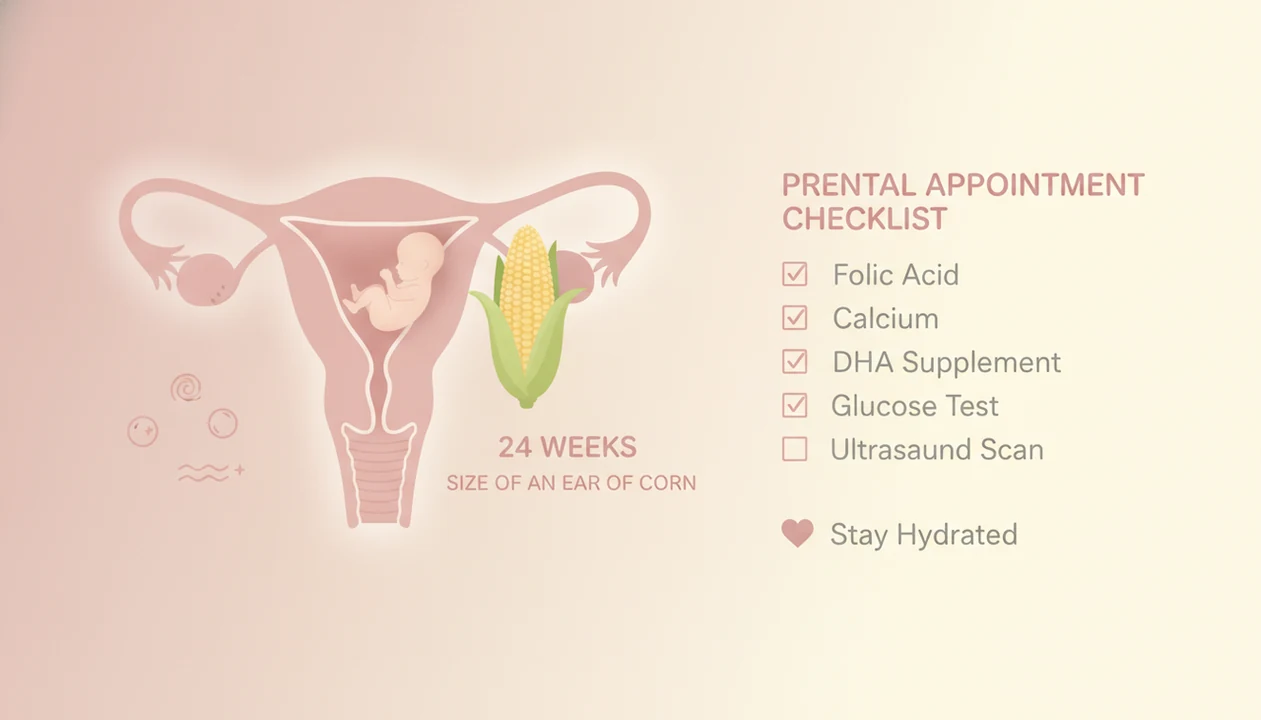
At 24 weeks pregnant, your baby is about the length of an ear of corn and the main takeaway is that growth, movement, lung development, and glucose screening become important focuses now.
- Baby size: about 11.8 to 12.5 inches head to heel and around 1.3 pounds, or about 600 grams
- Symptoms: stronger kicks, heartburn, constipation, back or hip pain, leg cramps, round ligament pain, nasal congestion, mild swelling, occasional Braxton Hicks contractions
- Appointments: routine blood pressure, weight, fetal heartbeat, fundal height, and glucose screening between 24 and 28 weeks
- Ultrasound: not always routine this week unless your clinician is following growth, placenta position, anatomy, or another concern
Week 24 at a Glance
| Topic | Week 24 |
|---|---|
| Baby size | About 12 inches long and roughly 1.3 pounds, often compared with an ear of corn. |
| Ultrasound | Usually only if follow-up is needed for growth, anatomy, placenta position, fluid, or another clinical reason. |
| Symptoms | Heartburn, constipation, leg cramps, backache, round ligament pain, mild swelling, and more noticeable movement. |
| Appointments | Many clinicians offer glucose screening for gestational diabetes between 24 and 28 weeks, plus routine prenatal checks. |
| Key milestone | The lungs continue branching and begin making surfactant while hearing, sleep-wake cycles, and movement patterns mature. |
| Dating note | Pregnancy weeks are counted from the first day of the last menstrual period, not from conception. |
TL;DR
At week 24, your baby is about the size of an ear of corn, with active growth in the lungs, brain, hearing, and movement patterns. Many prenatal care plans include glucose screening between 24 and 28 weeks, while common symptoms include heartburn, leg cramps, backache, mild swelling, and stronger kicks.
- Baby is roughly 11.8 to 12.5 inches long and about 1.3 pounds.
- Formal kick counting often starts closer to 28 weeks, but reduced movement should be reported.
- Ask your OB-GYN or midwife about glucose screening, warning signs, and upcoming third-trimester care.
What does week 24 of pregnancy mean?
24 weeks pregnant means you are about six months along, near the end of the second trimester, and your pregnancy is still dated from the first day of your last menstrual period. By 24 weeks gestation, you are well past implantation and the early gestational sac stage; care now focuses more on fetal growth, placenta health, maternal symptoms, and screening tests than on hCG trends.
This can be an exciting stage because movements may feel stronger, but it is also normal to feel uncertain or overwhelmed as appointments and planning become more concrete. Continuing prenatal vitamins with folic acid and bringing questions to your OB-GYN or midwife can help you stay organized.
How is your baby developing and how big are they at week 24?
At week 24, the average baby measures about 11.8 to 12.5 inches from head to heel and weighs about 1.3 pounds, or around 600 grams. A common comparison is an ear of corn or a small cantaloupe, although normal measurements vary with genetics, dating, and individual growth patterns.
Your baby’s lungs are developing branches and beginning to make surfactant, a substance that helps the air sacs work after birth. The brain, hearing, taste buds, facial features, and sleep-wake cycles are also maturing, while the skin remains thin because more fat will be added later.
If you are comparing stages, you can look back at pregnancy week by week or move ahead to 25 weeks pregnant. If your estimated due date changed after an ultrasound or early dating scan, you can review timing with a due date calculator and confirm the official date with your healthcare professional.
What symptoms are common at week 24?
Symptoms at week 24 commonly include heartburn, constipation, back or hip pain, leg cramps, round ligament pain, nasal congestion, darker skin patches, mild swelling in the feet or ankles, and occasional Braxton Hicks contractions. Many clinicians describe Braxton Hicks as irregular, brief tightening that often eases with hydration, rest, or a position change.
Your uterus is rising higher in the abdomen, and fundal height may measure close to 24 centimeters, though a small range can be normal. Gentle movement, hydration, supportive shoes, rest breaks, and relaxation tools such as pregnancy meditation may support day-to-day comfort.
What should you know about movement at this stage?
At this stage, baby movement may feel like kicks, rolls, taps, or flutters, but the pattern can still be inconsistent. Many clinicians recommend formal daily kick counting closer to 28 weeks, yet a clear decrease from your baby’s usual pattern should be discussed with your maternity care team.
ACOG and NHS guidance commonly emphasize contacting a clinician or maternity unit when fetal movements feel reduced rather than waiting to see if they improve. You can learn how tracking works with a baby kick counter, but do not rely on an app instead of medical advice if movement feels reduced or unusual.
What appointments and tests happen around week 24?
Around week 24, many prenatal care plans include routine blood pressure, weight, fetal heartbeat, and fundal height checks, with glucose screening for gestational diabetes commonly offered between 24 and 28 weeks. Your clinician may also order blood work for anemia and review your blood type, including Rh status, depending on your history.
An ultrasound is not always scheduled during this window unless your OB-GYN, midwife, or maternal-fetal medicine clinician wants follow-up for growth, anatomy, amniotic fluid, placenta location, or another concern. If you like tracking questions and symptoms between visits, a pregnancy tracker can help you bring clearer notes to appointments.
How can you plan ahead from week 24?
From week 24, planning can stay simple: learn your care team’s contact rules, understand warning signs, and begin thinking about birth support, feeding preferences, and postpartum help. If you are pregnant 24 weeks, you do not need a complete plan today, but small steps now can reduce pressure later.
Research suggests preparation feels more manageable when it is broken into specific next actions, such as saving your maternity unit phone number, writing appointment questions, and reviewing third-trimester topics. If you are beginning to think about the next phase, read about third-trimester planning or review the previous week at 23 weeks pregnant for context.
Limitations & Safety
This page is general education about week 24 and cannot diagnose symptoms, confirm fetal wellbeing, or replace individualized prenatal care.
- Call your healthcare professional promptly for vaginal bleeding, fluid leakage, severe abdominal pain, fever, fainting, or painful regular contractions.
- Seek urgent advice for severe headache, vision changes, sudden swelling of the face or hands, chest pain, shortness of breath, or symptoms that feel concerning.
- Contact your maternity unit if baby movements are clearly reduced from your usual pattern, even if you are not yet doing formal kick counts.
- Always follow your own clinician’s guidance, especially if you have a high-risk pregnancy, multiple pregnancy, diabetes, hypertension, placenta concerns, or a history of preterm birth.
Frequently Asked Questions
How many months is 24 weeks pregnant?
At week 24, you are about six months along and near the end of the second trimester. Pregnancy dating is counted from the first day of your last menstrual period, so month estimates can vary slightly.
How big is my baby at week 24?
At week 24, many babies measure about 12 inches from head to heel and weigh around 1.3 pounds. This is often compared with an ear of corn, but your clinician will interpret growth based on your dating, prior scans, and overall pregnancy history.
What symptoms are common at 24 weeks gestation?
Common symptoms include stronger movement, heartburn, constipation, leg cramps, back pain, round ligament pain, mild swelling, and occasional Braxton Hicks contractions. Many clinicians recommend calling if symptoms are severe, persistent, sudden, or unusual for you.
What appointments or tests happen around week 24?
Many prenatal visits around this time include blood pressure, weight, fetal heartbeat, and fundal height checks. Between 24 and 28 weeks, glucose screening for gestational diabetes is commonly offered, and some clinicians also review anemia testing or Rh status.
Will I have an ultrasound during week 24?
An ultrasound is not always routine during week 24. Your OB-GYN or midwife may recommend one if they need to follow growth, anatomy, placenta location, amniotic fluid, or another specific concern.
Should I count kicks at this stage?
Formal daily kick counting often starts closer to 28 weeks, but you can still pay attention to your baby’s usual movement pattern now. ACOG and NHS-style guidance commonly advises contacting your maternity care team if movements seem clearly reduced rather than waiting.