 Pregnancy
17 Weeks Pregnant
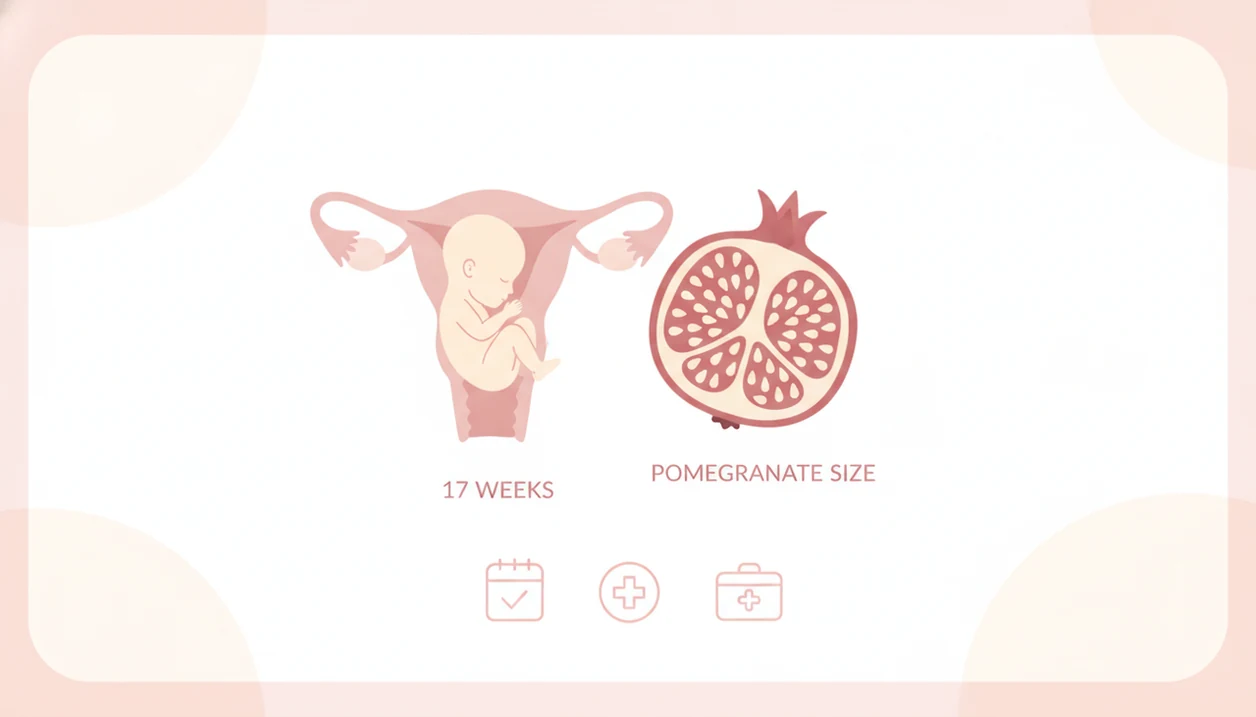
Quick Answers at Week 17
At 17 weeks pregnant, baby is about pomegranate-sized and the main takeaway is steady second-trimester growth with symptoms like ligament pain while the anatomy scan is usually coming soon.
- Baby size: about 5 inches crown to rump and around 5 to 6 ounces
- Symptoms: round ligament pain, backache, constipation, heartburn, nasal congestion, increased discharge
- Appointments: a routine visit may check blood pressure, weight, urine, symptoms, and fetal heartbeat
- Ultrasound: the detailed anatomy scan is commonly scheduled for 18 to 22 weeks, though timing varies
Week 17 at a Glance
| Topic | Week 17 |
|---|---|
| Baby size | Often compared with a pomegranate or turnip; about 5 inches crown to rump and 5 to 6 ounces |
| Ultrasound | The anatomy scan is usually planned for about 18 to 22 weeks rather than necessarily this week |
| Symptoms | Round ligament pain, backaches, constipation, heartburn, nasal congestion, breast changes, and discharge |
| Appointments | Blood pressure, weight, urine, symptom review, and fetal heartbeat check may be included |
| Key milestone | Baby’s skeleton is hardening, body fat is beginning to build, and early movement may be felt by some |
TL;DR
Week 17 is a mid-second-trimester point when baby is growing quickly and your uterus may be making symptoms more noticeable. Most people are preparing for the detailed anatomy ultrasound, commonly scheduled between 18 and 22 weeks.
- Baby is roughly pomegranate-sized, about 5 inches crown to rump.
- Symptoms at week 17 often include ligament pain, backache, constipation, heartburn, and congestion.
- A prenatal visit may include routine checks and discussion of screening or upcoming ultrasound plans.
What does 17 weeks pregnant mean?
At 17 weeks pregnant, you are about 15 weeks after conception and in the fourth month of pregnancy. Clinicians commonly date pregnancy from the first day of the last menstrual period, so being pregnant 17 weeks does not mean conception happened 17 weeks ago.
This point in early pregnancy week 17 sits in the second trimester, after implantation and the earliest hCG-driven changes, when the placenta is supporting the pregnancy and the uterus is rising higher in the abdomen. It is normal to feel excited, uncertain, or a little overwhelmed as your body changes become more visible.
Baby development at week 17
During week 17, baby is building stronger bones, adding early body fat, and practicing movements such as swallowing and sucking. The skeleton is continuing to harden from soft cartilage into bone, while the arms and legs are active even if you cannot clearly feel movement yet.
Hearing structures are developing, and the baby may begin responding to vibration and sound as the weeks progress. The umbilical cord is also getting stronger and thicker as it supports oxygen and nutrient flow through the placenta. Follow your broader timeline in a pregnancy week-by-week guide.
How big is baby at 17 weeks?
At 17 weeks, baby is commonly compared to a pomegranate or turnip, measuring about 5 inches from crown to rump and weighing around 5 to 6 ounces. Exact size varies because ultrasound dating, genetics, and normal growth patterns differ from pregnancy to pregnancy.
Unlike very early scans that may focus on the gestational sac and dating, second-trimester care usually looks more at fetal growth, anatomy, placenta location, and overall development. If you are checking dates or planning ahead, a due date calculator can help estimate your pregnancy timeline, but your OB-GYN or midwife’s dating is the reference point.
What symptoms are common during week 17?
At 17 weeks gestation, common symptoms include round ligament pain, backache, constipation, heartburn, bloating, nasal congestion, breast changes, mild swelling, skin darkening, and increased vaginal discharge. The uterus is rising higher in the abdomen, which can make your bump more noticeable and may contribute to posture changes.
Many clinicians describe round ligament pain as brief, sharp, or pulling discomfort near the lower belly or groin, often triggered by position changes, coughing, or standing quickly. Some people feel early baby movements now, while others do not feel quickening until closer to 20 to 25 weeks, especially in a first pregnancy or with an anterior placenta.
Tracking symptoms at week 17, questions, and milestones can make prenatal visits easier to discuss. You can use a simple notebook or a pregnancy tracker to record patterns, without treating any app or checklist as a substitute for medical care.
What appointments and tests happen around week 17?
A prenatal appointment around week 17 may include checking blood pressure, weight, urine, symptoms, and the baby’s heartbeat with a Doppler if appropriate. If you have not already scheduled it, your care team may arrange the detailed anatomy ultrasound, typically performed between 18 and 22 weeks.
ACOG and NHS guidance commonly frame prenatal testing around personal risk factors, earlier results, and informed choice rather than a one-size-fits-all plan. Some people are offered second-trimester blood screening, often called a quad screen, during roughly 15 to 22 weeks, while diagnostic testing such as amniocentesis is recommended only in selected situations after counseling about benefits and risks.
Routine care at this stage usually focuses less on repeating hCG levels and more on growth, symptoms, screening decisions, and planning the anatomy scan. If your next visit is closer to the following week, you may want to preview what changes are coming at 18 weeks pregnant. If you recently moved into this stage, comparing with 16 weeks pregnant can also help you see what is changing.
What habits can help this week?
Helpful habits this week include eating fiber-rich foods, drinking fluids, moving gently if approved, using supportive shoes, and changing positions slowly. Many clinicians also suggest continuing prenatal vitamins as directed, including folic acid if it is part of your prescribed or recommended supplement plan.
Side-sleeping practice, a pregnancy pillow, and short rest breaks may help as the uterus grows and posture changes. Stress reduction does not need to be complicated: slow breathing, light stretching, quiet walks, and brief mindfulness sessions can help some pregnant people feel more settled. If relaxation tools appeal to you, explore pregnancy meditation as a low-pressure support option.
Limitations & Safety
Week 17 information describes common patterns, but it cannot determine whether your pregnancy is healthy or diagnose symptoms. Always follow your clinician’s guidance, especially if you have a high-risk pregnancy, prior complications, multiple pregnancy, chronic condition, or new concerning symptoms.
- Contact your healthcare provider urgently for heavy bleeding, severe abdominal pain, leaking fluid, fever, fainting, chest pain, or shortness of breath.
- Seek care for persistent severe headache, vision changes, sudden swelling of the face or hands, or significant one-sided leg pain or swelling.
- Call your clinician if vomiting prevents fluids, pain is worsening, discharge has a strong odor, or you feel something is not right.
- Do not start medications, supplements, intense exercise, or major diet changes without checking pregnancy-specific safety with your OB-GYN, midwife, or care team.
- Fetal movement patterns are often inconsistent at this stage; ask your clinician when formal movement tracking should begin for your pregnancy.
Frequently Asked Questions
How big is my baby at 17 weeks pregnant?
At this stage, baby is often compared to a pomegranate or turnip. A typical measurement is about 5 inches from crown to rump and around 5 to 6 ounces, though normal size varies.
Can I feel the baby move at 17 weeks?
Yes, some people feel early flutters at 17 weeks, often called quickening. Many clinicians note that others, especially in a first pregnancy or with an anterior placenta, may not feel clear movement until closer to 20 to 25 weeks.
What symptoms are common at 17 weeks pregnant?
Common symptoms include a growing bump, round ligament pain, backache, constipation, heartburn, nasal congestion, breast changes, and increased vaginal discharge. Symptoms vary widely, and new severe or worrying symptoms should be discussed with a healthcare provider.
What happens at a 17-week prenatal appointment?
A routine visit may include checking blood pressure, weight, urine, symptoms, and the fetal heartbeat if appropriate. Your clinician may also discuss screening results and schedule the anatomy ultrasound, usually done between 18 and 22 weeks.
Is it normal not to look very pregnant at 17 weeks?
Yes, it can be normal not to have a large bump yet. Bump size depends on body shape, abdominal muscle tone, prior pregnancies, uterus position, and normal variation, so appearance alone is not usually a reliable measure of pregnancy health.
Do I need an ultrasound at 17 weeks?
Not always. Many clinicians schedule the detailed anatomy ultrasound for 18 to 22 weeks, so a scan may be coming soon rather than happening exactly at week 17.