 Pregnancy
26 Weeks Pregnant: Baby Development, Symptoms, Size, and Appointments
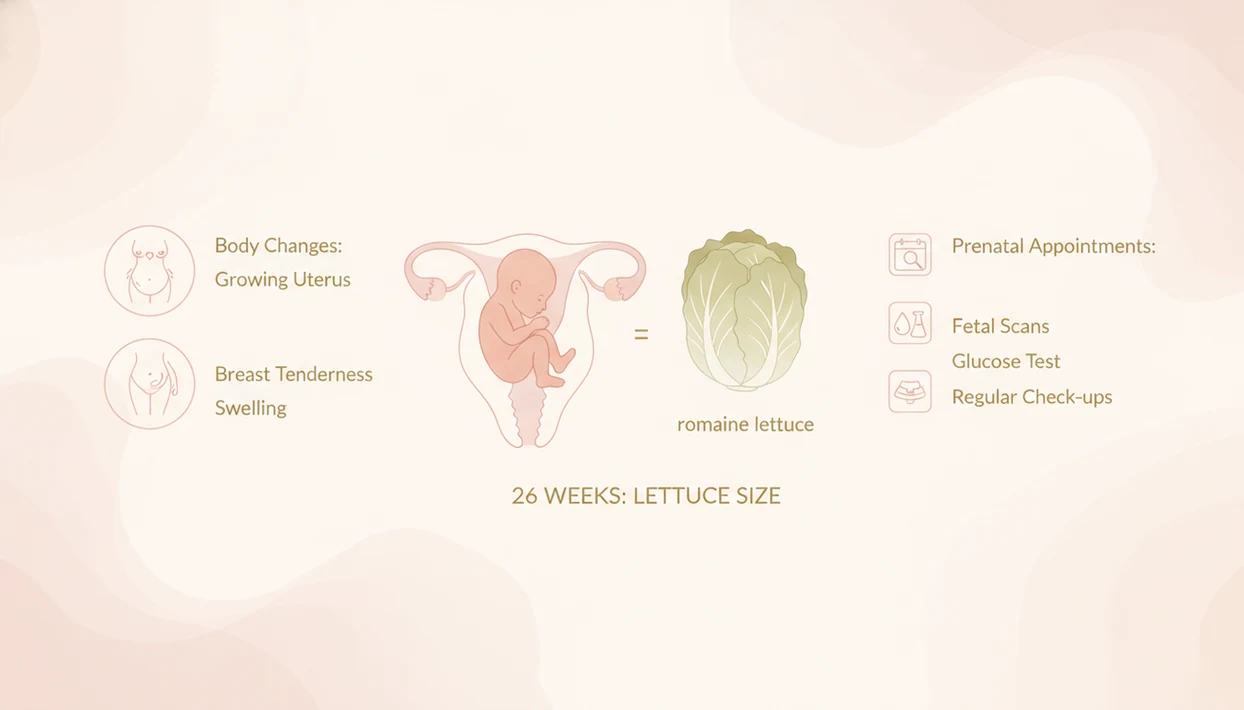
Quick Answers at Week 26
At 26 weeks pregnant, your baby is roughly 14 inches long and about 1.7 to 2 pounds, and the main takeaway is that movement, lung practice, and late-second-trimester checks are becoming more important.
- Baby size: About 14 inches from head to heel and roughly 1.7 to 2 pounds, often compared with a head of lettuce
- Symptoms: stronger movement, back pain, pelvic pressure, heartburn, constipation, leg cramps, sleep disruption, mild swelling, Braxton Hicks
- Appointments: Routine prenatal visit plus gestational diabetes screening if not already completed
- Ultrasound: Not always routine this week unless your OB-GYN or midwife wants to check growth, placenta position, fluid, or another concern
Week 26 at a Glance
| Topic | Week 26 |
|---|---|
| Baby size | About 14 inches long and around 1.7 to 2 pounds, with normal variation |
| Ultrasound | Usually only done if clinically indicated for growth, placenta, fluid, dates, or symptoms |
| Symptoms | Backache, heartburn, leg cramps, sleep changes, pelvic pressure, mild swelling, and Braxton Hicks |
| Appointments | Blood pressure, weight, urine testing when indicated, fundal height, fetal heartbeat, and glucose screening if due |
| Key milestone | Baby is practicing breathing movements, responding more to sound, and adding fat |
TL;DR
Week 26 is late in the second trimester, with your baby growing, moving more distinctly, and practicing breathing movements. This is also a common window for routine prenatal checks and gestational diabetes screening.
- Baby is about 14 inches long and roughly 1.7 to 2 pounds.
- Common symptoms include heartburn, back pain, leg cramps, sleep disruption, mild swelling, and Braxton Hicks.
- Contact your care team for reduced fetal movement, bleeding, leaking fluid, severe pain, or regular painful contractions.
What Does 26 Weeks Pregnant Mean?
At week 26, you are near the end of the second trimester and about 24 weeks from conception because clinicians date pregnancy from the first day of your last menstrual period. This dating method can feel confusing, but it helps standardize prenatal visits, fetal growth assessment, and screening windows across your pregnancy week-by-week timeline.
Many clinicians describe this as late second trimester care, with the third trimester often beginning around week 28. If your dates, symptoms, or scan results do not seem to line up, a due date calculator can help you understand estimated timing, while your OB-GYN or midwife should guide any medical interpretation.
How Big Is Baby at Week 26?
At 26 weeks gestation, many babies are about 14 inches from head to heel and weigh roughly 1.7 to 2 pounds. A common comparison is a head of lettuce or a long scallion, but fruit-and-vegetable comparisons are only rough visual aids.
Research-informed prenatal care places more weight on growth trends than on one isolated size estimate. Fundal height, ultrasound measurements when used, placental function, dating accuracy, genetics, and your clinician’s assessment all provide better context than a single comparison.
Development is also active this week: the brain, lungs, and nervous system continue maturing, the eyelids may begin to open, and practice breathing movements help prepare the lungs for life after birth. The placenta continues supporting oxygen and nutrient transfer while the baby adds fat and muscle tone.
What Symptoms Are Common at Week 26?
Symptoms at week 26 commonly include backache, pelvic pressure, heartburn, constipation, leg cramps, nasal congestion, vivid dreams, sleep changes, mild ankle or foot swelling, and occasional Braxton Hicks tightening. Many clinicians describe Braxton Hicks as irregular, usually mild contractions that often ease with rest, hydration, or a position change.
Your growing uterus can shift posture and increase pressure on the ribs, bladder, pelvis, and lower back. Smaller meals, supportive shoes, gentle stretching, side sleeping, and steady hydration may help some people feel more comfortable, although persistent or severe symptoms deserve medical advice.
Feeling excited one day and overwhelmed the next is common at this stage, especially as birth and parenting start to feel more concrete. Some parents use pregnancy meditation or breathing practices to support sleep and stress, but these tools should not replace care for concerning symptoms.
How Should You Think About Fetal Movement This Week?
During week 26, fetal movement often feels stronger and more recognizable, but patterns may still be developing. ACOG and NHS guidance commonly emphasize knowing what is normal for your own baby rather than comparing movement with another pregnancy.
Kicks, rolls, stretches, and quieter periods can all occur, and babies may respond to voices, music, meals, rest, or sudden sounds. If movement is clearly reduced, absent, or noticeably different from your usual pattern, contact your maternity unit, OB-GYN, or midwife promptly rather than waiting for the next appointment.
Formal daily kick counting is often introduced later, commonly around 28 weeks, but awareness can begin now if your clinician recommends it. A baby kick counter can help record movement patterns consistently when tracking is advised.
If you are comparing nearby milestones, you may also find it helpful to review 25 weeks pregnant and 27 weeks pregnant.
What Appointments and Planning Matter Around Week 26?
Around week 26, appointments often include blood pressure, weight, urine screening when indicated, fundal height, and listening to the fetal heartbeat. Many practices schedule gestational diabetes screening between 24 and 28 weeks, and some patients also need blood counts, antibody testing, Rh-related care, or follow-up based on personal history.
Your care team may ask about fetal movement, contractions, headaches, swelling, mood, sleep, pain, medications, prenatal vitamins, and folic acid or other supplements. This is a useful time to clarify warning signs, ask whether an ultrasound is needed, and review any concerns about placenta position, growth, or prior test results.
Planning for the third trimester does not need to be perfect or urgent. A simple list covering childbirth education, feeding preferences, infant care basics, work leave, home support, and supplies can reduce decision fatigue; for more structure, see the third trimester checklist.
Limitations & Safety
This page is general pregnancy education and is not a diagnosis or personal medical advice. Screening schedules, visit frequency, ultrasound use, and medication advice can vary by country, practice, and individual risk factors.
- Contact your clinician promptly for vaginal bleeding, leaking fluid, severe abdominal pain, regular painful contractions, fever, chest pain, fainting, severe headache, vision changes, or sudden significant swelling.
- Seek urgent guidance if fetal movement is significantly reduced, absent, or clearly different from your baby’s usual pattern.
- If you have a high-risk pregnancy, twins or multiples, hypertension, diabetes, placenta concerns, prior preterm birth, or other complications, follow your care team’s individualized plan.
- Do not stop, start, or change medications or supplements without guidance from your OB-GYN, midwife, or prescribing clinician.
Frequently Asked Questions
How many months is 26 weeks pregnant?
At week 26, you are commonly described as about six months along, although month counting varies because calendar months are not exactly four weeks. Clinicians usually use weeks of gestation because that is more precise for development, screening, and appointments.
What trimester is 26 weeks pregnant?
Week 26 is usually considered the late second trimester. Many pregnancy calendars place the start of the third trimester at week 28, though some sources use slightly different cutoffs.
How big is the baby at 26 weeks pregnant?
At this stage, many babies measure about 14 inches from head to heel and weigh roughly 1.7 to 2 pounds. Many clinicians treat these as averages, not targets, because fetal size varies with dating, genetics, placental function, and growth pattern.
What symptoms are common at 26 weeks pregnant?
Common symptoms include back pain, pelvic pressure, heartburn, constipation, leg cramps, sleep changes, nasal congestion, mild swelling, and Braxton Hicks contractions. Contact your clinician if symptoms are severe, sudden, painful, or different from what your care team told you to expect.
Do you get an ultrasound at 26 weeks pregnant?
An ultrasound is not always routine this week. Your OB-GYN or midwife may recommend one if they need to check growth, amniotic fluid, placenta position, dating questions, symptoms, or a prior finding.
What appointments or tests happen around week 26?
A routine visit may include blood pressure, weight, urine testing when indicated, fundal height, and fetal heartbeat assessment. Many clinicians also schedule gestational diabetes screening between 24 and 28 weeks, with additional blood tests or Rh-related care when appropriate.
Should I count kicks at 26 weeks pregnant?
You may be encouraged to notice your baby’s usual movement pattern, but formal daily kick counting is often introduced closer to 28 weeks. ACOG and NHS-style guidance commonly advises contacting your maternity team promptly if movement is reduced, absent, or clearly different from normal.