 Pregnancy
16 Weeks Pregnant: Baby Development, Symptoms, and Size
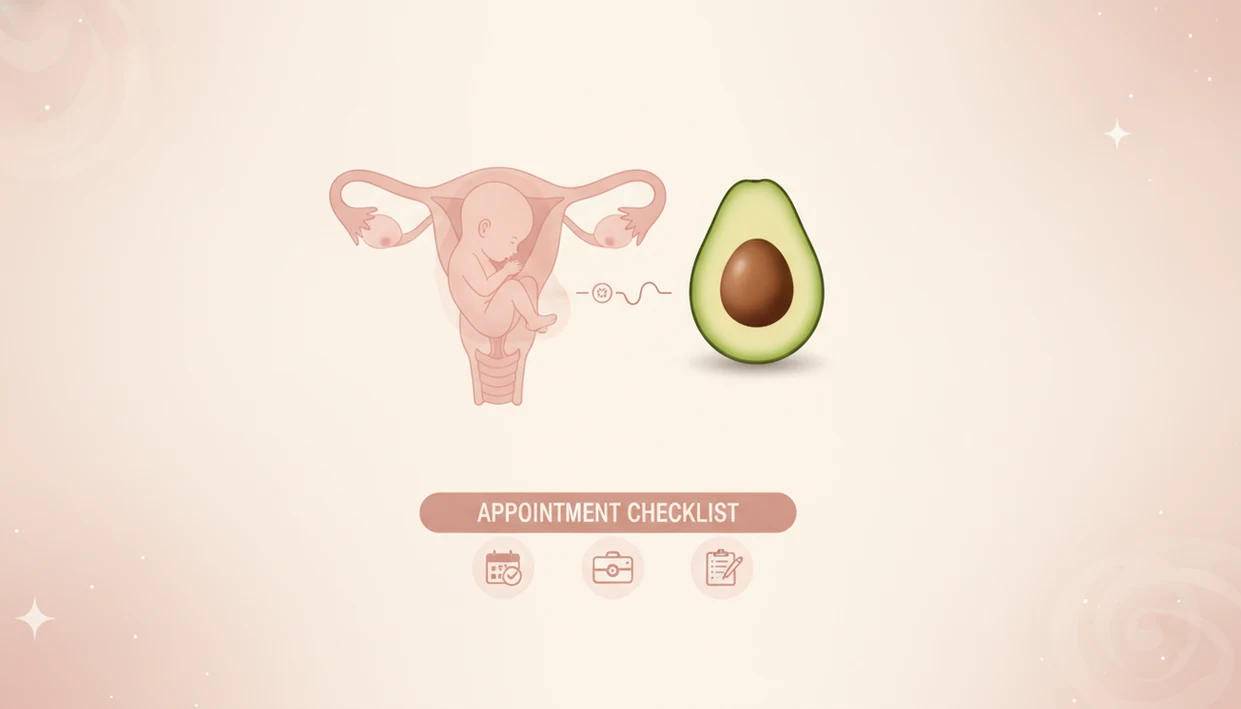
Quick Answers at Week 16
At 16 weeks pregnant, your baby is about avocado-sized and the main takeaway is steady second-trimester growth with movement increasing even if you cannot feel it yet.
- Baby size: about 4.5 to 5 inches crown to rump and around 3 to 4 ounces
- Symptoms: growing bump, round ligament pain, constipation, heartburn, congestion, backache, increased discharge
- Appointments: routine prenatal visit, blood pressure, weight, urine testing, symptom review, possible screening discussion
- Ultrasound: anatomy scan is usually scheduled for about 18 to 22 weeks, not always performed this week
Week 16 at a Glance
| Topic | Week 16 |
|---|---|
| Baby size | Often compared to an avocado, about 4.5 to 5 inches crown to rump and around 3 to 4 ounces |
| Ultrasound | Baby may move actively on ultrasound; the detailed anatomy scan is commonly planned for 18 to 22 weeks |
| Symptoms | Round ligament pain, constipation, heartburn, congestion, backache, gum tenderness, and a more noticeable bump |
| Appointments | Routine prenatal care may include blood pressure, weight, urine testing, Doppler heartbeat check, and screening discussions |
| Key milestone | Bones and muscles are strengthening, and coordinated fetal movement is becoming more frequent |
TL;DR
At 16 weeks pregnant, your baby is avocado-sized and developing stronger bones, muscles, and movement patterns. You may have a growing bump and second-trimester symptoms, while routine prenatal care often focuses on screening options and planning the anatomy scan.
- Clear kicks are not required yet; many people feel movement later.
- Common symptoms include round ligament pain, constipation, heartburn, congestion, and backache.
- Ask your OB-GYN or midwife which tests are time-sensitive this month.
What Does 16 Weeks Pregnant Mean?
Pregnant 16 weeks means you are in the second trimester, about four months into pregnancy, and your baby is growing quickly from the timeline dated by your last menstrual period.
Clinicians date pregnancy in weeks of gestation from the first day of the last menstrual period rather than the day of conception, so 16 weeks gestation may not match the exact day implantation occurred. For a broader timeline, see our pregnancy week-by-week guide.
How Big Is the Baby at Week 16?
At this stage, the baby is commonly compared to an avocado, measuring about 4.5 to 5 inches from crown to rump and weighing around 3 to 4 ounces.
Many clinicians treat these numbers as estimates because fetal position, ultrasound dating, and normal growth differences can all affect measurements during the second trimester. If you are checking how week 16 fits with your estimated due date, a due date calculator can help you understand the timeline your prenatal team may compare with early ultrasound findings and menstrual history.
Baby Development During Week 16
During week 16, bones are hardening, muscles are strengthening, and coordinated fetal movements are becoming more frequent.
The head is more upright, facial muscles may make small expressions, and the ears are closer to their final position. The heart is pumping steadily, the kidneys are making urine, and the nervous system is refining movement patterns while the placenta supports much of the baby’s oxygen and nutrient exchange.
After the early pregnancy hCG rise, implantation, and the first ultrasound signs such as a gestational sac, prenatal care now shifts more toward growth, anatomy, symptoms, and screening choices. Movement can be visible on ultrasound even when it is not yet strong enough for you to notice clearly.
What Symptoms Are Common at Week 16?
Symptoms at week 16 commonly include a firmer lower belly, round ligament pain, mild backache, constipation, heartburn, nasal congestion, increased vaginal discharge, and tender or bleeding gums.
ACOG and NHS guidance commonly note that second-trimester symptoms vary widely, so a calmer week does not automatically mean something is wrong and a symptom-heavy week does not automatically mean a complication. It is also normal to feel excited, uncertain, or overwhelmed when your body changes faster than your confidence does.
Tracking patterns can make changes easier to discuss at prenatal visits, especially if pain, headaches, swelling, or digestion changes are new. A pregnancy tracker can help you record symptoms, appointments, questions, and weekly changes without relying on memory alone.
What Appointments and Tests Happen Around Week 16?
A routine prenatal visit around week 16 usually focuses on your blood pressure, weight, urine testing, symptom review, and listening for the baby’s heartbeat with a Doppler.
Your OB-GYN or midwife may discuss second-trimester blood screening, amniocentesis if indicated, and scheduling the anatomy ultrasound for about 18 to 22 weeks. Many clinicians describe screening options as time-sensitive, so ask which tests are appropriate for your pregnancy, when they need to be done, and when results are expected.
The anatomy scan is usually the next major ultrasound and looks at fetal anatomy, placenta location, amniotic fluid, growth, and sometimes fetal sex if visible and requested. Unlike very early scans that focus on the gestational sac and dating, this scan is designed to review developing structures in more detail.
Is It Normal Not to Feel Movement Yet?
No clear kicks during week 16 is usually expected, especially in a first pregnancy or when the placenta is positioned at the front of the uterus.
Early movement may feel like gas bubbles, taps, or fluttering before it becomes consistent. Research and clinical guidance commonly place formal kick counting later in pregnancy, not at this stage.
Gentle walking, hydration, fiber-rich foods, supportive shoes, side-lying rest, and continuing prenatal vitamins with folic acid as directed may support daily comfort. If stress or sleep changes are noticeable, short guided practices such as pregnancy meditation may support relaxation, though they do not replace medical care.
Pregnancy changes week by week, and comparing nearby weeks can make this stage easier to understand. If you are reviewing recent changes, read 15 weeks pregnant; if you want to look ahead, see 17 weeks pregnant for upcoming development, symptoms, and appointment planning.
Limitations & Safety
This page provides general education about being pregnant 16 weeks and cannot diagnose symptoms, confirm fetal health, or replace individualized care from a qualified clinician.
Always follow your prenatal team’s guidance, especially if you have a high-risk pregnancy, prior complications, twins, or a medical condition.
- Contact your clinician promptly for vaginal bleeding, fluid leakage, fever, severe abdominal pain, or persistent cramping.
- Seek urgent care for severe headache, vision changes, fainting, chest pain, shortness of breath, or one-sided swelling.
- Call your care team if vomiting prevents fluids, symptoms suddenly worsen, or you feel something is not right.
- Do not start or stop medications, supplements, prenatal vitamins, or major activity changes without professional guidance.
Frequently Asked Questions
How big is the baby at 16 weeks pregnant?
At this stage, the baby is often compared to an avocado. Typical estimates are about 4.5 to 5 inches from crown to rump and around 3 to 4 ounces, though clinicians treat size estimates as approximate.
Should I feel the baby move at 16 weeks?
Not necessarily. Many clinicians note that some people feel early flutters around this stage, especially after a previous pregnancy, but clear movement often comes later, around the time of the anatomy scan window.
What symptoms are common at 16 weeks pregnant?
Common symptoms include a growing bump, round ligament pain, constipation, heartburn, nasal congestion, backache, and increased vaginal discharge. Mild symptoms can be typical, but severe pain, bleeding, fever, or fluid leakage should be checked promptly.
What appointments or tests happen around 16 weeks?
A prenatal visit around this time may include blood pressure, weight, urine testing, symptom review, and listening for the heartbeat. Your OB-GYN or midwife may also discuss second-trimester screening, amniocentesis if indicated, and scheduling the anatomy scan for about 18 to 22 weeks.
Is 16 weeks pregnant the second trimester?
Yes. Week 16 is in the second trimester, which is commonly described as weeks 13 through 27. Some early symptoms may ease during this period, but second-trimester symptoms still vary widely.
Is an ultrasound normal during week 16?
It can be normal, but it is not required for everyone. Many clinicians schedule the detailed anatomy ultrasound for about 18 to 22 weeks, while an earlier scan may be used for dating, symptoms, screening, or specific medical reasons.