 Pregnancy
21 Weeks Pregnant: Baby Development, Symptoms, Size, and Appointments
Quick Answers at Week 21
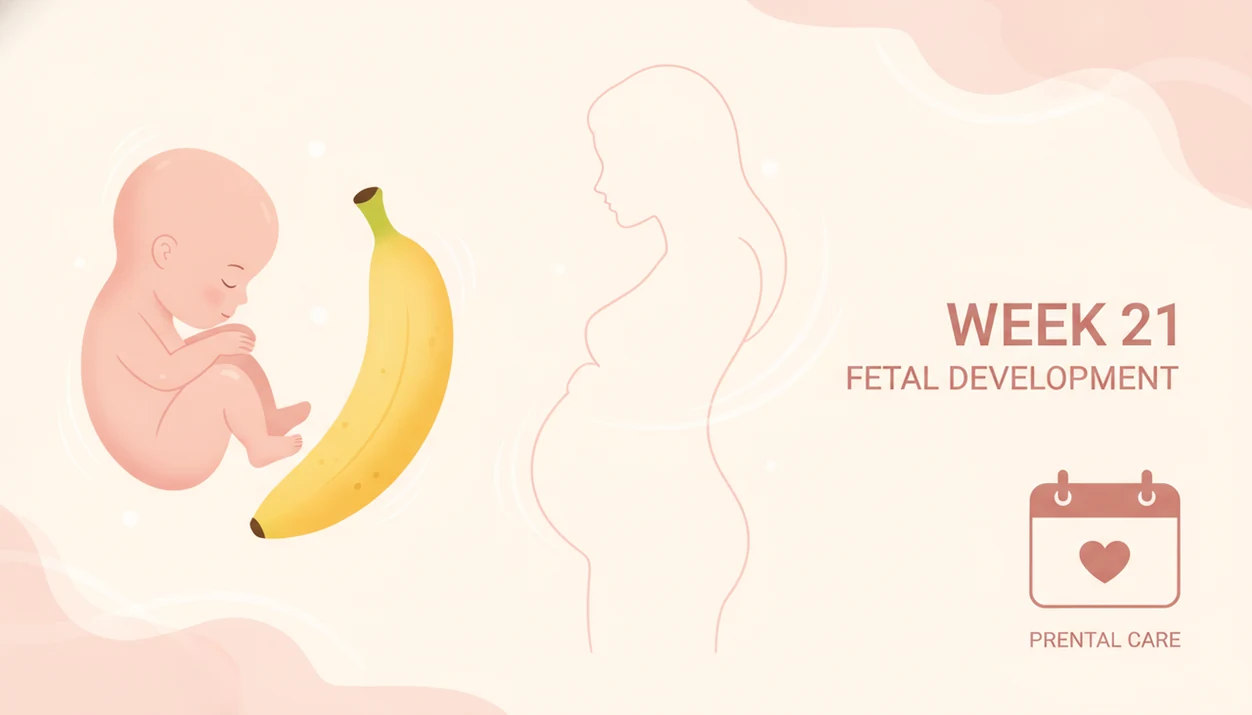
At 21 weeks pregnant, your baby is about the length of a banana or large carrot, and the main takeaway is that movement, swallowing, and sleep-wake patterns are becoming more noticeable but may still be irregular.
- Baby size: About 10 to 11 inches head to heel and roughly 11 to 13 ounces, with normal variation
- Symptoms: backache, round ligament pain, heartburn, constipation, leg cramps, mild swelling, skin or hair changes
- Appointments: Routine prenatal visit, blood pressure and weight checks, fetal heartbeat, fundal height, urine testing if indicated, anatomy scan review
- Ultrasound: The anatomy scan is often done around 18 to 22 weeks, so week 21 may include review or follow-up images if needed
Week 21 at a Glance
| Topic | Week 21 |
|---|---|
| Baby size | About 10 to 11 inches head to heel; often compared with a banana or large carrot |
| Ultrasound | Anatomy scan review or follow-up imaging may happen if views, placenta location, or growth need clarification |
| Symptoms | Backache, round ligament pain, heartburn, constipation, leg cramps, mild swelling, and changing skin or hair |
| Appointments | Routine prenatal care may include blood pressure, weight, fetal heartbeat, fundal height, and symptom review |
| Key milestone | Sleep-wake patterns, swallowing, and stronger movements are becoming more coordinated |
TL;DR
At week 21, baby is roughly banana-sized, and movements may be easier to notice but not yet predictable. Prenatal care is usually routine unless symptoms or anatomy scan results need follow-up.
- Baby may be swallowing amniotic fluid and developing more organized sleep-wake cycles.
- Common symptoms include backache, heartburn, round ligament pain, constipation, leg cramps, and mild swelling.
- Call your OB-GYN, midwife, or clinician for bleeding, leaking fluid, severe pain, fever, severe headache, vision changes, or a sudden concerning change.
What does pregnant 21 weeks mean?
Pregnant 21 weeks means you are in the second trimester, roughly halfway through month five, with gestational age counted from the first day of your last menstrual period. By this point, earlier milestones such as implantation, the first rise in hCG, and the appearance of a gestational sac are already behind you, while the placenta is supporting ongoing fetal growth.
Many clinicians use weeks rather than months because dating is more precise that way. If you are checking dates, compare this page with our pregnancy week-by-week guide or estimate timing with the due date calculator.
How is your baby developing during week 21?
During week 21, the baby’s nervous system, muscles, and digestive tract are becoming more coordinated. The baby may swallow small amounts of amniotic fluid, practice breathing-like movements, and develop more noticeable sleep-wake cycles.
Your baby’s skin is still thin, but protective vernix continues to build. Taste buds are maturing, and the inner ear is developed enough that some babies may respond to sound or changes in your activity.
How big is the baby at 21 weeks gestation?
At 21 weeks gestation, many babies measure about 10 to 11 inches from head to heel and may weigh around 11 to 13 ounces. A common size comparison is a banana or a large carrot, although fetal size naturally varies based on genetics, dating, and measurement technique.
ACOG and NHS guidance commonly emphasizes trends and overall clinical context rather than a single size number. Ultrasound estimates can help assess growth pattern, anatomy, placenta position, amniotic fluid, and related findings, but they are not exact weight measurements.
What symptoms at week 21 are common?
Common symptoms at week 21 include a growing belly, lower back discomfort, pelvic pressure, round ligament pain, heartburn, constipation, leg cramps, mild swelling, and skin or hair changes. Many people also notice more energy than in the first trimester, though sleep can become harder as the uterus grows and posture shifts.
Comfort measures may include gentle stretching, supportive shoes, hydration, smaller meals for heartburn, and side-sleeping with pillows. Continue prenatal vitamins as directed; folic acid remains part of routine pregnancy supplementation even though the earliest neural tube development has already occurred. For stress management, some people find guided pregnancy meditation useful as part of a calm daily routine.
What appointments or ultrasound follow-up happen around week 21?
Around week 21, prenatal care is often routine and may include blood pressure, weight, fetal heartbeat, fundal height, urine testing if indicated, and a review of symptoms or anatomy scan results. Your OB-GYN or midwife may ask about pain, bleeding, fluid leakage, headaches, and fetal movement expectations.
If you recently had an anatomy scan, your provider may review fetal growth, organ views, placenta location, cervix length if measured, and whether any images need repeating. You can also use a pregnancy tracker to record questions before appointments.
Is fetal movement regular at this stage?
Fetal movement is often noticeable but still irregular at this stage. Some people feel daily flutters, taps, or rolls, while others feel movement only occasionally, especially in a first pregnancy or with an anterior placenta.
Many clinicians recommend formal kick counting later in pregnancy rather than during early pregnancy week 21, but learning your baby’s emerging activity pattern can still feel reassuring. If you are curious about later movement tracking, save the baby kick counter for the third trimester or when your clinician recommends monitoring.
How can you plan ahead from this week?
This week is a practical time to review birth preferences, childcare needs, leave plans, and classes without rushing. You do not need to finalize everything now, but small steps can reduce pressure later.
It is normal to feel excited, uncertain, or a little overwhelmed as the pregnancy begins to feel more real. Consider learning about comfort techniques, labor options, and what support you want during birth; you may want to read about hypnobirthing or look ahead to 22 weeks pregnant. If you are comparing where you have been, revisit 20 weeks pregnant for anatomy scan context.
Limitations & Safety
The safest approach is to use this information as education, not as a replacement for care from an obstetrician, midwife, or qualified clinician.
- Call your healthcare provider urgently for vaginal bleeding, leaking fluid, severe abdominal pain, fever, severe headache, vision changes, chest pain, fainting, or one-sided swelling.
- At this stage, movement can be inconsistent, but contact your provider if you feel something is wrong or notice a sudden concerning change.
- Symptoms vary widely; your medical history, placenta position, multiple pregnancy, and pregnancy dating can change what is expected.
- Follow your clinician’s advice for medications, prenatal vitamins, supplements, exercise, travel, and appointment timing.
Frequently Asked Questions
How many months is 21 weeks pregnant?
At week 21, you are usually described as being in the fifth month of pregnancy and in the second trimester. Month counting is approximate because clinicians measure pregnancy more precisely by gestational weeks from the last menstrual period.
How big is my baby at 21 weeks pregnant?
Many babies are about 10 to 11 inches from head to heel and weigh roughly 11 to 13 ounces at this point. A common comparison is a banana or large carrot, but individual growth varies and ultrasound measurements are estimates.
Is it normal to feel irregular movement at 21 weeks?
Yes, movement can still be irregular during week 21. Many clinicians note that an anterior placenta, first pregnancy, or baby’s position can make movement harder to notice, but you should contact your care team for a sudden concerning change or warning symptoms.
What symptoms are common at 21 weeks pregnant?
Common symptoms include backache, round ligament pain, heartburn, constipation, leg cramps, mild swelling, and skin or hair changes. Severe pain, bleeding, leaking fluid, fever, severe headache, or vision changes should be assessed by a healthcare professional.
What appointments happen around 21 weeks pregnant?
A routine prenatal visit may include blood pressure, weight, fetal heartbeat, fundal height, urine testing if indicated, and review of anatomy scan results. Your OB-GYN or midwife may also discuss symptoms, fetal movement expectations, placenta findings, and any follow-up imaging.
Do I need to count kicks at 21 weeks gestation?
Formal kick counting is usually recommended later in pregnancy, not typically at 21 weeks gestation. Still, ACOG and NHS-style guidance commonly encourages contacting your clinician if you notice a sudden concerning change, especially with bleeding, pain, or leaking fluid.