 Pregnancy
22 Weeks Pregnant: Papaya-Sized, Extra Blood and Swollen Ankles
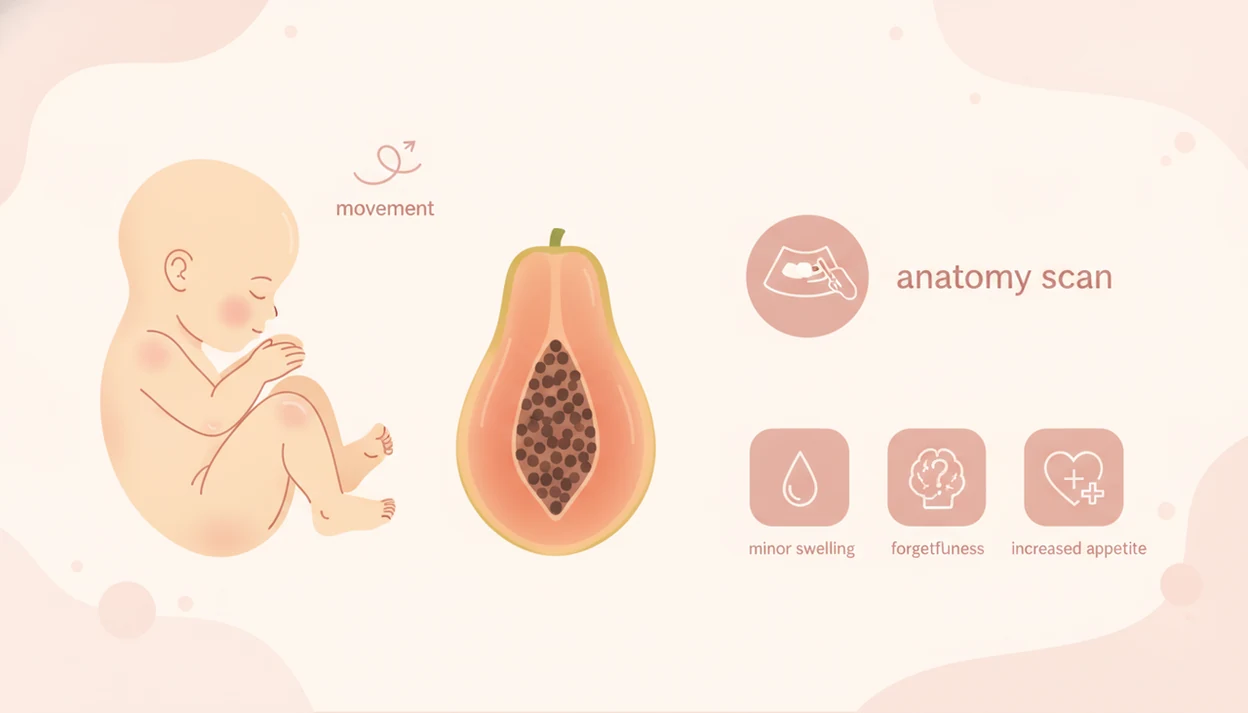
Quick answers at week 22
At 22 weeks pregnant, your baby is about the size of a papaya, roughly 11 inches and 1 pound. Your body now carries far more blood than before, which explains the nosebleeds, stuffy nose and puffy ankles.
- Baby size. About 11 inches and about 1 pound.
- Body. Swelling in the feet, nosebleeds, a blocked nose, bleeding gums, backache and the first Braxton Hicks tightenings.
- Appointments. A routine visit. Ask about the glucose screening coming up between 24 and 28 weeks.
- Worth knowing. Preeclampsia can start after 20 weeks, so sudden swelling of the face or hands with a headache needs a same-day call.
Week 22 at a glance
| Topic | Week 22 |
|---|---|
| Baby size | Papaya, about 11 inches and about 1 pound. |
| Baby is busy with | Hearing is developing. Lips and eyebrows are more distinct, and fine hair covers the skin. |
| Your body | Blood volume keeps rising, so expect swelling, nosebleeds and a stuffy nose. |
| Watch for | Sudden face or hand swelling, a severe headache, vision changes. |
| Care | Routine visit. Glucose test planning for the weeks ahead. |
How big is your baby at 22 weeks?
At 22 weeks your baby is about 11 inches long and about a pound, so about the size of a papaya. That is a real handful, and the next few weeks add weight quickly.
The face now looks like a newborn's, only thinner. The lips are more defined, and the eyebrows are visible. Fine hair covers the skin, and a waxy coating called vernix protects it while it floats in fluid. Fat arrives later, which is why a baby born this early looks wrinkled and red.
Can your baby hear you at 22 weeks?
The inner ear is developing, and babies start to react to loud sounds somewhere around the next few weeks. You do not need to speak in any special way. Talking, reading and singing are fine, and your voice is the one your baby will know best at birth.
If you want a daily habit, play a calm recording while you rest. A good pregnancy meditation gives you both a regular quiet moment.
Why do you have nosebleeds and puffy ankles?
Your blood volume rises by roughly 30 to 50 percent during pregnancy. Hormones also relax blood vessel walls. The result is a stuffy nose that bleeds easily, bleeding gums when you brush, and fluid pooling in your feet by the end of the day.
A saline spray or a humidifier helps the nose. Use a soft toothbrush and keep your dental visit, because gum disease is linked with early birth. For ankles, put your feet up for 15 minutes in the afternoon, wear shoes that do not pinch, and drink water, since too little can make swelling worse. How much water during pregnancy covers the daily amount.
Mild swelling at the end of the day is normal. Sudden puffiness in the face or hands, or one swollen, painful calf, is not.
What are Braxton Hicks contractions?
Braxton Hicks are practice tightenings. The belly goes firm for 30 seconds or a couple of minutes, usually without pain, and then softens. They can start around now and tend to show up after exercise, a full bladder or a long day on your feet.
They stay irregular and ease with water, rest or a change of position. Real labor tightening gets closer together and stronger. Our guide to Braxton Hicks vs real contractions explains the difference, and it matters most before 37 weeks.
What happens at appointments around week 22?
Expect the usual checks of blood pressure, weight, urine, the baby's heartbeat and fundal height. If your anatomy scan showed a low-lying placenta or an unclear view, you may have a follow-up scan. Most low placentas rise as the uterus grows.
Ask which test your practice uses for gestational diabetes and when. Most offer a screening between 24 and 28 weeks, and earlier if you have risk factors such as a past gestational diabetes pregnancy.
What helps this week?
Sleep on your side with a pillow between your knees, and add a second pillow behind your back. Walk a little each day. Eat protein at each meal, and choose iron-rich foods, since your needs are rising. With a pillow between your knees, put on a calm audio and let the evening wind down.
Book the dental cleaning if you have not had one. Then pick one thing for your next visit, such as a question about birth classes.
When should you call your provider?
Call right away for bleeding, leaking fluid, severe belly pain, fever, a headache that will not shift, vision changes or sudden swelling of the face or hands. Before 37 weeks, regular contractions, pelvic pressure, a dull low backache or a change in discharge may be early preterm labor, and they also deserve a call.
This is general information, so follow your own provider's advice if it differs.
Frequently Asked Questions
Can my baby hear me at 22 weeks?
The ear is developing, and babies begin to respond to sounds in the following weeks. Talking and singing are safe, and your baby will recognize your voice after birth.
Why do I get nosebleeds while pregnant?
Blood volume rises and hormones widen the small vessels in the nose, so they bleed more easily. Sit up, lean forward and pinch the soft part of the nose for ten minutes. Call if bleeding is heavy or will not stop.
Is swelling in my ankles normal at 22 weeks?
Mild swelling that builds through the day and eases overnight is common. Sudden swelling of the face or hands, or a severe headache, can be a preeclampsia sign, so call your provider right away.
Are Braxton Hicks contractions normal at 22 weeks?
Occasional, irregular, painless tightenings can be normal. If they become regular, painful or come with pressure or bleeding, call your provider, because that could be preterm labor.