 Pregnancy
23 Weeks Pregnant
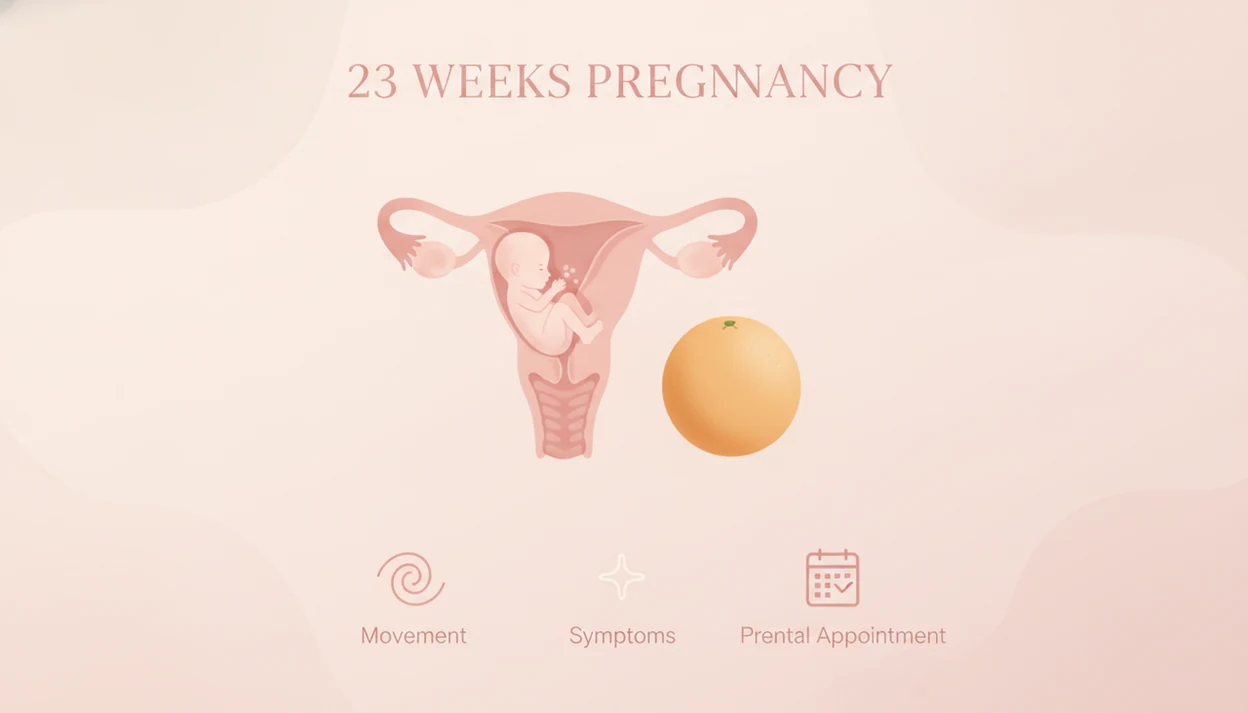
Quick Answers at Week 23
At 23 weeks pregnant, your baby is about 11.4 inches long and around 1.1 pounds, with stronger movement, developing hearing, and growing lungs as the second trimester continues.
- Baby size: About the size of a large mango or grapefruit.
- Symptoms: stronger kicks, backache, heartburn, constipation, leg cramps, mild swelling, round ligament pain, Braxton Hicks tightening
- Appointments: Routine care may include blood pressure, urine screening, fundal height, weight, and fetal heartbeat; glucose screening is often discussed for weeks 24 to 28.
- Ultrasound: Not always routine this week, but follow-up anatomy scan views may be scheduled if earlier images were incomplete.
Week 23 at a Glance
| Topic | Week 23 |
|---|---|
| Baby size | About 11.4 inches from head to heel and around 1.1 pounds, similar to a large mango or grapefruit. |
| Ultrasound | Usually only if follow-up anatomy scan views are needed or your clinician has a specific reason. |
| Symptoms | Backache, heartburn, constipation, leg cramps, mild swelling, round ligament pain, nasal congestion, and more noticeable movement. |
| Appointments | A routine prenatal visit may check blood pressure, urine, weight, fundal height, and fetal heartbeat. |
| Key milestone | Hearing, movement coordination, skin changes, and lung development continue during the second trimester. |
TL;DR
At 23 weeks pregnant, your baby is roughly mango- or grapefruit-sized, and movement may feel stronger as hearing, muscles, skin, and lungs continue developing. Many clinicians use this part of the second trimester to monitor routine health markers and prepare you for upcoming glucose screening.
- Baby size: about 11.4 inches long and around 1.1 pounds.
- Common symptoms: backache, heartburn, leg cramps, constipation, swelling, and Braxton Hicks tightening.
- Focus this week: comfort, hydration, gentle movement awareness, prenatal questions, and planning next tests.
What 23 weeks pregnant means
At 23 weeks gestation, you are usually about five months into pregnancy and still in the second trimester. Pregnancy dating is commonly based on the first day of your last menstrual period, then refined when needed by ultrasound findings and your clinician’s due date.
Earlier milestones such as implantation, rising hCG, and the first visible gestational sac are now behind you, while the placenta continues supporting oxygen and nutrient transfer. If dates feel confusing, a due date calculator can help you compare estimates with your OB-GYN or midwife’s timeline.
You can also use the broader pregnancy week-by-week guide, look back at 22 weeks pregnant, or read ahead to 24 weeks pregnant to see how development changes week by week.
Baby development and size at 23 weeks
At week 23, a baby is about 11.4 inches from head to heel and weighs around 1.1 pounds, often compared with a large mango or grapefruit. Many clinicians treat these as averages rather than targets because growth can vary with genetics, dating accuracy, placental function, and overall pregnancy health.
Your baby’s skin is still thin and somewhat translucent, but fat stores are gradually increasing. The lungs are forming air sacs and early surfactant activity, while the brain, hearing pathways, and muscle control keep maturing.
Research suggests babies at this stage may respond to voices, music, or sudden sounds with movement, although sleep-wake patterns are still developing. Feeling excited one day and uncertain the next is common when movement becomes more real but still unpredictable.
Symptoms and body changes this week
Symptoms at week 23 commonly include stronger fetal movement, round ligament pain, backache, pelvic pressure, heartburn, constipation, leg cramps, mild swelling, nasal congestion, and increased vaginal discharge. Braxton Hicks contractions may feel like brief tightening, especially after activity or dehydration, but they should not become regular, painful, or progressively stronger.
Your uterus is rising above the belly button, which can shift posture and add pressure to the lower back, hips, and pelvis. ACOG and NHS guidance commonly emphasize hydration, balanced meals, movement as tolerated, and contacting a clinician for symptoms that feel severe, sudden, or unusual.
Continuing prenatal vitamins, including folic acid as directed by your clinician, remains part of routine pregnancy care. Gentle stretching, fiber-rich foods, supportive shoes, and side sleeping may help comfort, but persistent pain, significant swelling, bleeding, fluid leakage, fever, or reduced wellbeing should be discussed with a healthcare professional.
Appointments and planning for week 23
A routine prenatal appointment around week 23 may include blood pressure, weight, urine testing, fundal height measurement, and listening to the fetal heartbeat. If your anatomy scan needed additional views, your OB-GYN or midwife may schedule a follow-up ultrasound.
Many clinicians also begin preparing patients for glucose screening, which is often performed between 24 and 28 weeks. This is a useful time to save questions in a pregnancy tracker, review your clinic’s after-hours contact instructions, and confirm what symptoms should prompt a call.
You may also hear about later pregnancy tools such as a baby kick counter. Formal daily kick counts are commonly introduced later, often around 28 weeks, unless your clinician advises starting earlier.
Comfort, movement, and preparation
During week 23, movement may feel like taps, rolls, flutters, or small kicks, and it can vary with your position, meals, hydration, and time of day. The goal now is gentle awareness rather than strict counting because many babies still have irregular sleep-wake cycles and enough room to change position.
Comfort steps can stay simple: drink fluids regularly, change positions, use pillows for side sleeping, take breaks from long standing, and choose gentle activity if your clinician has not restricted it. If tightening, cramping, or pressure becomes regular or painful, many clinicians recommend calling promptly rather than waiting it out.
Preparation does not need to feel intense. Small actions such as choosing a prenatal class, reviewing birth preferences, practicing calm breathing, and reading about how to prepare for labor can make later decisions feel less rushed.
Limitations & Safety
This week’s information is general and cannot determine what is normal for your individual medical history, placenta, cervix, baby, or symptoms. Use it for education, not diagnosis or treatment, and follow the advice of your obstetrician, midwife, or qualified healthcare professional.
- Call your clinician urgently for vaginal bleeding, fluid leakage, severe abdominal pain, fever, fainting, or symptoms that feel sudden or concerning.
- Seek care for regular painful contractions, pelvic pressure that worsens, or back pain with cramping before term.
- Report severe headache, vision changes, chest pain, shortness of breath, or sudden swelling of the face or hands.
- Ask your clinician about movement expectations if you notice a major change in your baby’s usual activity.
- If you have a high-risk pregnancy, twins, prior preterm birth, placenta concerns, hypertension, diabetes, or cervical issues, follow your personalized care plan.
Frequently Asked Questions
How big is my baby at 23 weeks pregnant?
At 23 weeks pregnant, the average baby is about 11.4 inches from head to heel and weighs around 1.1 pounds. A common comparison is a large mango or grapefruit, though many clinicians emphasize that normal measurements vary.
What is my baby developing at week 23?
Your baby is developing stronger muscles, more coordinated movement, hearing responses, and early lung structures needed for breathing after birth. Skin is still thin, and fat stores are gradually increasing during this stage of pregnancy.
What symptoms are common at 23 weeks pregnant?
Common symptoms include backache, heartburn, constipation, leg cramps, round ligament pain, mild swelling, nasal congestion, and stronger fetal movement. Braxton Hicks tightening can also happen, but ACOG-style guidance commonly treats regular painful contractions, bleeding, or fluid leakage as reasons to seek care.
Should I be counting kicks at 23 weeks gestation?
Formal daily kick counting is usually not required this early unless your clinician recommends it. Many people feel movement at this stage, but patterns can still be irregular because the baby has room to move and sleep cycles are still maturing.
What appointments or tests happen around week 23?
A routine visit may include blood pressure, weight, urine testing, fundal height, and listening to the fetal heartbeat. Your clinician may also schedule follow-up anatomy scan views or discuss glucose screening, which is often done between 24 and 28 weeks.
Is an ultrasound routine when pregnant 23 weeks?
An ultrasound is not always routine during week 23 if the anatomy scan was already completed. Many clinicians order one only when earlier images were incomplete or there is a specific medical reason to check growth, placenta location, cervix, or fetal anatomy.