 Pregnancy
19 Weeks Pregnant: What to Expect This Week
Quick Answers at Week 19
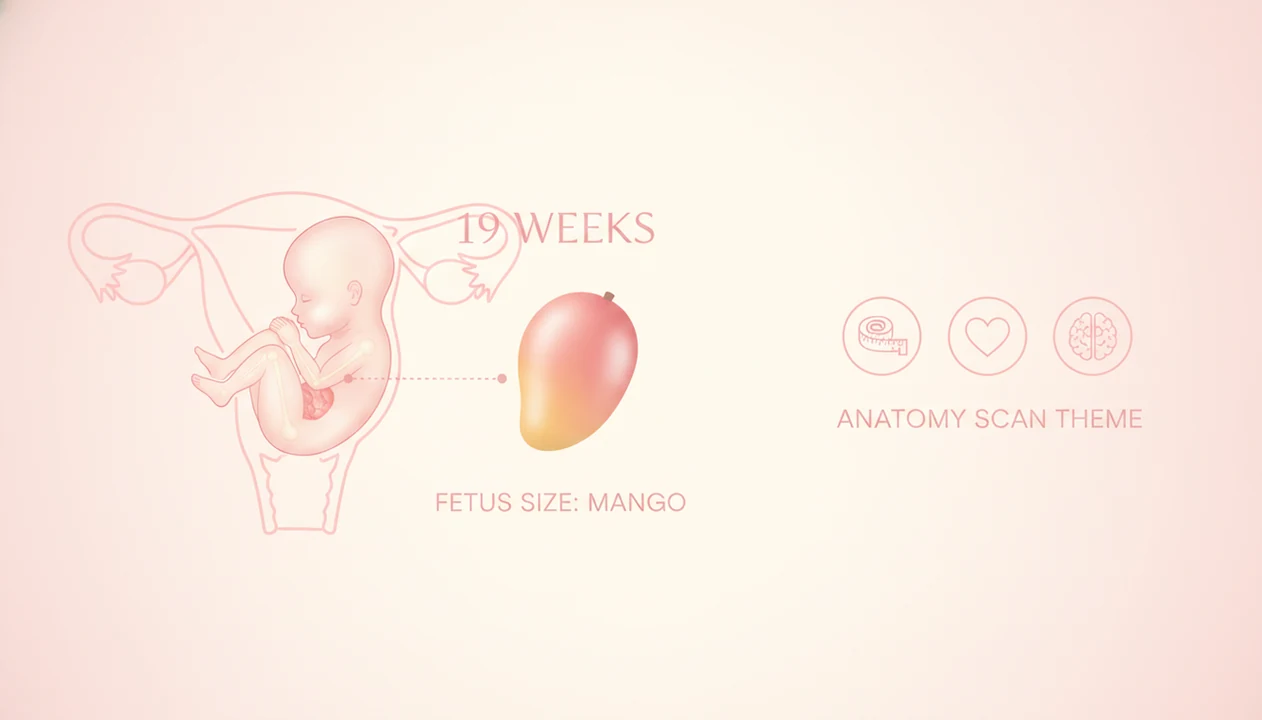
At 19 weeks pregnant, your baby is about mango-sized and the main focus is growth, stronger movement, and the upcoming or recent anatomy scan.
- Baby size: about 6 inches crown to rump and roughly 8 to 9 ounces, with normal variation
- Symptoms: round ligament pain, backache, hip tightness, heartburn, constipation, congestion, dizziness, leg cramps
- Appointments: routine prenatal care may include blood pressure, urine testing, weight, fetal heartbeat, and symptom review
- Ultrasound: the mid-pregnancy anatomy scan is commonly scheduled between 18 and 22 weeks
Week 19 at a Glance
| Topic | Week 19 |
|---|---|
| Baby size | Often compared with a mango; around 6 inches crown to rump and about 8 to 9 ounces |
| Ultrasound | Anatomy scan may be scheduled around this time, often between 18 and 22 weeks |
| Symptoms | Round ligament pain, backache, hip discomfort, heartburn, constipation, congestion, dizziness, and leg cramps |
| Appointments | Routine visit may check blood pressure, urine, weight, fetal heartbeat, and questions for your OB-GYN or midwife |
| Key milestone | Vernix caseosa is forming, hearing is developing, and movements may become easier to notice |
TL;DR
At week 19, your baby is roughly mango-sized and developing more coordinated movement, hearing, and a protective skin coating called vernix caseosa. The key practical step is preparing for or reviewing the mid-pregnancy anatomy scan with your care team.
- Baby may weigh about 8 to 9 ounces, though individual measurements vary.
- Common symptoms include ligament pain, backache, heartburn, constipation, congestion, and leg cramps.
- Call your clinician promptly for bleeding, leaking fluid, severe pain, fever, fainting, severe headache, or vision changes.
What does it mean to be 19 weeks pregnant?
Being pregnant 19 weeks means you are in the second trimester, close to the halfway point, with pregnancy dating still counted from the first day of your last menstrual period rather than from conception.
At 19 weeks gestation, implantation, the earliest hCG rise, and the first appearance of the gestational sac are already behind you; the focus is now fetal growth, your expanding uterus, the placenta, and routine prenatal care. Continue prenatal vitamins with folic acid unless your OB-GYN or midwife has advised a different plan.
This can be an exciting week, but it is also normal to feel uncertain or overwhelmed while waiting for scan details or interpreting new sensations. A pregnancy tracker can help you organize weekly changes and questions to bring to your care team.
Baby development at week 19
At this stage, your baby’s brain, nerves, muscles, and senses are becoming more coordinated, and movements may feel stronger or more organized.
Many clinicians describe week 19 as a period of rapid sensory and skin development: vernix caseosa begins coating the skin, fine lanugo may be visible, and hearing continues to mature. The arms and legs are more proportionate, and small stretches, rolls, or taps may be easier to notice, especially if you have been pregnant before.
This is a helpful point to review the wider pregnancy week-by-week timeline, whether you are comparing changes since 18 weeks pregnant or looking ahead to 20 weeks pregnant.
Baby size at week 19
At week 19, many babies measure about 6 inches from crown to rump and weigh roughly 8 to 9 ounces, often compared with a mango or heirloom tomato.
Research-based fetal growth charts show a normal range, so a single size estimate is not a diagnosis. Ultrasound teams usually assess several markers, such as head, abdomen, and limb measurements, rather than relying on length alone.
If your dates were adjusted earlier in pregnancy, a due date calculator can explain how gestational age is estimated, but your clinician’s dating plan is the reference to follow.
Symptoms at week 19
Common symptoms at week 19 include round ligament pain, lower back discomfort, hip tightness, leg cramps, constipation, heartburn, nasal congestion, dizziness, and skin changes.
Many clinicians attribute these symptoms to uterine growth, posture shifts, hormonal effects, and increased blood volume. Gentle movement, hydration, fiber-rich foods, supportive shoes, rest breaks, and side-lying sleep positions may help everyday discomfort.
Some people also use pregnancy meditation to manage stress and support relaxation during mid-pregnancy week 19. Symptoms that are severe, sudden, persistent, or paired with bleeding, fever, fainting, or fluid leakage should be discussed promptly with your care team.
Appointments and the anatomy scan
The main appointment around this stage is often the mid-pregnancy anatomy ultrasound, commonly scheduled between 18 and 22 weeks.
ACOG and NHS guidance commonly describe this detailed scan as a review of fetal anatomy and growth, with attention to amniotic fluid and placental location; some practices may also assess cervical length. A routine prenatal visit may include blood pressure, urine testing, weight, fetal heartbeat, and a discussion of symptoms, screening results, prenatal vitamins, and any questions for your OB-GYN or midwife.
Ask what the scan can and cannot confirm, when results will be reviewed, and whether follow-up imaging is needed. If movement feels irregular at this stage, formal kick counting is usually introduced later; your clinician can tell you when a baby kick counter becomes useful.
Limitations & Safety
Week-by-week pregnancy information can describe typical patterns, but it cannot diagnose symptoms, confirm fetal wellbeing, or replace individualized prenatal care.
- Contact your maternity unit, clinician, or emergency services urgently for heavy bleeding, severe abdominal pain, fainting, chest pain, or trouble breathing.
- Seek prompt care for leaking fluid, fever, persistent vomiting, severe headache, vision changes, or one-sided swelling or pain.
- If you have a high-risk pregnancy, twins, placenta concerns, prior loss, or a chronic health condition, follow your clinician’s specific advice.
- This page is educational and is not a diagnosis, treatment plan, or substitute for professional medical care.
Frequently Asked Questions
How big is my baby at 19 weeks pregnant?
At week 19, many babies are about 6 inches from crown to rump and weigh around 8 to 9 ounces. Many clinicians use multiple ultrasound measurements, such as head, abdomen, and limb size, to assess growth rather than relying on one number.
What is my baby developing at week 19?
Your baby is developing more coordinated movement, sensory pathways, hearing, and a protective skin coating called vernix caseosa. Lanugo may also be present on the skin, and movements can become more noticeable as the limbs grow more proportionate.
Is it normal to feel movement at 19 weeks pregnant?
Yes, it can be normal to feel fluttering, tapping, or rolling by this stage, especially after a previous pregnancy. It can also be normal not to feel clear movement yet, particularly with a first pregnancy or an anterior placenta; ask your clinician if you are worried.
What symptoms are common at week 19?
Common symptoms include round ligament pain, backache, hip discomfort, heartburn, constipation, congestion, dizziness, and leg cramps. ACOG and NHS-style guidance commonly advise seeking care if symptoms are severe, sudden, persistent, or accompanied by bleeding, fever, fainting, or leaking fluid.
What appointment happens around 19 weeks pregnant?
Many people have the mid-pregnancy anatomy scan between 18 and 22 weeks. This ultrasound reviews fetal anatomy, growth, placental location, and amniotic fluid, while a routine visit may also check blood pressure, urine, weight, and fetal heartbeat.
Do I still need prenatal vitamins and folic acid in the second trimester?
Yes, most clinicians recommend continuing prenatal vitamins unless your OB-GYN or midwife gives different instructions. Folic acid remains part of many prenatal supplements, and your care team can advise on iron, vitamin D, or other nutrients based on your health and test results.