 Pregnancy
18 Weeks Pregnant: What to Expect This Week
Quick Answers at Week 18
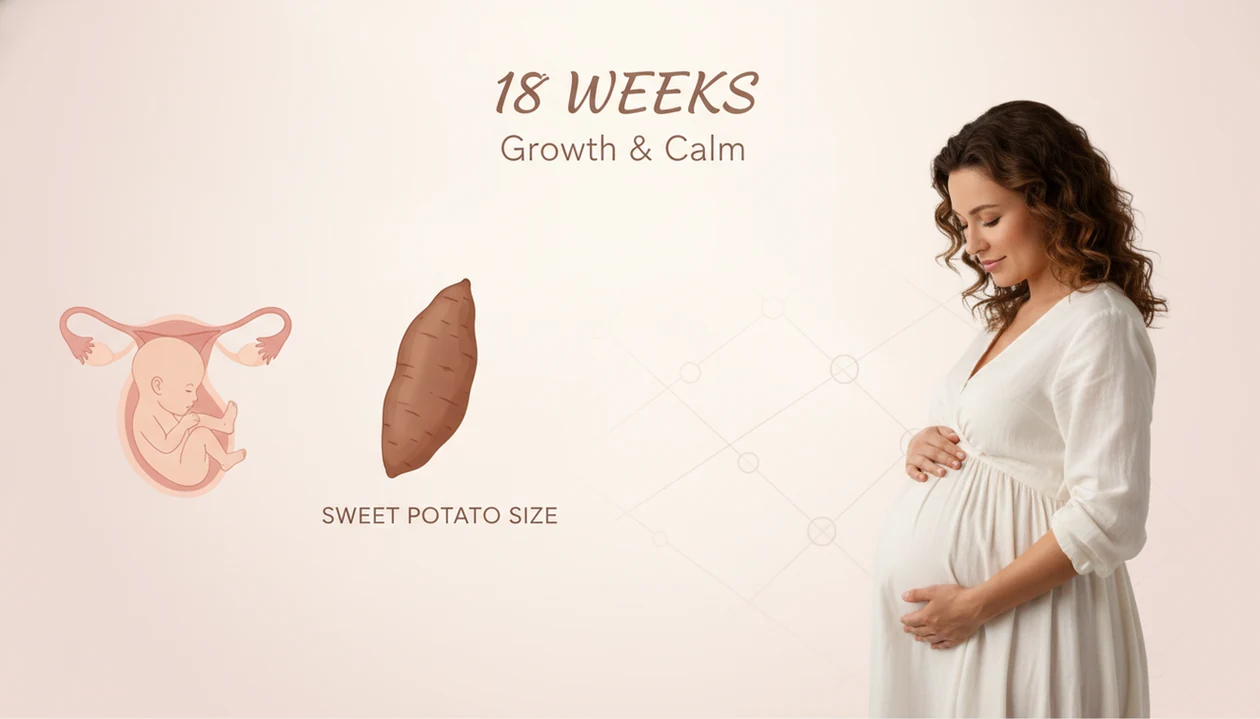
At 18 weeks pregnant, your baby is about the size of a sweet potato, and the main takeaway is that early movement may begin while the anatomy scan window is opening.
- Baby size: About 5.5 inches crown to rump and around 6 to 7 ounces, often compared with a sweet potato or bell pepper.
- Symptoms: round ligament pain, backache, hip discomfort, heartburn, constipation, nasal congestion, leg cramps, skin changes, mild swelling, increased discharge
- Appointments: A routine prenatal visit may include blood pressure, weight, urine testing if indicated, fundal height, fetal heartbeat, and symptom review.
- Ultrasound: The mid-pregnancy anatomy scan is commonly scheduled between 18 and 22 weeks.
Week 18 at a Glance
| Topic | Week 18 |
|---|---|
| Baby size | About sweet potato or bell pepper size; roughly 5.5 inches crown to rump and 6 to 7 ounces. |
| Ultrasound | Anatomy scan often occurs between 18 and 22 weeks to review fetal anatomy, growth, placenta position, fluid, and heartbeat. |
| Symptoms | Round ligament pain, back or hip discomfort, heartburn, constipation, congestion, leg cramps, skin changes, and increased discharge may appear. |
| Appointments | Your OB-GYN or midwife may check blood pressure, weight, urine if needed, fetal heartbeat, fundal height, and screening results. |
| Key milestone | Quickening may start; early flutters can be subtle and inconsistent at 18 weeks gestation. |
TL;DR
At 18 weeks pregnant, baby is about sweet potato size, and many people are starting to notice a more obvious bump or faint flutters. The anatomy ultrasound is often scheduled from 18 to 22 weeks, while symptoms such as round ligament pain, heartburn, backache, and constipation are common.
- Early movement may feel like bubbles, tapping, or swishing and does not have to be daily yet.
- Continue prenatal vitamins with folic acid unless your clinician advises otherwise.
- Call your OB-GYN or midwife for heavy bleeding, severe pain, fluid leakage, fever, fainting, vision changes, or symptoms that feel alarming.
What Does 18 Weeks Pregnant Mean?
18 weeks pregnant means you are in the second trimester, about midway through month five, with pregnancy dating usually counted from the first day of your last menstrual period. By 18 weeks gestation, earlier milestones such as implantation, rising hCG, and the first gestational sac seen on early ultrasound are behind you, while growth, movement, and anatomy are now the main focus.
Your uterus is continuing to rise, your bump may be easier to see, and your baby is developing more coordinated movement and more responsive hearing. If you feel excited one moment and uncertain the next, that is a very normal way to experience a week with new sensations and upcoming scans.
Baby Development at Week 18
At week 18, your baby’s nervous system is becoming more organized, muscles are strengthening, and movements are becoming more coordinated. The ears are settling into position, the senses continue to mature, and your baby may respond to sound, touch, or changes in your activity level even when you cannot feel every movement.
Your baby is also slowly building protective fat, while vernix, a waxy coating, begins helping protect the skin. Fine hair called lanugo may be present, and the placenta continues supporting oxygen, nutrients, and waste exchange as pregnancy progresses.
Baby Size at Week 18
At week 18, baby size is often compared with a sweet potato or bell pepper, measuring about 5.5 inches from crown to rump and weighing around 6 to 7 ounces. Normal growth varies by individual pregnancy, dating accuracy, and measurement method, so a fruit or vegetable comparison is only an estimate.
Many clinicians use ultrasound measurements at this stage to look at growth patterns and anatomy rather than to predict exact birth size. If your estimated size differs slightly from an app comparison, that is usually expected because babies grow at different rates and ultrasound estimates have normal margins of variation.
For a broader view of second-trimester milestones, you can compare this week with the full pregnancy week-by-week guide, or look back at 17 weeks pregnant and ahead to 19 weeks pregnant.
Symptoms at Week 18
Symptoms at week 18 commonly include round ligament pain, mild backache, hip discomfort, nasal congestion, heartburn, constipation, leg cramps, skin changes, and increased vaginal discharge. These changes are often linked with hormones, increased blood volume, a growing uterus, and posture shifts as your center of gravity changes.
Some people feel more energetic in the second trimester, while others still feel tired or emotionally up and down. Pregnant 18 weeks can also mean clothes feel tighter, sleep takes more adjustment, and everyday movements start to require a little more planning.
Gentle movement, hydration, fiber-rich meals, and rest breaks may help with everyday discomforts. A pregnancy tracker can make it easier to record symptoms at week 18, questions, and changes to discuss at your next prenatal visit.
Movement and Quickening at Week 18
Movement at week 18 may feel like bubbles, tapping, fluttering, or tiny swishes, and it may not yet happen every day. Many clinicians describe first noticeable fetal movement, often called quickening, as common between 16 and 22 weeks.
If this is your first pregnancy, you may notice movement later than someone who has been pregnant before. Placenta position also matters; an anterior placenta can cushion early kicks, and formal kick counting is usually recommended later in pregnancy unless your clinician gives different instructions.
Later in pregnancy, a baby kick counter can help track regular movement patterns. For now, early flutters are usually inconsistent, and not feeling daily movement during week 18 does not automatically mean something is wrong.
Appointments, Anatomy Scan, and Planning
The main appointment around this stage is often the mid-pregnancy anatomy ultrasound, commonly performed between 18 and 22 weeks. ACOG and NHS guidance commonly frame this scan as a detailed look at fetal anatomy, growth, heartbeat, placenta position, and amniotic fluid, with genital anatomy sometimes visible if you want to know and the view is clear.
A routine prenatal visit may also include blood pressure, weight, urine testing if indicated, fundal height assessment, and a fetal heartbeat check. Your OB-GYN or midwife may review screening results, prenatal vitamins, folic acid intake, medications, exercise, sleep, travel, nutrition, and warning signs.
If your due date is uncertain or has changed after ultrasound dating, a due date calculator can help you understand the timeline, but your clinician’s dating method should guide medical decisions. This is also a reasonable time to write down scan questions, consider comfortable maternity clothing, and discuss workplace needs, travel plans, and support systems.
Some families begin exploring birth preferences in the second trimester without needing to make every decision yet. If you are interested in relaxation or coping skills, pregnancy meditation and hypnobirthing can introduce calm breathing and body awareness before the third trimester.
Limitations & Safety
Safety at this stage means using this page as general education and contacting your healthcare professional for symptoms, medication questions, or concerns that feel urgent. Individual advice may differ based on your health history, placenta location, screening results, and pregnancy risk factors.
- This page is not a diagnosis, treatment plan, or substitute for personalized prenatal care.
- Contact your healthcare professional urgently for heavy bleeding, severe abdominal pain, fever, fainting, severe headache, vision changes, fluid leakage, or symptoms that feel alarming.
- At this stage, fetal movement can still be inconsistent; follow your clinician’s advice if you are worried about movement or have risk factors.
- Ultrasound size estimates and app fruit comparisons are approximate and should not be used alone to judge fetal health.
- Always ask your clinician before starting new medications, supplements, intense exercise, or major diet changes during pregnancy.
Frequently Asked Questions
How big is my baby at 18 weeks pregnant?
At this stage, a typical baby is about 5.5 inches from crown to rump and weighs around 6 to 7 ounces. Size is often compared with a sweet potato or bell pepper. Many clinicians caution that individual measurements vary and ultrasound estimates have normal margins of variation.
Should I feel movement at week 18?
You may feel early movement now, but it is also common not to notice it yet. Many clinicians describe first movements as appearing between 16 and 22 weeks, often feeling like fluttering, bubbles, or light tapping. An anterior placenta or first pregnancy can make movement harder to detect early.
What symptoms are common during week 18?
Common symptoms include round ligament pain, mild backache, hip discomfort, heartburn, constipation, nasal congestion, leg cramps, and increased vaginal discharge. These are often related to hormone changes, growing uterus size, increased blood volume, and posture shifts. Severe, sudden, or worrying symptoms should be discussed with an OB-GYN or midwife.
What appointments happen around this point in pregnancy?
Many people have the anatomy ultrasound between 18 and 22 weeks. This scan checks fetal anatomy, growth, placenta position, amniotic fluid, and heartbeat. A routine visit may also include blood pressure, weight, urine checks if needed, and a discussion of symptoms or screening results.
Can the anatomy scan tell the baby’s sex at 18 weeks gestation?
Often, the sonographer may be able to see genital anatomy at the 18- to 22-week scan if the baby’s position and image quality allow. It is not guaranteed, and some families choose not to find out. Genetic screening results, if performed, may also provide sex chromosome information.
Do I still need prenatal vitamins and folic acid now?
Yes, continue prenatal vitamins with folic acid unless your clinician recommends a different plan. ACOG and NHS-style prenatal guidance commonly emphasizes ongoing nutrition support throughout pregnancy, but the exact supplement type and dose should be personalized. Ask your OB-GYN or midwife before adding extra supplements.