 Pregnancy
28 Weeks Pregnant: What to Expect This Week
Quick Answers at Week 28
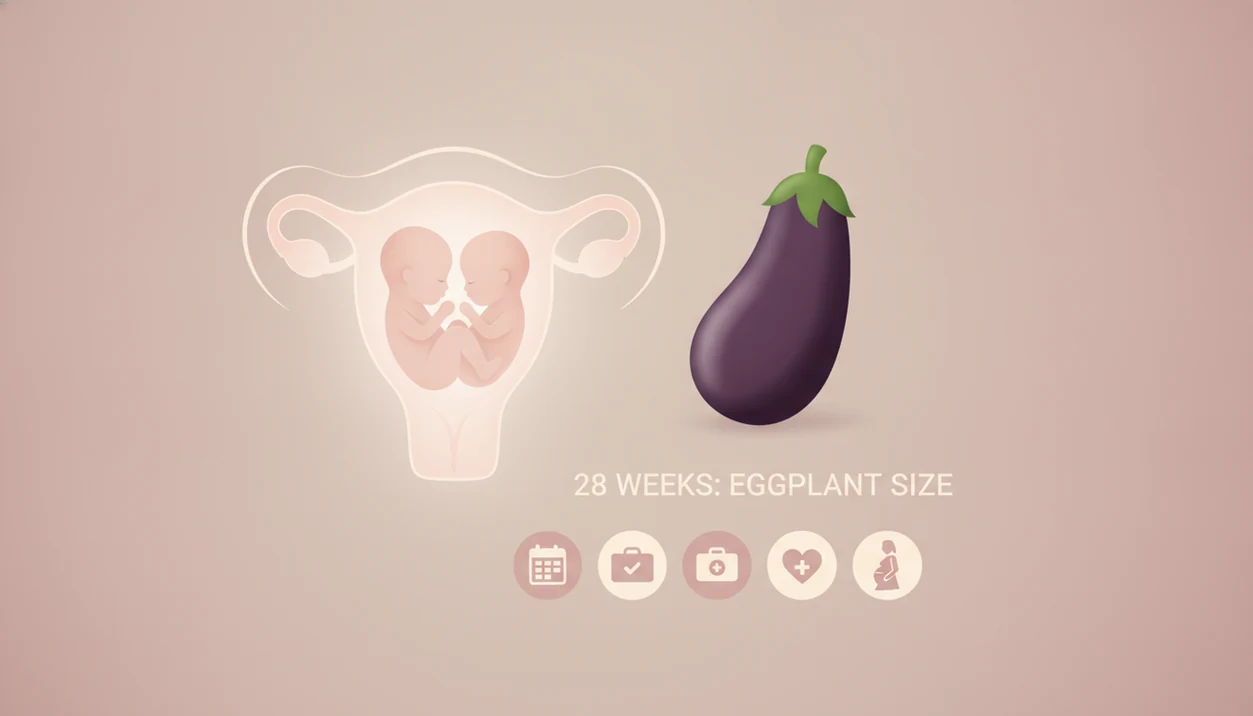
At 28 weeks pregnant, your baby is about the size of a large eggplant, and the main takeaway is that the third trimester is beginning with stronger movement, maturing lungs, and more practical prenatal planning.
- Baby size: about 14.8 inches head to heel and around 2.2 pounds, on average
- Symptoms: heartburn, back pain, leg cramps, Braxton Hicks contractions, mild swelling, insomnia, shortness of breath
- Appointments: visits may become more frequent; Rh immune globulin, Tdap timing, glucose screening follow-up, and kick count guidance may be discussed
- Ultrasound: not always routine this week, but may be used to check growth, fluid, placenta, or position if clinically indicated
Week 28 at a Glance
| Topic | Week 28 |
|---|---|
| Baby size | About 14.8 inches long and around 2.2 pounds, similar to a large eggplant |
| Ultrasound | May be ordered for growth, fluid, placenta, or fetal position, but is not always routine |
| Symptoms | Heartburn, back pain, leg cramps, Braxton Hicks, swelling, insomnia, and shortness of breath |
| Appointments | Prenatal visits may shift toward every two weeks depending on your care plan |
| Key milestone | The third trimester is beginning in many pregnancy references, with movement tracking becoming more important |
TL;DR
At 28 weeks pregnant, your baby is about the size of a large eggplant and is gaining fat while the brain, lungs, and movement patterns continue to mature. This week often brings third-trimester planning, more noticeable symptoms, and closer attention to fetal movement.
- Common symptoms include heartburn, back pain, leg cramps, mild swelling, insomnia, and Braxton Hicks contractions.
- Many clinicians discuss kick counts or movement awareness around this stage.
- Appointments may include Rh immune globulin if needed, Tdap timing, and glucose screening follow-up.
What 28 weeks pregnant means
At 28 weeks pregnant, you are usually 28 weeks and 0 days through 28 weeks and 6 days from the first day of your last menstrual period. If you are unsure about dating, a due date calculator can help estimate your timeline, but your clinician’s dating based on ultrasound and menstrual history is the medical reference.
By 28 weeks gestation, implantation, early hCG changes, and the first gestational sac measurement are long behind you; care now focuses more on fetal growth, placenta function, movement patterns, and third-trimester planning. Being pregnant 28 weeks can feel exciting and overwhelming at the same time, especially as birth starts to feel more real.
Baby size and development at week 28
During week 28, a baby is commonly estimated at about 14.8 inches from head to heel and around 2.2 pounds, similar in size to a large eggplant. Individual growth varies, but development this week centers on rapid brain growth, lung maturation, stronger muscles, more fat storage, and increasingly organized sleep-wake cycles.
Your baby’s eyes can open and close, and some babies respond to light, sound, and familiar voices. The lungs are still immature, but they are producing surfactant, a substance that helps air sacs stay open after birth, while the placenta continues supporting oxygen and nutrient transfer. You can compare this stage with the broader pregnancy week-by-week timeline.
Your body and symptoms at week 28
Symptoms at week 28 commonly include heartburn, back pain, pelvic pressure, leg cramps, constipation, hemorrhoids, mild swelling, insomnia, Braxton Hicks contractions, and shortness of breath. The uterus sits higher in the abdomen now, which can add rib pressure and make it harder to find a comfortable sleep position.
Many clinicians consider leaking colostrum, darker areolas, vivid dreams, and stronger emotional swings common at this stage. Mild swelling in the feet and ankles can happen, especially later in the day, but sudden swelling of the face or hands, severe headache, vision changes, or right upper abdominal pain should be discussed with a clinician promptly.
Appointments and tests around week 28
Around week 28, prenatal visits often become more frequent, depending on your pregnancy, local practice, and your OB-GYN or midwife’s care plan. A typical visit may include blood pressure, weight, urine testing if indicated, fundal height, fetal heartbeat, symptom review, and discussion of movement patterns, preterm labor symptoms, vaccines, and upcoming birth preferences.
Many clinicians recommend Rh immune globulin around this point if you have Rh-negative blood and your care plan calls for it. If glucose screening was done between 24 and 28 weeks, this may be when results are reviewed or follow-up testing is arranged. ACOG guidance commonly recommends Tdap vaccination during 27–36 weeks to help protect the newborn from pertussis, and your care team may also remind you to continue prenatal vitamins with folic acid unless advised otherwise.
Baby movement, kick counts, and warning signs
At this stage, many clinicians encourage learning your baby’s usual movement pattern because a noticeable change can be clinically important. Babies have active and quiet periods, but reduced movement, absent movement, or a pattern that feels unusual for your baby should be reported to your maternity unit or healthcare professional without delay.
A simple baby kick counter can help you notice patterns, but it should not replace medical assessment if you are worried. ACOG and NHS guidance commonly advise seeking prompt help for concerns about fetal movement rather than waiting to see if the pattern improves. Also call your clinician for vaginal bleeding, leaking fluid, regular painful contractions, fever, severe abdominal pain, or symptoms that feel sudden, intense, or unlike your usual pregnancy changes.
Preparing for the third trimester
This week, preparation becomes more practical: confirm upcoming appointments, review birth setting options, organize newborn essentials, and discuss support for recovery and feeding. A clear third-trimester plan can reduce last-minute stress while still leaving room for the unpredictable timing and needs of labor, birth, and postpartum recovery.
You may find it useful to work through a third trimester checklist and keep notes for your next appointment. If you want context from nearby weeks, review 27 weeks pregnant or look ahead to 29 weeks pregnant.
Limitations & Safety
General information about 28 weeks pregnant cannot determine whether a symptom is normal for your specific pregnancy. Use it to prepare questions, not to diagnose yourself or delay urgent care.
- Call your clinician or maternity unit right away for reduced fetal movement, vaginal bleeding, leaking fluid, regular painful contractions, or severe abdominal pain.
- Seek urgent advice for severe headache, vision changes, sudden swelling of the face or hands, chest pain, fainting, fever, or shortness of breath that is new or worsening.
- If you have a high-risk pregnancy, twins or multiples, prior preterm birth, hypertension, diabetes, placenta concerns, or growth concerns, follow your individualized care plan.
- Medication, supplement, vaccine, and travel decisions should be reviewed with a qualified healthcare professional.
Frequently Asked Questions
Is week 28 the third trimester?
Yes, in many pregnancy references, week 28 marks the start of the third trimester. Some systems define the third trimester as beginning at 27 weeks, so you may see small differences. Your clinician will use gestational age and your due date to guide care.
How big is my baby at 28 weeks?
At 28 weeks pregnant, a baby is often estimated at about 14.8 inches from head to heel and around 2.2 pounds. These are averages, and normal fetal size varies. Ultrasound measurements are interpreted alongside your full pregnancy history.
What symptoms are common at week 28?
Common symptoms include back pain, heartburn, constipation, leg cramps, pelvic pressure, mild swelling, insomnia, and Braxton Hicks contractions. You may also feel short of breath as the uterus rises. Sudden, severe, or unusual symptoms should be discussed with a healthcare professional.
What appointments or tests happen around this stage?
Prenatal visits may become more frequent around this point, often every two weeks depending on your care plan. Your visit may include blood pressure, fetal heartbeat, fundal height, and symptom review. Many clinicians also discuss Rh immune globulin if needed, Tdap vaccination timing, glucose screening follow-up, and fetal movement.
Should I count kicks at 28 weeks gestation?
Many clinicians recommend becoming familiar with your baby’s movement pattern around 28 weeks gestation. Kick counting can help you notice changes, but there is no single pattern that applies to every baby. If movement is reduced or feels unusual, contact your maternity unit or clinician promptly.
Is an ultrasound routine in week 28?
An ultrasound is not always routine this week. Many clinicians order one only if there is a reason to check growth, amniotic fluid, placenta location, fetal position, or another concern. Your OB-GYN or midwife can explain whether imaging is useful for your pregnancy.