 Pregnancy
31 Weeks Pregnant
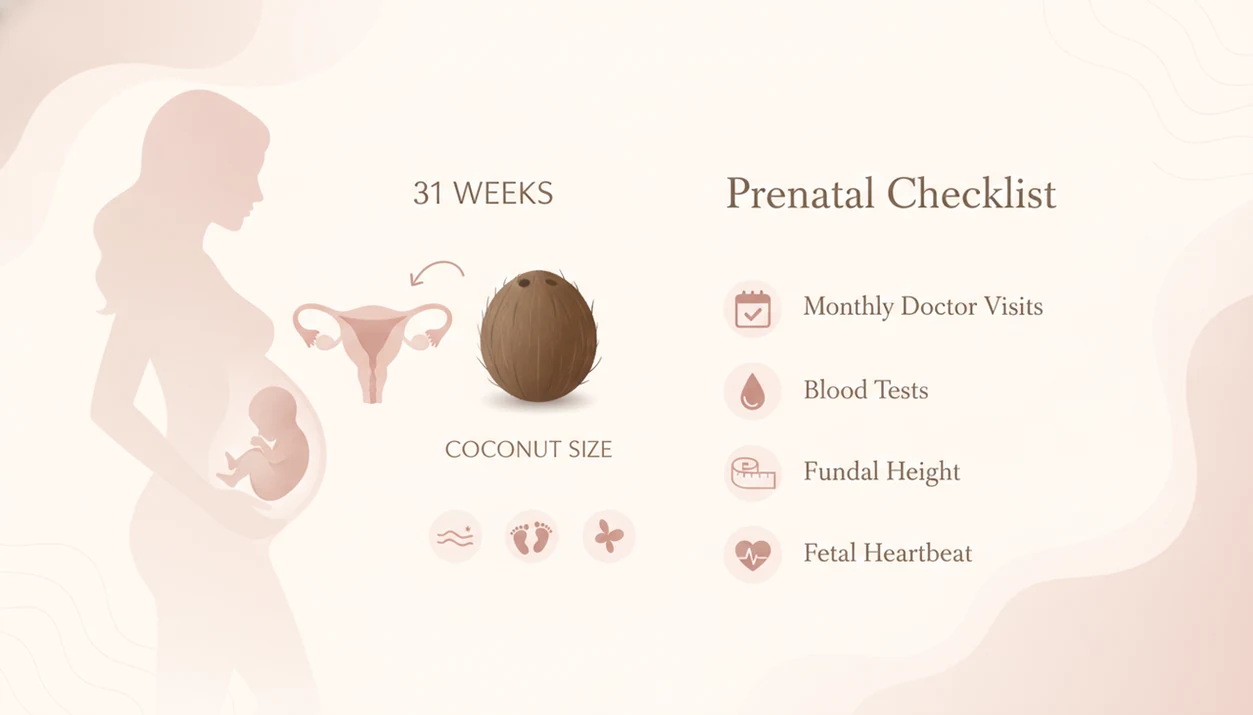
Quick Answers at Week 31
At 31 weeks pregnant, your baby is about 16 inches long and often 3 to 4 pounds, and the main takeaway is to monitor movement while keeping up with third-trimester prenatal care.
- Baby size: About 16 inches long and roughly 3 to 4 pounds, often compared with a coconut
- Symptoms: heartburn, back pain, pelvic pressure, swollen feet, leg cramps, constipation, shortness of breath, Braxton Hicks, sleep disruption
- Appointments: Routine visits may be every two weeks, with blood pressure, fetal heart rate, fundal height, symptom review, and movement discussion
- Ultrasound: Not always routine this week, but may be used for growth, fluid level, placenta position, or fetal presentation concerns
Week 31 at a Glance
| Topic | Week 31 |
|---|---|
| Baby size | About 16 inches long and roughly 3 to 4 pounds, with normal variation |
| Ultrasound | May be recommended if growth, fluid, placenta position, or presentation needs checking |
| Symptoms | Heartburn, pelvic pressure, back pain, Braxton Hicks, swelling, leg cramps, and sleep changes are common |
| Appointments | Many people have prenatal visits about every two weeks at this stage, depending on risk and local practice |
| Key milestone | Baby is gaining fat, practicing breathing movements, and showing more regular movement patterns |
TL;DR
At 31 weeks pregnant, your baby is roughly coconut-sized, gaining fat, practicing breathing movements, and becoming more responsive to sound, light, and routine. This week is mainly about tracking fetal movement, managing third-trimester symptoms, and staying aligned with your OB-GYN or midwife’s care plan.
- Baby is often about 16 inches long and around 3 to 4 pounds.
- Common symptoms include heartburn, back or pelvic discomfort, Braxton Hicks, swelling, and disrupted sleep.
- Call your provider for reduced movement, leaking fluid, bleeding, severe headache, vision changes, or regular painful contractions.
What Does 31 Weeks Pregnant Mean?
31 weeks pregnant means you are in the third trimester, about nine weeks from a 40-week due date. Pregnancy dating is counted from the first day of your last menstrual period, so 31 weeks gestation is usually about two weeks ahead of fetal age. Your provider may adjust timing based on ultrasound dating, cycle history, or clinical findings.
Care at this stage is very different from early pregnancy milestones such as implantation, a gestational sac, and rising hCG; now the focus is fetal growth, movement patterns, placenta function, and preparation for birth. If you are tracking your pregnancy week by week, you can compare this stage with 30 weeks pregnant, look ahead to 32 weeks pregnant, or explore the full pregnancy week-by-week guide.
How Is Your Baby Developing at Week 31?
At week 31, your baby’s brain, lungs, digestive system, and nervous system are still maturing while body fat builds under the skin. Many clinicians describe this as a period of steady finishing work rather than one single dramatic milestone. Breathing practice movements are common, but the lungs continue developing surfactant and strength before birth.
Your baby’s movements may feel more like rolls, stretches, and firm pushes than tiny flutters because space inside the uterus is tighter. ACOG and NHS guidance commonly emphasizes paying attention to your baby’s usual pattern and seeking advice if movement is reduced, weaker, or noticeably different. A baby kick counter can help you notice your baby’s normal rhythm.
How Big Is Your Baby at 31 Weeks?
At 31 weeks, many babies are roughly 16 inches long and weigh about 3 to 4 pounds. A common size comparison is a coconut or a small bunch of asparagus. These comparisons are only estimates because genetics, placental function, dating accuracy, and normal growth variation all influence size.
If your provider measures fundal height, it may be close to 31 centimeters, although a small range is typical. Ultrasound may be recommended if there are concerns about growth, fluid level, placenta position, or fetal presentation. Many clinicians interpret size by looking at trends over time rather than one single measurement.
What Symptoms Are Common During Week 31?
Symptoms at week 31 commonly include heartburn, shortness of breath, swollen feet, leg cramps, constipation, pelvic pressure, back pain, Braxton Hicks contractions, and interrupted sleep. Braxton Hicks may feel like irregular tightening that eases with rest, hydration, or position changes. Research suggests late-pregnancy discomfort often reflects a combination of uterine growth, posture changes, digestion changes, and increased pressure on blood vessels and nerves.
If you are pregnant 31 weeks and feeling excited one day but overwhelmed the next, that mixed reaction is understandable. Gentle movement, side-sleeping with pillows, smaller meals, hydration, and pelvic support may help some people. For relaxation and sleep support, you may find guided pregnancy meditation or simple body-scan routines useful.
What Appointments and Checks Happen Around Week 31?
A visit around week 31 may include blood pressure, weight, fundal height, fetal heart rate, symptom review, and urine testing when indicated. Many clinicians schedule prenatal visits every two weeks around this stage, though timing varies by pregnancy, risk factors, and local practice. Your OB-GYN, midwife, or maternity team may also discuss fetal movement, vaccines, anemia follow-up, birth preferences, and warning signs.
Continue prenatal vitamins as directed, including folic acid or iron if your clinician has recommended them. If your due date feels uncertain or you want to review your timeline, a due date calculator can estimate dates, but your clinician’s dating plan is more reliable. High-risk pregnancies, twins, growth concerns, hypertension, diabetes, or reduced movement may require extra monitoring such as ultrasound, nonstress testing, or specialist review.
How Can You Prepare for Birth at This Stage?
Week 31 is a practical time to prepare for birth without assuming labor is imminent. Consider reviewing your hospital bag, infant car seat plan, feeding preferences, postpartum support, and who to contact when labor begins. A practical third trimester checklist can help organize decisions before the final weeks feel more demanding.
Learning what early labor can feel like may reduce uncertainty later. Braxton Hicks contractions are usually irregular and do not progressively intensify, while labor contractions often become more patterned, longer, and stronger. You can read about stages of labor and use a contraction timer if your provider advises tracking contractions.
Limitations & Safety
Week-by-week pregnancy information can explain typical changes, but it cannot diagnose symptoms, predict labor timing, or replace individualized prenatal care. During week 31, contact your healthcare provider or local maternity unit if something feels wrong or your symptoms change suddenly.
- Seek urgent care for heavy bleeding, severe abdominal pain, chest pain, fainting, severe headache, vision changes, or sudden swelling of the face or hands.
- Call your provider promptly for reduced fetal movement, fluid leaking from the vagina, fever, painful urination, or persistent vomiting.
- Report contractions that become regular, painful, or frequent before 37 weeks, especially with pelvic pressure, backache, bleeding, or fluid leakage.
- Follow your own care plan if you have hypertension, diabetes, placenta concerns, multiples, a history of preterm birth, or any high-risk pregnancy condition.
Frequently Asked Questions
How many months is week 31 of pregnancy?
Week 31 is often described as the seventh month of pregnancy and is firmly in the third trimester. Month counting varies because calendar months are not exactly four weeks long, so clinicians usually track pregnancy by weeks of gestation.
What size is my baby at 31 weeks?
Many babies at this stage are about 16 inches long and weigh roughly 3 to 4 pounds. Size estimates vary, and ultrasound weight estimates can differ from actual birth weight, so your provider will interpret growth using trends and clinical context.
What symptoms are common at week 31?
Common symptoms include heartburn, back pain, pelvic pressure, leg cramps, swelling in the feet or ankles, constipation, shortness of breath, and sleep disruption. Braxton Hicks contractions may also occur, but regular painful contractions or symptoms that feel unusual should be discussed with your provider.
Should I count kicks during the third trimester?
Many clinicians recommend paying attention to your baby’s usual movement pattern in the third trimester. If movements are reduced, weaker, or noticeably different from normal, contact your maternity unit or healthcare provider rather than waiting until the next day.
What happens at a 31-week prenatal appointment?
A routine visit may include blood pressure, weight, fetal heart rate, fundal height, urine testing when indicated, and a review of symptoms and fetal movement. Your OB-GYN or midwife may also discuss vaccines, anemia, birth preparation, warning signs, and any need for additional monitoring.
Is an ultrasound routine at week 31?
An ultrasound is not always routine at this stage in an uncomplicated pregnancy. Your clinician may recommend one if there are questions about fetal growth, amniotic fluid, placenta position, baby’s presentation, twins, or reduced movement.