 Pregnancy
30 Weeks Pregnant
Quick Answers at Week 30
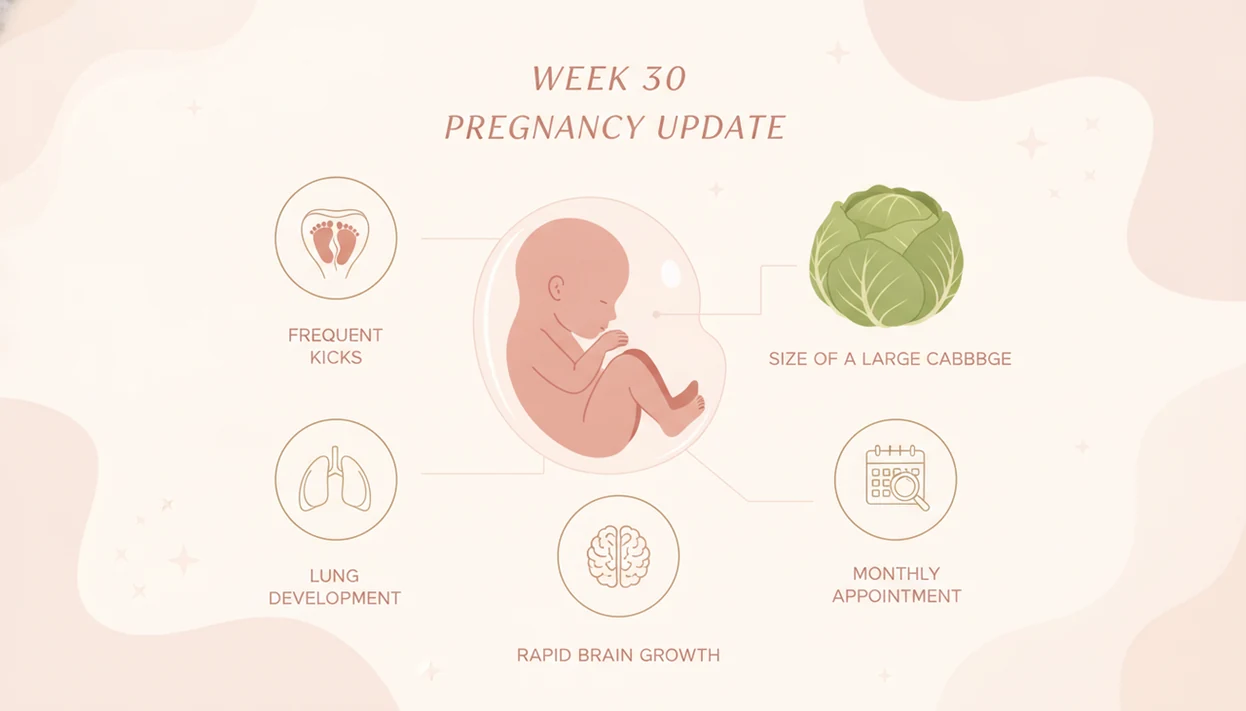
At 30 weeks pregnant, your baby is about the size of a large cabbage, and the main focus is third-trimester growth, stronger movement patterns, and keeping up with prenatal care.
- Baby size: about 15.5 to 16 inches head to heel and roughly 2.9 to 3.3 pounds
- Symptoms: heartburn, constipation, pelvic pressure, back or hip pain, leg cramps, swollen feet, Braxton Hicks, sleep changes
- Appointments: prenatal visits are often about every two weeks, depending on your OB-GYN or midwife’s plan
- Ultrasound: not always routine this week, but may be used to check growth, fluid, placenta, or position if clinically indicated
Week 30 at a Glance
| Topic | Week 30 |
|---|---|
| Baby size | Often compared with a large cabbage or small winter squash; about 15.5 to 16 inches and 2.9 to 3.3 pounds |
| Ultrasound | Usually performed only when your clinician wants more information about growth, amniotic fluid, placenta, or fetal position |
| Symptoms | Heartburn, pelvic pressure, back pain, swelling, leg cramps, Braxton Hicks, and more frequent urination are common |
| Appointments | Many clinicians schedule prenatal visits about every two weeks in this part of trimester three |
| Key milestone | Baby is gaining fat, practicing breathing movements, and showing more organized sleep and activity cycles |
TL;DR
At 30 weeks pregnant, your baby is growing quickly, gaining fat, and making more mature breathing and movement patterns. Your priorities are noticing your baby’s usual movement, managing third-trimester symptoms, and staying aligned with your prenatal care schedule.
- Baby is roughly large-cabbage size, though normal measurements vary.
- Symptoms at week 30 often include heartburn, swelling, pelvic pressure, Braxton Hicks, and sleep disruption.
- Call your care team for reduced movement, bleeding, leaking fluid, severe pain, or regular contractions before term.
What Does 30 Weeks Pregnant Mean?
At 30 weeks pregnant, you are in the third trimester, about 28 weeks after conception, with roughly 10 weeks until a 40-week due date. Clinicians date pregnancy from the first day of the last menstrual period, so this stage is counted differently from conception, implantation, early hCG rise, or the first gestational sac seen in early pregnancy.
If your dating was adjusted by ultrasound or your OB-GYN/midwife, use that medical due date for appointments and care decisions. Being pregnant 30 weeks can feel exciting and a little overwhelming at the same time, especially as birth starts to feel more real.
How Big Is Your Baby and What Is Developing at Week 30?
At week 30, many babies measure about 15.5 to 16 inches from head to heel and weigh roughly 2.9 to 3.3 pounds, with a common size comparison being a large cabbage or small winter squash. Research suggests this part of trimester three is an important period for brain folding, lung maturation, fat storage, and more organized sleep and active movement cycles.
Your baby may stretch, roll, hiccup, jab, or have quieter sleep periods rather than move constantly. Many clinicians recommend paying attention to your baby’s usual daily pattern; the baby kick counter can help you track movement if your care team has asked you to do so.
Size comparisons are helpful for visualization, but fundal height, growth scans, fetal heart rate, placenta function, and your baby’s movement pattern give your clinician more meaningful information. If your timing feels confusing, a due date calculator can help you review the timeline, but it should not replace your assigned due date.
What Symptoms Are Common at Week 30?
Common symptoms at week 30 include heartburn, constipation, pelvic pressure, back or hip pain, leg cramps, shortness of breath, swollen feet, more frequent urination, sleep changes, and Braxton Hicks contractions. Many clinicians describe Braxton Hicks as irregular tightening that often eases with rest, hydration, or a change in position.
At this stage, your belly is growing quickly, your center of gravity is shifting, and the uterus can press on the bladder, diaphragm, and digestive tract. Gentle movement, hydration, supportive pillows, smaller meals, and pregnancy-safe stretching may help, while prenatal vitamins with folic acid should be taken as directed by your care team.
Symptoms at week 30 should still be discussed if they feel severe, persistent, or clearly different from your normal. ACOG and NHS guidance commonly emphasizes contacting a maternity unit or clinician promptly for reduced fetal movement, severe headache, vision changes, heavy swelling with concerning symptoms, bleeding, leaking fluid, or regular painful contractions.
What Happens at Appointments and Ultrasound Around Week 30?
Around week 30, prenatal appointments are often scheduled about every two weeks, and ultrasound is usually done only when your clinician wants extra information about growth, amniotic fluid, placenta location, or fetal position. A typical visit may include blood pressure, weight, fundal height, fetal heart rate, symptom review, and urine testing if clinically indicated.
Your OB-GYN, midwife, or maternity team may ask about movement patterns, contractions, swelling, headaches, vision changes, vaccines, test results, and signs of preterm labor. If you are organizing the next few visits, the third trimester checklist can help you keep practical tasks in one place without replacing individualized medical instructions.
How Can You Prepare for the Weeks Ahead?
During week 30, preparation usually means making steady plans for birth, recovery, feeding, transportation, and support rather than trying to finish everything at once. Many clinicians encourage gradual planning because fatigue, appointments, and symptoms can make long to-do lists harder in late pregnancy.
You can review the broader timeline with pregnancy week-by-week, look ahead to 31 weeks pregnant, or compare with 29 weeks pregnant. For practical labor planning, see how to prepare for labor.
Useful next steps may include confirming your birth location, discussing infant feeding questions, checking childcare plans, learning warning signs, and packing a simple hospital bag. If you take medications or supplements, ask your clinician what to continue and what to avoid as early pregnancy week 30 becomes the later third trimester.
When Should You Call Your Care Team?
Call your maternity unit, clinician, or local emergency number promptly if you notice reduced fetal movement, vaginal bleeding, leaking fluid, regular painful contractions, severe abdominal pain, fever, chest pain, fainting, or severe headache with vision changes. These symptoms can be time-sensitive in the third trimester and need individualized assessment.
If you are unsure whether tightening is practice contractions or something more regular, timing the pattern can be useful information to share. A contraction timer can record frequency and duration, but your medical team should determine the next step.
Limitations & Safety
- This page is educational and is not a diagnosis, treatment plan, or substitute for prenatal care.
- Normal measurements and symptoms vary; your clinician’s assessment and your pregnancy history matter most.
- Seek urgent medical advice for reduced fetal movement, bleeding, leaking fluid, severe pain, severe headache, vision changes, or regular contractions before term.
- If you have a high-risk pregnancy, multiples, hypertension, diabetes, placenta concerns, or prior preterm birth, follow your care team’s specific instructions.
Frequently Asked Questions
How many months is 30 weeks pregnant?
Week 30 is often described as about seven months, but month counting is approximate because calendar months vary. Many clinicians track pregnancy by weeks of gestation because it is more precise for prenatal care, testing, and due-date planning.
What position is the baby in at 30 weeks?
At this stage, babies may be head-down, breech, sideways, or still changing position. Many clinicians note that there is still time for position changes before birth, so a non-head-down position now does not always predict delivery position.
Is it normal to have Braxton Hicks contractions during week 30?
Yes, Braxton Hicks contractions can be normal during week 30 and often feel like irregular tightening that settles with rest, hydration, or position changes. Call your care team if contractions become regular, painful, increasingly close together, or happen with bleeding, fluid leakage, or pelvic pressure.
How often should my baby move at 30 weeks pregnant?
You should generally notice your baby’s usual daily movement pattern by this point. ACOG and NHS-style guidance commonly advises contacting your maternity unit or clinician promptly if movements are reduced, absent, or clearly different from your baby’s normal pattern.
What happens at a 30-week prenatal appointment?
A 30-week visit may include blood pressure, weight, fetal heartbeat, fundal height, symptom review, and urine testing if clinically indicated. Your OB-GYN or midwife may also discuss fetal movement, preterm labor warning signs, vaccines, test results, and your next appointment schedule.
Do I need an ultrasound at 30 weeks gestation?
Not always; ultrasound at 30 weeks gestation is usually based on your care plan or a specific clinical question. Many clinicians use it when they need to check growth, amniotic fluid, placenta position, or fetal presentation.