 Pregnancy
37 Weeks Pregnant: What to Expect This Week
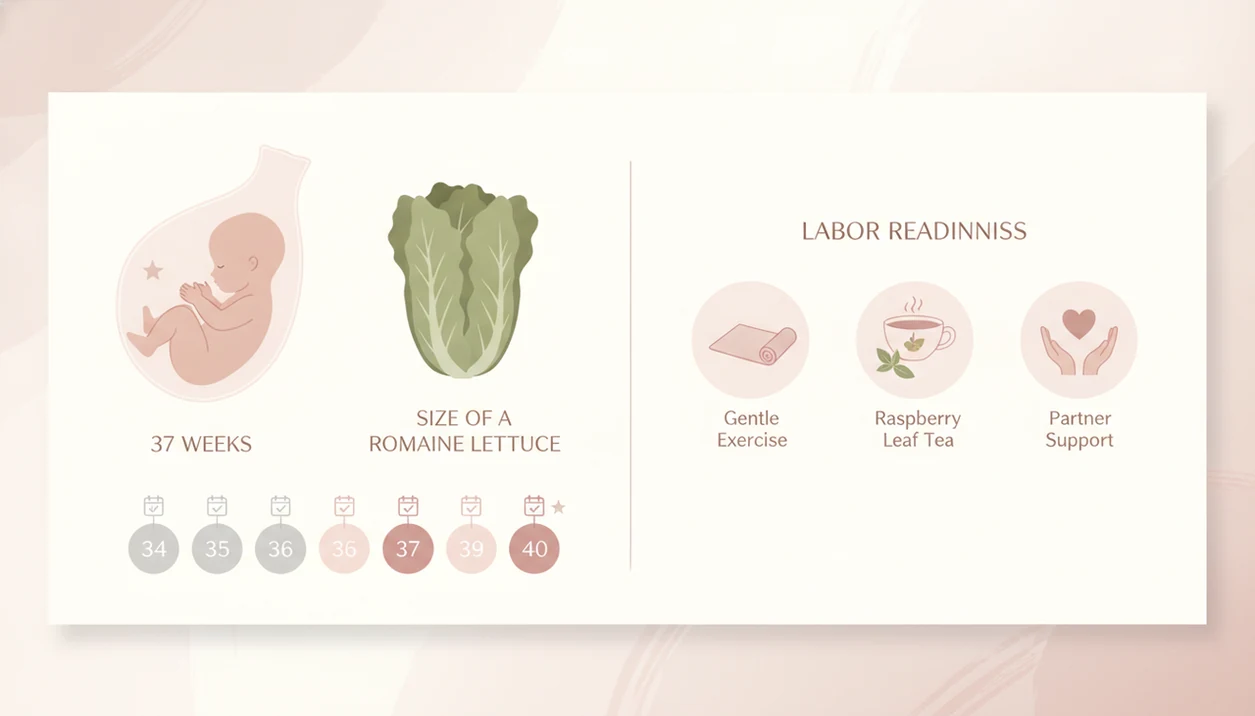
Quick Answers at Week 37
At 37 weeks pregnant, your baby is early term and often about 19 inches long and 6 to 7 pounds, with labor planning and movement awareness becoming especially important.
- Baby size: About 19 inches head to heel and around 6 to 7 pounds, with normal variation
- Symptoms: pelvic pressure, frequent urination, backache, heartburn, swelling, Braxton Hicks contractions, thicker discharge, sleep disruption
- Appointments: Usually weekly, with blood pressure, urine, fetal heartbeat, position check, symptoms, and Group B strep results reviewed
- Ultrasound: Not routine for everyone this week, but may be used if your OB-GYN or midwife wants to check growth, fluid, placenta, or position
Week 37 at a Glance
| Topic | Week 37 |
|---|---|
| Baby size | Often about 19 inches long and around 6 to 7 pounds |
| Ultrasound | Usually only if medically indicated, such as checking growth, fluid, placenta, or position |
| Symptoms | Pelvic pressure, Braxton Hicks, frequent urination, swelling, discharge changes, and poor sleep |
| Appointments | Weekly prenatal visit with blood pressure, urine, heartbeat, position, and Group B strep discussion |
| Key milestone | Baby is considered early term, while brain, lung, and fat development continue |
TL;DR
Week 37 is early term, not full term, and your baby is commonly around romaine-lettuce size at about 19 inches and 6 to 7 pounds. Keep tracking familiar movement patterns, attend weekly visits, and call your care team promptly for warning signs.
- Symptoms at week 37 often include pelvic pressure, Braxton Hicks contractions, swelling, discharge changes, and sleep disruption.
- Your OB-GYN or midwife may review Group B strep results, baby position, labor signs, and birth plans.
- Leaking fluid, heavy bleeding, severe headache, vision changes, fever, or reduced fetal movement needs medical guidance right away.
What does 37 weeks pregnant mean?
Being 37 weeks pregnant means you are 37 weeks from the first day of your last menstrual period and near the end of the third trimester. ACOG terminology commonly describes births from 37 weeks 0 days through 38 weeks 6 days as early term, while full term begins later.
At 37 weeks gestation, birth may feel close, but your due date is still an estimate rather than a deadline. Earlier milestones such as implantation, rising hCG, and seeing a gestational sac are now long behind you, and the focus has shifted to fetal movement, placenta function, labor readiness, and safe timing of birth.
You can compare this stage with the full pregnancy week-by-week guide or check how your estimated date is calculated with the due date calculator. If you were just 36 weeks pregnant, this week may feel similar but closer to final birth planning.
How is baby developing at week 37?
At week 37, your baby is practicing breathing movements, swallowing amniotic fluid, blinking, gripping, and responding to sound and light. Many clinicians note that the lungs are usually much more mature than earlier in pregnancy, but the brain, nervous system, and body fat continue important growth through the final weeks.
- Baby may be head-down, although position can vary.
- Lanugo and vernix may continue to decrease, though some may remain at birth.
- Daily movement patterns should remain familiar, even if movements feel more like rolls, stretches, or pushes.
- If movement seems reduced, use a baby kick counter and contact your care team promptly.
How big is baby at 37 weeks?
At 37 weeks, a typical baby is roughly the size of a bunch of Swiss chard or romaine lettuce, measuring about 19 inches from head to heel and weighing around 6 to 7 pounds. These numbers are averages, and healthy babies can be smaller or larger depending on genetics, placenta function, and dating accuracy.
Your clinician may estimate size by fundal height, palpation, or ultrasound when medically indicated, but late-pregnancy weight estimates are not exact. Looking ahead to 38 weeks pregnant, many babies continue gaining ounces each week.
What symptoms are common at week 37?
Common symptoms at week 37 include pelvic pressure, frequent urination, backache, heartburn, swollen feet or hands, thicker vaginal discharge, and irregular Braxton Hicks contractions. Lightening may make breathing easier if baby drops lower, but it can also increase pressure in the pelvis, hips, bladder, and rectum.
- Braxton Hicks: Often irregular and may ease with rest, fluids, or position changes.
- Mucus plug changes: Thick mucus or a small amount of blood-tinged discharge can happen, but heavy bleeding is not normal.
- Swelling: Mild swelling can be common, but sudden swelling with headache or vision changes needs urgent medical advice.
- Sleep changes: Discomfort, urination, and anticipation often make sleep more fragmented.
It is normal to feel excited, impatient, or overwhelmed as early pregnancy week 37 becomes a real countdown rather than an abstract date.
What happens at appointments during week 37?
Appointments during week 37 are usually weekly prenatal visits that check your health, baby’s status, and readiness for labor. Your OB-GYN or midwife may check blood pressure, weight, urine, fetal heartbeat, fundal height, baby position, symptoms, and Group B strep results if your swab was done around 36 to 37 weeks.
Many clinicians also review when to call, whether cervical checks are useful for your situation, and any plans for induction, cesarean birth, or extra monitoring. Cervical dilation or effacement at this visit can be interesting, but it does not reliably predict the exact day labor will begin.
Unless your care team advises otherwise, continue prenatal vitamins; folic acid remains part of most prenatal formulas even though its most time-sensitive role was earlier in development.
When should you call your care team?
You should call your care team promptly for regular painful contractions, leaking fluid, heavy bleeding, fever, severe headache, vision changes, sudden swelling, severe abdominal pain, or reduced fetal movement. ACOG and NHS guidance commonly emphasize that a noticeable change in fetal movement should be assessed rather than watched for a long time at home.
It is reasonable to know your hospital or birth center plan, keep your bag accessible, and understand the instructions specific to your pregnancy. A contraction timer can help you track contraction length and spacing, but symptoms and your medical history matter too.
Review practical guidance on when to go to the hospital before labor becomes intense, especially if you live far from your birth location or have a high-risk condition.
Limitations & Safety
This page is educational and cannot replace individualized advice from your obstetrician, midwife, or emergency services. Your care plan may differ based on your symptoms, exam findings, placenta health, fetal growth, and medical history.
- Call your care team urgently for decreased fetal movement, heavy bleeding, leaking fluid, severe abdominal pain, fever, severe headache, vision changes, chest pain, or sudden swelling.
- If you have high blood pressure, diabetes, placenta concerns, twins, a prior cesarean, or any high-risk condition, your 37-week plan may be different.
- Do not wait for an app or article to confirm labor concerns if your instincts or symptoms suggest something is wrong.
- Ask your OB-GYN or midwife which hospital entrance to use, when to call before arriving, and whether any special instructions apply to you.
Frequently Asked Questions
Is 37 weeks pregnant full term?
No. ACOG terminology commonly classifies 37 weeks 0 days through 38 weeks 6 days as early term, while full term begins at 39 weeks. If pregnancy remains healthy, babies can still benefit from additional brain, lung, and fat development.
How big is my baby at 37 weeks pregnant?
A typical baby at this stage is about 19 inches long and weighs around 6 to 7 pounds. Healthy measurements vary, and many clinicians caution that late-pregnancy size estimates are approximate.
What symptoms are common at 37 weeks pregnant?
Common symptoms include pelvic pressure, frequent urination, backache, heartburn, swollen feet, irregular Braxton Hicks contractions, and thicker discharge. Contact your OB-GYN or midwife if symptoms are severe, sudden, or linked with bleeding, leaking fluid, vision changes, or reduced movement.
What happens at a 37-week prenatal appointment?
A 37-week visit often includes blood pressure, urine testing, fetal heartbeat, fundal height, baby position, and a review of symptoms. Your clinician may also discuss Group B strep results, labor signs, cervical checks, and your birth plan.
Should I track baby movements at 37 weeks?
Yes. Your baby should still move regularly, although movements may feel more like rolls, stretches, or pushes because space is tighter. NHS-style guidance commonly advises contacting your care team promptly if movement is reduced or different from the usual pattern.
Do I need an ultrasound during week 37?
Not everyone needs an ultrasound this week. Your clinician may recommend one if there are questions about growth, amniotic fluid, placenta location or function, baby position, or another medical concern.
Can labor start at 37 weeks?
Yes, labor can start during week 37, and this is considered early term. Call your care team according to their instructions if you have regular painful contractions, leaking fluid, bleeding, reduced fetal movement, or symptoms that feel urgent.