 Pregnancy
29 Weeks Pregnant: What to Expect This Week
Quick Answers at Week 29
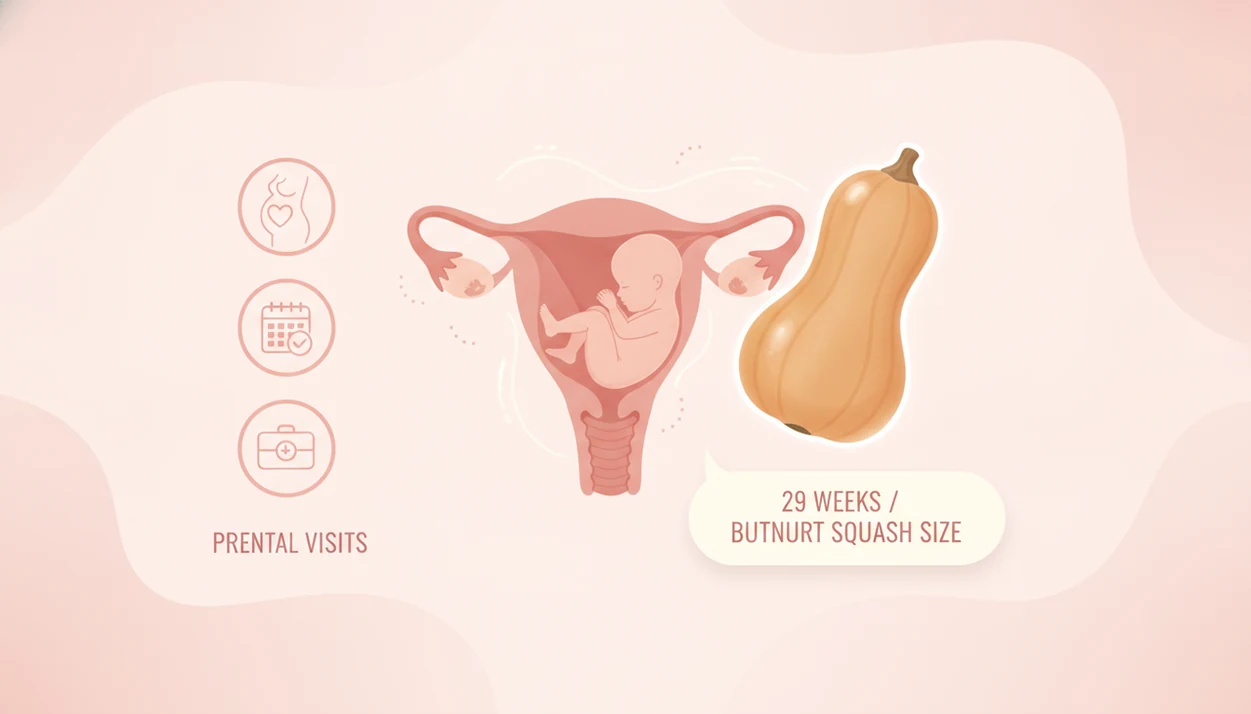
At 29 weeks pregnant, your baby is about the size of a butternut squash and the main takeaway is steady third-trimester growth, stronger movement patterns, and closer prenatal monitoring.
- Baby size: about 15 to 16 inches long and around 2.5 to 3 pounds
- Symptoms: heartburn, backache, pelvic pressure, leg cramps, mild swelling, frequent urination, sleep disruption, Braxton Hicks contractions
- Appointments: prenatal visits may include blood pressure, urine testing, fundal height, fetal heartbeat, symptom review, vaccine discussion, and movement guidance
- Ultrasound: not always routine this week, but may be used if your OB-GYN or midwife wants to check growth, fluid, placenta position, or wellbeing
Week 29 at a Glance
| Topic | Week 29 |
|---|---|
| Baby size | Often compared with a butternut squash; roughly 15 to 16 inches and about 2.5 to 3 pounds |
| Development | Brain growth, lung maturation, body fat gain, stronger muscles, and more organized sleep-wake cycles continue |
| Ultrasound | Usually done only if clinically indicated, such as growth, fluid, placenta, or movement concerns |
| Symptoms | Heartburn, constipation, back or pelvic pain, swelling, leg cramps, shortness of breath, sleep changes, and Braxton Hicks |
| Appointments | Your clinician may check blood pressure, urine, weight, fundal height, fetal heartbeat, symptoms, and fetal movement |
| Key milestone | This is early third trimester, when recognizing your baby's usual movement pattern becomes especially practical |
TL;DR
Week 29 is the third trimester, with about 11 weeks until your estimated due date, and your baby is roughly butternut squash-sized. The main priorities are noticing your baby's usual movements, managing third-trimester symptoms, and keeping prenatal care on track.
- Baby development focuses on brain growth, lung maturation, stronger movements, and building body fat.
- Common symptoms include heartburn, backache, leg cramps, swelling, frequent urination, and disrupted sleep.
- Call your OB-GYN, midwife, or maternity unit promptly for decreased movement, bleeding, leaking fluid, severe pain, or regular painful contractions.
What does week 29 of pregnancy mean?
Week 29 means you are in the third trimester, dated from the first day of your last menstrual period, with about 11 weeks until your estimated due date. Pregnancy dating is not based on the day of conception for most people, which is why someone can be pregnant 29 weeks even though fertilization happened later than the LMP-based count.
Earlier pregnancy markers such as implantation, rising hCG, and seeing a gestational sac are no longer the main focus at this stage; clinicians now pay more attention to fetal growth, movement, blood pressure, symptoms, placenta-related concerns, and preparation for birth. It is normal to feel excited and a little unsettled as appointments, body changes, and planning start to feel more real.
If you want to check timing across the whole journey, use the pregnancy week-by-week guide or compare nearby weeks: 28 weeks pregnant and 30 weeks pregnant.
How big is your baby at week 29?
At week 29, your baby is commonly about 15 to 16 inches from head to heel and weighs around 2.5 to 3 pounds, often compared with a butternut squash. Size ranges vary, so one measurement alone does not define health; many clinicians look at growth trends, fundal height, ultrasound findings if needed, and overall wellbeing.
Development during 29 weeks gestation centers on rapid brain growth, continued lung maturation, strengthening muscles, and gaining body fat under the skin. The lungs are still maturing, the bones are hardening, and the skull remains flexible for birth.
Movements may feel like kicks, rolls, stretches, nudges, or rhythmic hiccups. The important comparison is your baby's usual pattern, not a universal number that applies to every pregnancy; if your clinician recommends tracking, a baby kick counter can help you notice and describe changes clearly.
What symptoms are common during week 29?
Symptoms at week 29 commonly include heartburn, constipation, hemorrhoids, back or pelvic pain, leg cramps, mild swelling, shortness of breath, frequent urination, vivid dreams, and trouble sleeping. Braxton Hicks contractions may feel like irregular tightening that eases with rest, hydration, or a change in position.
Your growing uterus can press on the stomach, ribs, bladder, and diaphragm, which helps explain many third-trimester discomforts. Many clinicians suggest practical measures such as smaller meals, side-sleeping with pillow support, slow position changes, hydration, gentle movement if approved, and continuing prenatal vitamins as directed; folic acid remains part of many prenatal formulations even though neural tube development happened much earlier.
Some symptoms should not be brushed off as routine discomfort. Persistent headache, vision changes, sudden swelling of the face or hands, severe abdominal pain, chest pain, fainting, fever, leaking fluid, bleeding, or regular painful contractions need prompt medical guidance.
What appointments and tests may happen this week?
A prenatal appointment around this week may include blood pressure, weight, urine testing, fundal height, fetal heartbeat, and a review of symptoms and fetal movement. Your OB-GYN or midwife may also discuss glucose screening results, anemia testing, Rh immune globulin if you are Rh negative, and whether your visit schedule should become more frequent.
ACOG guidance commonly recommends Tdap vaccination between 27 and 36 weeks of each pregnancy, while NHS guidance commonly recommends the whooping cough vaccine during pregnancy, ideally before week 32 when possible. Your care team may tailor vaccine, medication, supplement, work, travel, and exercise advice to your health history.
This is also a useful time to confirm your estimated due date with a due date calculator, review birth preferences, and organize third-trimester tasks. The third trimester checklist and guide on how to prepare for labor can help you plan without assuming labor will happen on an exact date.
Do you need an ultrasound at week 29?
A routine ultrasound is not always scheduled at week 29, but your clinician may order one to check growth, amniotic fluid, placenta position, cervical concerns, or fetal wellbeing. Ultrasound decisions depend on your medical history, symptoms, prior scan findings, and whether your pregnancy is considered higher risk.
If an ultrasound is done, the report may include estimated fetal weight, position, fluid assessment, and other measurements that are interpreted as trends rather than perfect predictions. Many clinicians combine imaging with your blood pressure, urine results, fundal height, fetal heartbeat, and movement history to decide whether any follow-up is needed.
Limitations & Safety
This information is educational and is not a diagnosis, treatment plan, or substitute for care from your doctor, midwife, OB-GYN, maternity unit, or emergency services.
- Contact your maternity unit or clinician promptly for decreased fetal movement, vaginal bleeding, leaking fluid, severe abdominal pain, regular painful contractions, fever, fainting, or trauma.
- Seek urgent advice for symptoms that may suggest preeclampsia, such as severe headache, vision changes, sudden swelling of the face or hands, chest pain, or shortness of breath.
- If you have a high-risk pregnancy, twins or multiples, diabetes, hypertension, placenta concerns, prior preterm birth, fetal growth concerns, or other complications, your monitoring and appointment schedule may differ.
- Medication, supplement, exercise, travel, and work decisions should be individualized with your healthcare professional.
Frequently Asked Questions
How many months is 29 weeks pregnant?
At 29 weeks pregnant, many clinicians describe you as being in the seventh month of pregnancy and in the third trimester. Month counts vary because calendar months are longer than exactly four weeks, so week-by-week dating is usually more precise.
How big is my baby at 29 weeks pregnant?
At 29 weeks gestation, many babies measure about 15 to 16 inches from head to heel and weigh around 2.5 to 3 pounds. A butternut squash is a common size comparison, but your clinician will focus more on growth patterns than one isolated estimate.
What should baby movement feel like at week 29?
Movement may feel like kicks, rolls, swishes, stretches, nudges, or hiccups. ACOG and NHS-style guidance commonly emphasizes knowing your baby's usual pattern and seeking prompt advice if movements are reduced, absent, or noticeably different.
Are Braxton Hicks contractions normal during week 29?
Irregular, mild tightening that eases with rest, hydration, or changing position can be Braxton Hicks. Call your clinician if contractions become regular or painful, or if they come with bleeding, fluid leakage, pelvic pressure, back pain, or concern about preterm labor.
What happens at a 29-week prenatal appointment?
A visit around this time often includes blood pressure, urine testing, weight, fundal height, fetal heartbeat, and a symptom review. Your OB-GYN or midwife may also discuss glucose screening, anemia, Rh status, Tdap or whooping cough vaccination, and fetal movement.
Is an ultrasound normal at week 29?
An ultrasound is not always routine this week, but it can be normal if your care team wants more information. Many clinicians use ultrasound to assess growth, amniotic fluid, placenta position, fetal position, or wellbeing when there is a medical reason.