 Pregnancy
32 Weeks Pregnant: Baby Development, Symptoms, Size, and Appointments
Quick Answers at Week 32
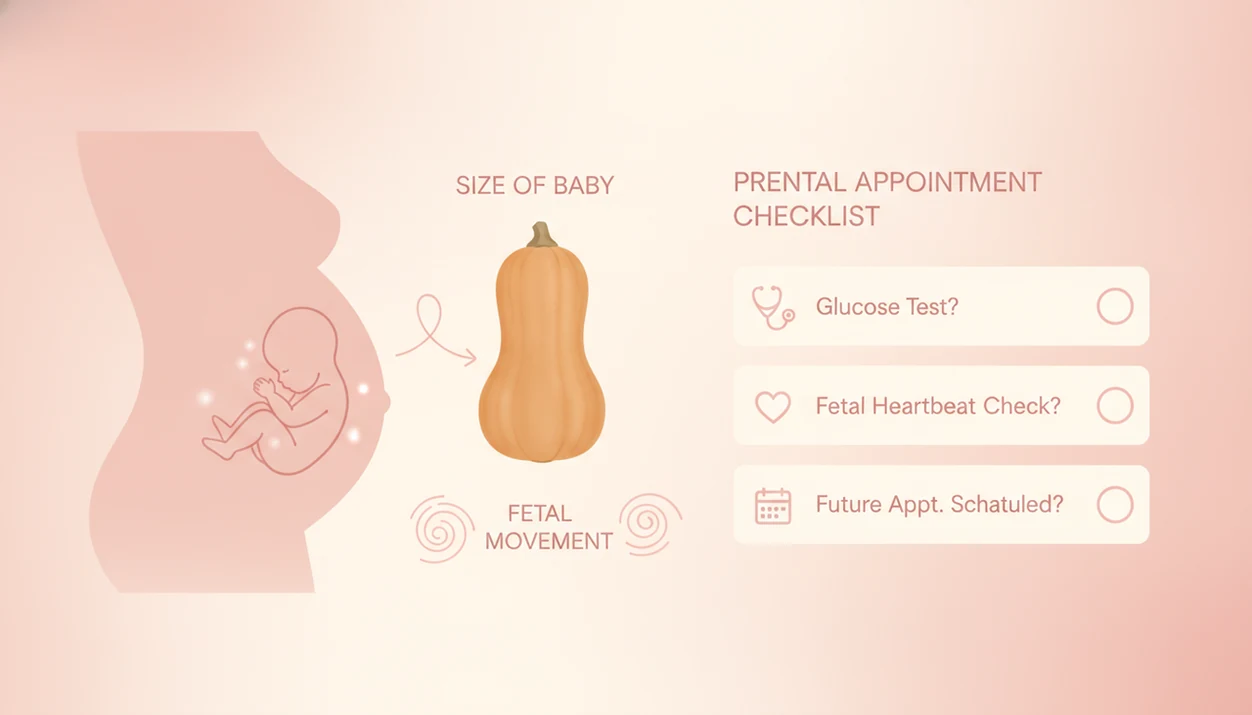
At 32 weeks pregnant, your baby is about the size of a squash and is continuing to gain weight, mature the lungs and brain, and settle into stronger movement patterns.
- Baby size: about 16.5 to 17 inches long and roughly 3.5 to 4.5 pounds
- Symptoms: Braxton Hicks contractions, pelvic pressure, heartburn, shortness of breath, swelling, backache, sleep trouble
- Appointments: prenatal visits are often every 2 weeks, with blood pressure, fetal heartbeat, fundal height, symptoms, and movement reviewed
- Ultrasound: not always routine this week, but may be used to check growth, fluid level, placenta concerns, or baby’s position
Week 32 at a Glance
| Topic | Week 32 |
|---|---|
| Baby size | Commonly compared with a squash; about 16.5 to 17 inches and 3.5 to 4.5 pounds |
| Development | Lungs, brain, digestion, temperature control, and fat stores continue to mature |
| Symptoms | Braxton Hicks contractions, heartburn, swelling, pelvic pressure, shortness of breath, and sleep changes are common |
| Appointments | Many clinicians schedule prenatal visits about every 2 weeks at this stage, adjusted for individual risk |
| Ultrasound | May be recommended for growth, fluid, placenta, or position checks, but is not required for every pregnancy |
| Key milestone | Baby is building fat and practicing breathing movements while the placenta continues supporting oxygen and nutrients |
TL;DR
At week 32, your baby is roughly squash-sized and still gaining fat while the lungs and brain mature. Most people are having more frequent third-trimester checkups and should call promptly for decreased movement, leaking fluid, bleeding, or regular painful contractions.
- Baby is often about 16.5 to 17 inches long and 3.5 to 4.5 pounds.
- Common symptoms include Braxton Hicks, pelvic pressure, heartburn, swelling, and sleep disruption.
- Ask your OB-GYN or midwife about movement patterns, preterm labor signs, vaccines or tests, and when visits become weekly.
What does 32 weeks pregnant mean?
Being 32 weeks pregnant means pregnancy is dated 32 weeks from the first day of your last menstrual period, and you are in the third trimester with about 8 weeks until a 40-week due date. In 32 weeks gestation, conception and implantation happened much earlier, and early markers such as rising hCG or seeing a gestational sac are usually no longer the main focus of care.
At this stage, the placenta continues to provide oxygen and nutrients while your baby gains fat, practices breathing movements, and prepares for life after birth. ACOG and NHS guidance commonly emphasize knowing your baby’s usual movement pattern in the third trimester and contacting a clinician if that pattern changes.
If you feel excited one moment and overwhelmed the next, that is a very human response to being close to birth while still managing day-to-day discomforts.
Baby development at week 32
At week 32, your baby’s lungs, brain, digestive system, temperature control, and fat stores are still maturing. Many clinicians describe this period as a time of rapid finishing work: the skin looks less translucent, bones continue hardening, and fingernails may be fully formed.
Your baby is practicing breathing movements by moving amniotic fluid in and out of the lungs, although oxygen still comes through the placenta. You may notice more recognizable sleep-wake cycles, stretches, rolls, hiccups, or stronger movement patterns during the day.
If you are tracking movement, try the baby kick counter to notice your baby’s usual pattern. A change from your baby’s normal activity is more important than comparing your counts with someone else’s pregnancy.
How big is baby at 32 weeks?
At 32 weeks, a baby is commonly about 16.5 to 17 inches from head to heel and roughly 3.5 to 4.5 pounds, often compared with a squash or jicama. These are averages, so your baby may measure smaller or larger and still be growing appropriately for your pregnancy.
From now until birth, weight gain remains a major focus as fat builds under the skin. Growth depends on factors such as genetics, placental function, fetal position, fluid level, and overall pregnancy health.
If your provider measures fundal height, it may be close to the number of weeks, give or take a couple of centimeters. Ultrasound may be recommended if growth, amniotic fluid, placenta location, or baby’s position needs a closer look.
Symptoms at week 32
Symptoms at week 32 commonly include Braxton Hicks contractions, backache, pelvic pressure, constipation, heartburn, leg cramps, swelling, shortness of breath, frequent urination, and trouble sleeping. These discomforts often reflect a larger uterus, higher blood volume, hormone-related ligament relaxation, and pressure on the bladder, lungs, stomach, and pelvis.
Braxton Hicks contractions are usually irregular, mild, and may ease with rest, hydration, or changing position. Contact your OB-GYN or midwife if contractions become regular, painful, closer together, or occur with bleeding, fluid leakage, or strong pelvic pressure.
For comfort, many clinicians suggest side-sleeping with pillows, gentle stretching, smaller meals, hydration, slow position changes, and rest breaks when possible. You can also explore pregnancy meditation or hypnobirthing for relaxation and coping skills as birth gets closer.
Appointments and checks around week 32
Around week 32, many clinicians schedule prenatal visits about every 2 weeks, although higher-risk pregnancies may need closer monitoring. A typical visit may include blood pressure, weight, urine testing if indicated, fundal height, fetal heartbeat, symptom review, fetal movement discussion, and screening for preterm labor warning signs.
Your provider may ask about headaches, vision changes, swelling, contractions, vaginal bleeding, fluid leakage, and your baby’s usual movement pattern. If you have gestational diabetes, high blood pressure, growth concerns, placenta concerns, or a multiple pregnancy, additional ultrasounds or nonstress tests may be scheduled.
Continue prenatal vitamins, including folic acid and other nutrients, as recommended by your healthcare professional rather than starting or stopping supplements on your own. If your due date feels uncertain or you want to compare dates, use the due date calculator, and you can follow the full timeline in the pregnancy week-by-week guide.
How should you prepare for labor this week?
This week is a practical time to learn early labor signs, review birth preferences, install the car seat, pack key hospital items, and confirm support plans. Preparation does not need to be perfect; the goal is to reduce last-minute decisions and know when to ask for help.
Consider reviewing what contractions may feel like, who to call first, how long it takes to reach your birth location, and what your provider considers urgent. A contraction timer can be useful later if contractions become patterned.
For a structured next step, read the third trimester checklist or learn more about when to go to the hospital. If you are looking ahead, you may also want to compare week 32 with 33 weeks pregnant.
Limitations & Safety
This safety information is general pregnancy education and cannot diagnose symptoms, assess fetal wellbeing, or replace individualized guidance from your clinician.
- Call your healthcare provider right away for decreased fetal movement, vaginal bleeding, leaking fluid, regular painful contractions, severe abdominal pain, fever, or symptoms that feel unusual for you.
- Seek urgent care for severe headache, vision changes, sudden significant swelling, chest pain, trouble breathing, fainting, or seizures.
- If you have a high-risk pregnancy, twins or multiples, high blood pressure, diabetes, placenta concerns, or a history of preterm birth, follow your provider’s individualized guidance.
- Medication, supplement, exercise, and travel decisions should be checked with your healthcare provider, especially in the third trimester.
- ACOG and NHS guidance commonly encourages prompt evaluation when fetal movement is reduced from the baby’s normal pattern, even if you are unsure whether the change is significant.
Frequently Asked Questions
How many months is 32 weeks pregnant?
At 32 weeks pregnant, you are about 8 months pregnant by common calendar estimates. Pregnancy is more accurately tracked in weeks, and at this stage you are in the third trimester with about 8 weeks until a 40-week due date.
What position is the baby in at week 32?
Some babies are head-down by week 32, while others are breech or transverse and may still turn. Your provider may check position by feeling your abdomen and may use ultrasound if the position is unclear or clinically important.
Is decreased movement normal during week 32?
Decreased movement should be checked promptly because your baby should still move regularly, even if movements feel more like rolls or stretches. ACOG and NHS guidance commonly advise contacting a healthcare provider if movement is reduced from your baby’s usual pattern.
Are Braxton Hicks contractions common at this stage?
Yes, Braxton Hicks contractions are common in the third trimester and are often irregular, mild, and short-lived. Call your provider if contractions become regular, painful, closer together, or come with bleeding, leaking fluid, or pelvic pressure.
What should I ask at my 32-week prenatal appointment?
Ask how your baby is measuring, what movement pattern to expect, which symptoms should trigger a call, and when your visits become weekly. You can also ask your OB-GYN or midwife about birth preferences, hospital arrival guidance, vaccines or tests, and whether any ultrasound or monitoring is recommended for your situation.
Is an ultrasound routine at 32 weeks gestation?
An ultrasound is not routine for every pregnancy at 32 weeks gestation, but it may be recommended for specific reasons. Many clinicians use ultrasound at this stage to check fetal growth, amniotic fluid, placenta concerns, or baby’s position when those details need closer assessment.