 Pregnancy
34 Weeks Pregnant: Baby Development, Symptoms, Size, and Appointments
Quick Answers at Week 34
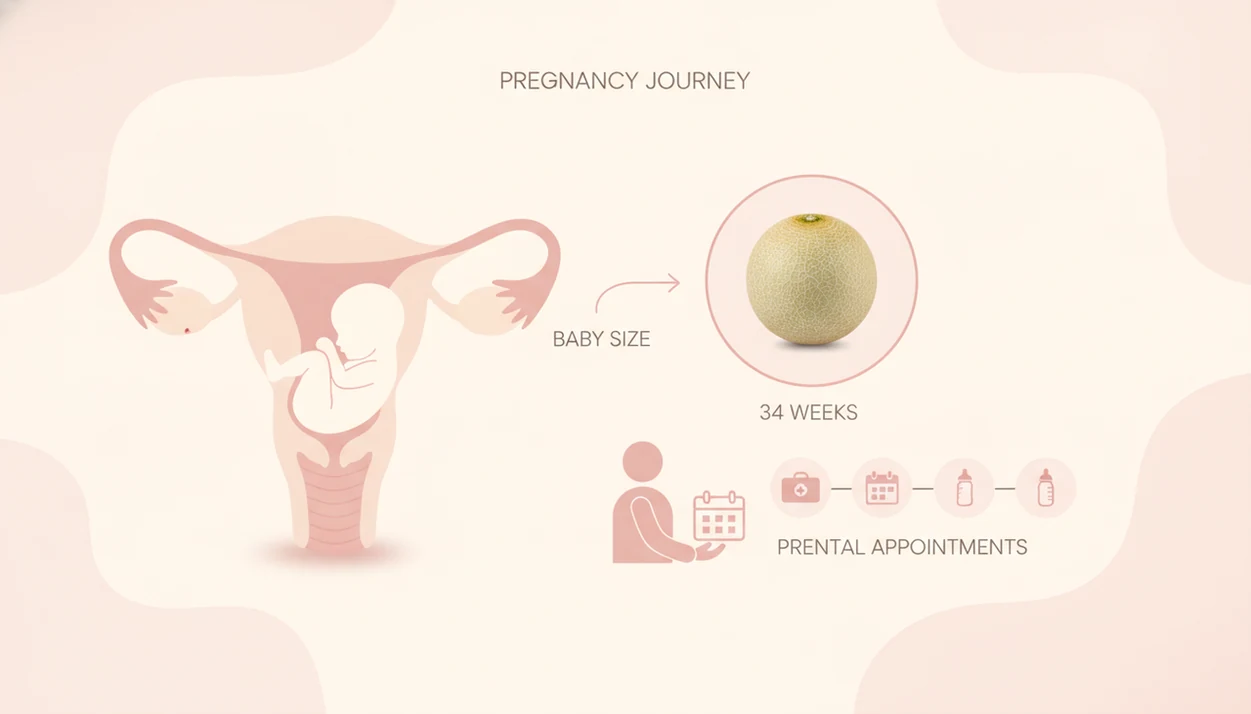
At 34 weeks pregnant, your baby is usually about the size of a cantaloupe and is still gaining fat while you prepare for more frequent late-pregnancy checks.
- Baby size: About 17 to 18 inches long and roughly 4.5 to 5 pounds, with normal variation.
- Symptoms: pelvic pressure, Braxton Hicks contractions, heartburn, swelling, fatigue, back or hip pain, shortness of breath, sleep trouble
- Appointments: Blood pressure, urine checks when used, fundal height, fetal heartbeat, symptom review, movement discussion, vaccines, and birth planning.
- Ultrasound: Not routine for everyone this week, but may be used for growth, fluid, placenta, position, or other clinical concerns.
Week 34 at a Glance
| Topic | Week 34 |
|---|---|
| Baby size | About 17 to 18 inches long and around 4.5 to 5 pounds; often compared with a cantaloupe. |
| Ultrasound | Usually done only if your OB-GYN or midwife wants to check growth, amniotic fluid, placenta, or position. |
| Symptoms | Braxton Hicks, pelvic pressure, heartburn, swelling, fatigue, back pain, leg cramps, and sleep disruption are common. |
| Appointments | Prenatal visits often review blood pressure, fetal heartbeat, fundal height, movement, vaccines, warning signs, and birth plans. |
| Key milestone | Baby is building fat stores, practicing breathing movements, and maturing the lungs and nervous system. |
TL;DR
At week 34, your baby is commonly about cantaloupe-sized, still maturing the lungs and nervous system, and gaining fat for life after birth. Your main jobs are to watch movement patterns, keep prenatal appointments, and know which symptoms need prompt medical advice.
- Common symptoms include pelvic pressure, Braxton Hicks, heartburn, swelling, fatigue, and sleep trouble.
- Appointments may cover blood pressure, urine checks, fetal heartbeat, fundal height, vaccines, and birth planning.
- Call your care team promptly for reduced movement, bleeding, leaking fluid, severe headache, vision changes, or regular painful contractions before 37 weeks.
What does 34 weeks pregnant mean?
34 weeks pregnant means you are in the third trimester, about six weeks from a 40-week due date, though your clinician’s dating should be the reference. Pregnancy is usually counted from the first day of the last menstrual period, so week 34 is much later than implantation and the early ultrasound stage when a gestational sac may first be seen.
If you are unsure how your dates line up, a due date calculator and a pregnancy week-by-week guide can help you place late pregnancy week 34 in context. Many clinicians also recommend continuing prenatal vitamins, including folic acid as directed, through the rest of pregnancy. It is normal to feel excited, impatient, or overwhelmed as the final weeks start to feel very real.
How is your baby developing at week 34?
At week 34, your baby’s lungs, brain, and nervous system are still maturing while fat stores increase and the skin becomes smoother. Many clinicians describe this stage as a period of practice: the baby may swallow amniotic fluid, make breathing-like movements, suck, sleep in cycles, and respond to sound, light, and touch.
The placenta continues to support oxygen and nutrient transfer, while the skull bones remain flexible for birth. Your baby may already be head-down, but position can still change. If birth happened now, the baby would usually be considered late preterm and would need extra medical assessment for breathing, feeding, temperature, and overall wellbeing.
How big is your baby at 34 weeks?
At 34 weeks gestation, many babies measure around 17 to 18 inches long and weigh roughly 4.5 to 5 pounds, although normal size varies widely. A common comparison is a cantaloupe or small butternut squash.
Your OB-GYN or midwife will rely more on fundal height, growth trends, movement, amniotic fluid, and ultrasound when indicated than on a fruit comparison. Ultrasound weight estimates can be less precise late in pregnancy because fetal position, fluid level, and measurement angles can affect the calculation.
What symptoms are common at week 34?
Common symptoms at week 34 include Braxton Hicks contractions, pelvic pressure, back or hip pain, shortness of breath, heartburn, constipation, hemorrhoids, swelling, leg cramps, fatigue, vivid dreams, frequent urination, and trouble sleeping. These symptoms at week 34 often reflect a larger uterus, changing posture, hormonal effects on digestion and joints, and increased fluid volume in late pregnancy.
Some people also notice colostrum leakage, increased vaginal discharge, or a stronger urge to organize before birth. Resting on your side, drinking fluids, eating smaller meals, gentle stretching, and using supportive pillows may help comfort, but new, severe, one-sided, or rapidly worsening symptoms should be discussed with your maternity care team.
How should baby movement and position feel this week?
This week, movements may feel more like rolls, stretches, pushes, or pressure than sharp kicks because the uterus is getting crowded. ACOG and NHS guidance commonly emphasize that the important point is your baby’s usual pattern, not achieving a specific number that applies to everyone.
If your clinician has recommended tracking movement, you can use a baby kick counter to notice patterns. Many parents find it easier to focus after a meal, while resting on the left side, or during the baby’s usual active time. Compare this stage with 33 weeks pregnant and what may come next at 35 weeks pregnant.
What appointments and preparation happen around week 34?
A 34-week prenatal visit often includes blood pressure, weight, urine testing when used by the clinic, fundal height, fetal heartbeat, symptom review, movement discussion, and questions about contractions or fluid leakage. Many clinicians also review Tdap if not already given, RSV vaccination when seasonally appropriate, birth preferences, breastfeeding plans, and the upcoming Group B strep screen.
Visits commonly become more frequent in the final weeks, often every two weeks and then weekly near the end, depending on your pregnancy and local practice. If you are pregnant 34 weeks with high blood pressure, diabetes, growth concerns, reduced movement, a breech baby, twins, placenta concerns, or other risk factors, your schedule may include extra monitoring or ultrasound; hCG levels are not usually used to monitor wellbeing at this late stage.
Week 34 is also a practical time to confirm your birth location, pack essentials, install the car seat, review childcare or pet plans, and learn your hospital’s instructions for contractions, broken waters, bleeding, or reduced movement. You may want to use a third trimester checklist and review when to go to the hospital before labor begins.
Limitations & Safety
This safety section explains when general week-by-week information should give way to individualized medical advice from your OB-GYN, midwife, maternity triage unit, or emergency care team.
- This page is general pregnancy education and is not a diagnosis, treatment plan, or substitute for your maternity care team.
- Call your clinician or maternity unit promptly for decreased fetal movement, vaginal bleeding, leaking fluid, severe headache, vision changes, chest pain, fainting, fever, or severe abdominal pain.
- Seek urgent advice for regular painful contractions before 37 weeks, especially if they increase in frequency, do not ease with rest or fluids, or come with pelvic pressure or backache.
- Sudden swelling of the face or hands, right upper abdominal pain, or very high blood pressure symptoms can be warning signs and should be assessed urgently.
- If you have a high-risk pregnancy, twins, placenta concerns, diabetes, hypertension, prior preterm birth, or reduced growth concerns, follow your individualized plan over general week-by-week guidance.
Frequently Asked Questions
What size is my baby at 34 weeks pregnant?
At this stage, many babies are about 17 to 18 inches long and weigh around 4.5 to 5 pounds. A common comparison is a cantaloupe or small butternut squash, but normal size varies. Your care team will interpret growth using measurements, trends, and your pregnancy history.
Is 34 weeks pregnant full term?
No. A birth in week 34 is generally considered late preterm, while full term begins at 39 weeks. Many babies born at this stage do well with modern care, but clinicians commonly assess breathing, feeding, temperature control, blood sugar, and jaundice risk.
What symptoms are common at 34 weeks pregnant?
Common symptoms include pelvic pressure, Braxton Hicks contractions, heartburn, back pain, swelling, fatigue, shortness of breath, leg cramps, and difficulty sleeping. These can be typical in late pregnancy, but severe, sudden, or unusual symptoms should be checked. Many clinicians advise calling promptly for bleeding, leaking fluid, reduced movement, severe headache, or vision changes.
What happens at a 34-week prenatal appointment?
A 34-week appointment often includes blood pressure, weight, fetal heartbeat, fundal height, symptom review, and discussion of fetal movement. Your clinician may also review vaccines, birth planning, warning signs, and the Group B strep test that is commonly done later, often around 36 to 37 weeks.
Should baby movements change at week 34?
Movements may feel different because there is less room, often becoming rolls, stretches, or firm pushes. However, the overall pattern should remain familiar. ACOG and NHS guidance commonly advises prompt assessment for a noticeable decrease or sudden change in movement.
Do I need an ultrasound at week 34?
Not everyone needs an ultrasound this week. Many clinicians order one only when there is a reason to check growth, amniotic fluid, placenta location, baby’s position, or a specific medical concern. If your pregnancy is high risk or movement has changed, your care team may recommend extra monitoring.