 Pregnancy
33 Weeks Pregnant: What to Expect This Week
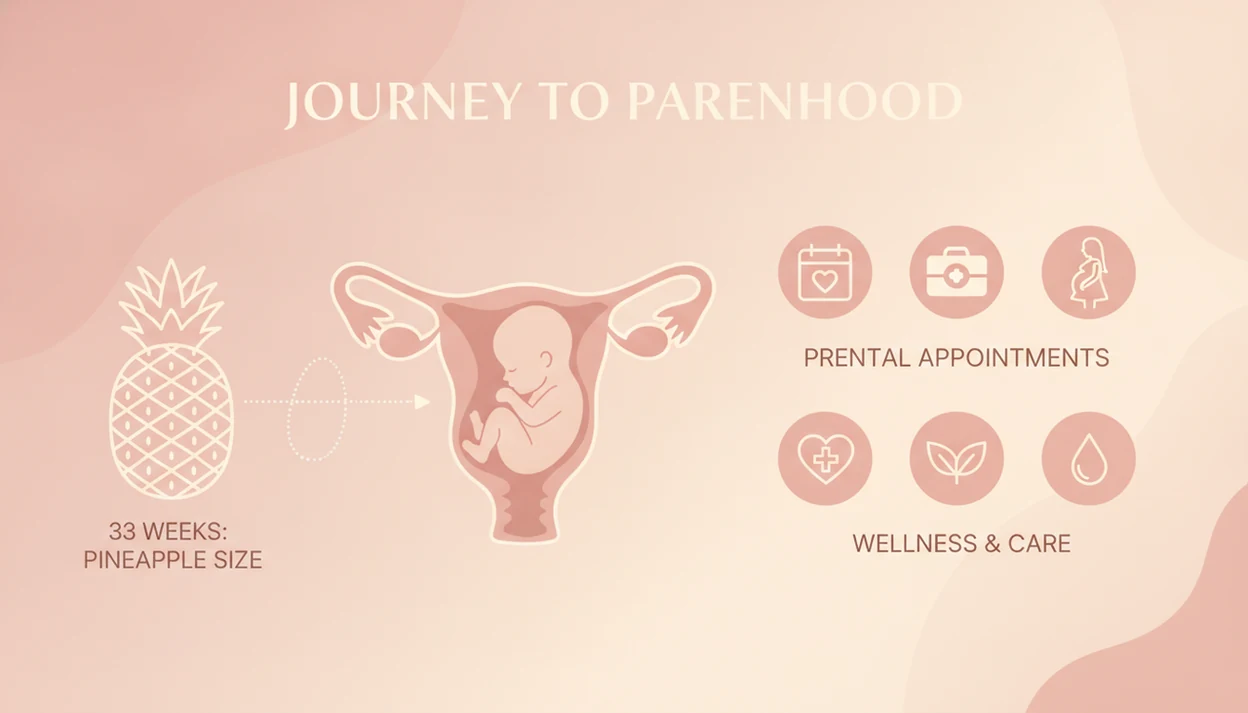
Quick Answers at Week 33
At 33 weeks pregnant, your baby is about pineapple-sized and is mainly gaining fat, maturing the brain and lungs, and settling into late-third-trimester patterns.
- Baby size: About 17 inches long and roughly 4 to 4.5 pounds, with normal variation.
- Symptoms: pelvic pressure, Braxton Hicks, backache, swelling, heartburn, shortness of breath, sleep disruption, frequent urination
- Appointments: Often blood pressure, urine screening, weight, fundal height, fetal heartbeat, and discussion of movement and symptoms.
- Ultrasound: Not always routine this week, but may be used if growth, fluid, placenta, or baby position needs checking.
Week 33 at a Glance
| Topic | Week 33 |
|---|---|
| Baby size | Commonly about 17 inches long and 4 to 4.5 pounds, often compared with a pineapple or large squash. |
| Ultrasound | Usually done only if your OB-GYN or midwife wants to check growth, position, amniotic fluid, or placenta-related concerns. |
| Symptoms | Braxton Hicks, pelvic pressure, back pain, heartburn, swelling, shortness of breath, and sleep disruption are common. |
| Appointments | A prenatal visit may include blood pressure, urine testing, fundal height, fetal heartbeat, and questions about fetal movement. |
| Key milestone | Baby is adding fat, practicing breathing movements, and continuing brain and nervous system maturation. |
TL;DR
At week 33, your baby is growing steadily, gaining fat, and practicing important skills for life after birth. Your main jobs are to track movement, attend prenatal checks, prepare practical birth plans, and call promptly for warning symptoms.
- Baby is roughly pineapple-sized, though individual growth varies.
- Common symptoms include pelvic pressure, Braxton Hicks, backache, swelling, heartburn, and disrupted sleep.
- Contact your maternity unit urgently for reduced movement, bleeding, leaking fluid, or regular painful contractions.
What does being 33 weeks pregnant mean?
Being 33 weeks pregnant means you are in the third trimester, about seven weeks from your estimated due date, and your baby is continuing to mature while your body prepares for birth. Pregnancy dating is based on the first day of your last menstrual period, so your exact timing can vary; you can review dates with a due date calculator or your OB-GYN or midwife.
By this stage, early markers such as hCG trends, implantation timing, and the first gestational sac measurement are no longer the main way progress is assessed. Clinicians usually focus on fetal movement, fundal height, blood pressure, symptoms, and any risk factors affecting the placenta or baby’s growth.
How big is your baby at week 33?
At week 33, a baby is commonly around 17 inches long and weighs roughly 4 to 4.5 pounds, though normal measurements vary. A common comparison is a pineapple or large squash, and ultrasound estimates are useful but not exact.
Many clinicians look at growth trends, fundal height, fetal heartbeat, amniotic fluid, and overall wellbeing rather than one size estimate alone. You may also want to look back at 32 weeks pregnant or ahead to 34 weeks pregnant to see how quickly size and symptoms can change.
If you are following progress across pregnancy, the wider pregnancy week-by-week guide can help you compare development through the third trimester.
What is your baby developing during week 33?
During week 33, your baby is building fat stores, strengthening muscles, practicing breathing-like movements with amniotic fluid, and becoming more coordinated. The brain and nervous system are developing quickly, while most bones continue hardening and the skull remains flexible for birth.
Many babies also have more recognizable active and quiet periods and may respond to familiar voices, light, and movement. The placenta is still supporting oxygen and nutrient transfer, while your baby continues to gain weight in preparation for the final weeks.
What symptoms are common at week 33?
Common symptoms at week 33 include shortness of breath, heartburn, constipation, leg cramps, pelvic pressure, back pain, leaking colostrum, swelling, sleep disruption, and more frequent urination. Braxton Hicks contractions may feel like irregular tightening that comes and goes and often eases with rest, hydration, or a change in position.
ACOG and NHS guidance commonly emphasize taking sudden or severe symptoms seriously in late pregnancy. Swelling in the feet and ankles can be common, but sudden swelling, severe headache, vision changes, upper abdominal pain, chest pain, or shortness of breath at rest should be checked promptly.
Symptoms at week 33 can feel physically demanding and emotionally mixed; it is normal to feel excited, impatient, uncertain, or overwhelmed on the same day.
What happens at appointments and movement checks this week?
A week 33 prenatal appointment commonly includes weight, blood pressure, urine screening, fundal height, fetal heartbeat, and a discussion of symptoms, fetal movement, and birth plans. Some practices see patients every two weeks at this stage, while high-risk pregnancies may need closer monitoring.
Your clinician may also discuss Tdap, seasonal RSV vaccination eligibility, prenatal vitamins, ongoing folic acid or iron needs, and upcoming group B strep screening around 36 to 37 weeks. If baby position is uncertain, your OB-GYN or midwife may feel your abdomen or order an ultrasound depending on your history and local practice.
Movement patterns still matter in late pregnancy. If your clinician has recommended daily awareness or counting, a baby kick counter can make it easier to notice your baby’s usual rhythm, and reduced movement should be reported rather than watched overnight.
How should you prepare for labor and birth now?
This week is a practical time to review birth preferences, pack key hospital items, arrange transportation, and confirm support for pets, older children, or work leave. You do not need a perfect plan, but knowing your preferences for pain relief, movement, monitoring, feeding, and newborn care can make conversations easier if labor starts earlier than expected.
Many clinicians suggest bringing questions about pain, sleep, swelling, mental health, work plans, and when to call the hospital. For structured preparation, see the third-trimester checklist, learn how contractions progress with a contraction timer, and review the stages of labor before your due date.
Limitations & Safety
- This page is general education, not a diagnosis or a substitute for care from your clinician.
- Call your maternity unit urgently for decreased fetal movement, vaginal bleeding, leaking fluid, regular painful contractions, fever, severe headache, vision changes, chest pain, or severe abdominal pain.
- Seek prompt care for sudden swelling of the face or hands, shortness of breath at rest, fainting, or symptoms that feel unusual for you.
- If you have twins, placenta concerns, diabetes, high blood pressure, prior preterm birth, or another high-risk condition, your monitoring schedule may differ.
Frequently Asked Questions
How many months is 33 weeks pregnant?
At week 33, you are in the eighth month by many common pregnancy-month estimates. Month counting varies because calendar months are not exactly four weeks long, so clinicians usually use weeks of gestation for accuracy.
Is a baby fully developed at week 33?
No, important maturation is still happening, especially in the lungs, brain, feeding coordination, and fat stores. Many clinicians consider ongoing pregnancy time valuable when it is safe because babies born this early may need neonatal support.
What position should my baby be in during week 33?
Many babies are head-down by this stage, but some are breech, transverse, or still changing position. Your clinician may feel your abdomen or use ultrasound if position is uncertain, especially as birth gets closer.
What happens at a 33-week prenatal appointment?
A typical visit may include blood pressure, urine screening, weight, fundal height, fetal heartbeat, and questions about symptoms and fetal movement. Your care team may also review vaccinations, birth planning, mental health, and when to call for labor signs or warning symptoms.
Are Braxton Hicks normal at 33 weeks pregnant?
Yes, Braxton Hicks contractions are common in the third trimester and often feel like irregular tightening. ACOG and NHS-style guidance commonly advises calling your maternity unit for regular, painful, increasingly frequent contractions, especially with bleeding, leaking fluid, or reduced movement.
Is ultrasound routine at 33 weeks gestation?
Ultrasound is not always routine at this point. Your OB-GYN or midwife may recommend one if they need to check growth, amniotic fluid, placenta location or function, baby position, or another clinical concern.