 Pregnancy
38 Weeks Pregnant: What to Expect
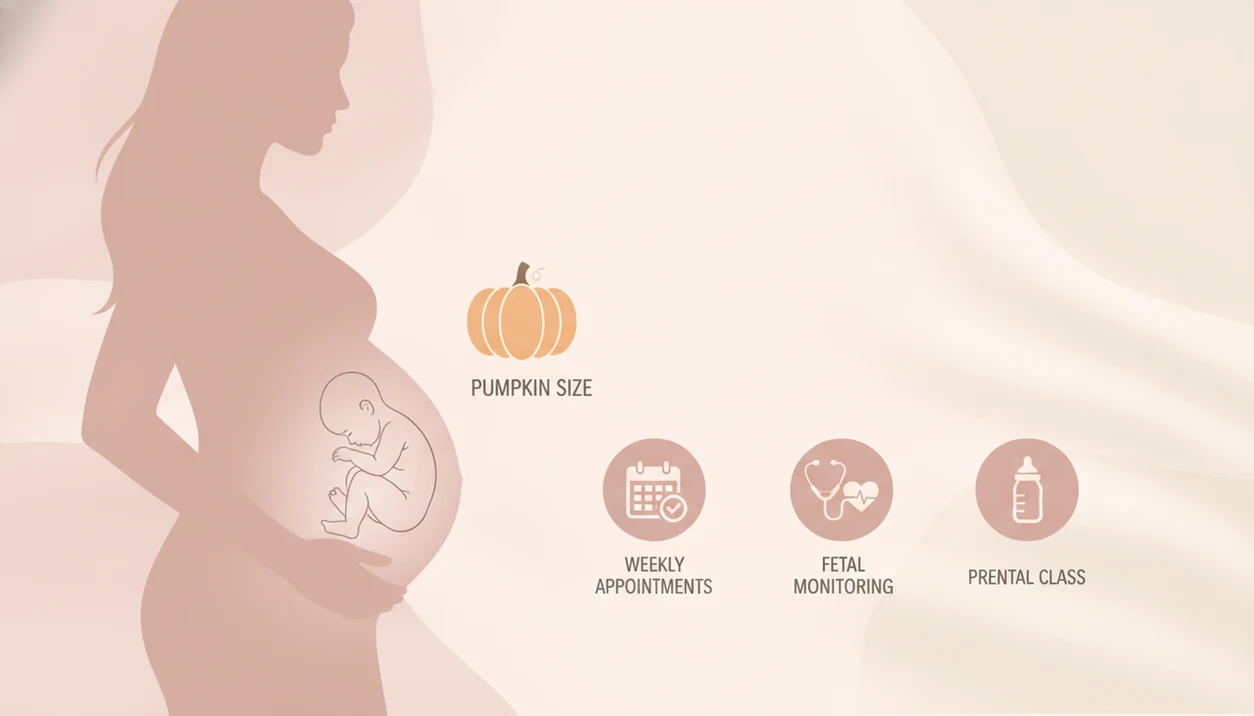
Quick Answers at Week 38
At 38 weeks pregnant, your baby is about 19 to 20 inches long, often around 6.5 to 7 pounds, and the main focus is watching labor signs while keeping weekly prenatal checks.
- Baby size: roughly small-pumpkin size, with normal variation
- Symptoms: pelvic pressure, Braxton Hicks contractions, backache, swelling, discharge changes, frequent urination, disrupted sleep
- Appointments: usually weekly, with blood pressure, urine, fetal heart rate, fundal height, symptoms, and labor-plan review
- Ultrasound: not routine for everyone this week, but may be used if your clinician needs to check growth, fluid, position, or another concern
Week 38 at a Glance
| Topic | Week 38 |
|---|---|
| Baby size | About 19 to 20 inches long and often around 6.5 to 7 pounds, though normal size varies widely. |
| Ultrasound | Usually done only if medically indicated, such as checking growth, fluid level, fetal position, or placenta-related concerns. |
| Symptoms | Pelvic pressure, Braxton Hicks, backache, hip discomfort, swelling, heartburn, discharge changes, and frequent urination. |
| Appointments | Weekly prenatal visits commonly include blood pressure, urine screening, fetal heart rate, fundal height, and labor planning. |
| Key milestone | ACOG terminology commonly describes this stage as early term; many babies do well if born now, but development continues. |
| When to call | Call promptly for reduced fetal movement, heavy bleeding, water breaking, severe headache, vision changes, fever, or strong regular contractions. |
TL;DR
Week 38 is early term, and your baby is near birth size while still gaining weight and maturing. Your priorities are noticing fetal movement, tracking labor signs, and following your OB-GYN or midwife’s instructions about when to call or go in.
- Baby is often about 19 to 20 inches long and around 6.5 to 7 pounds.
- Symptoms at week 38 often include pelvic pressure, Braxton Hicks, backache, swelling, discharge changes, and frequent urination.
- Seek medical advice right away for decreased movement, heavy bleeding, water breaking, severe headache, vision changes, or concerning pain.
What Does 38 Weeks Pregnant Mean?
38 weeks pregnant means you are 38 weeks from the first day of your last menstrual period, with about two weeks until a 40-week due date. ACOG terminology commonly classifies 37 weeks 0 days through 38 weeks 6 days as early term, meaning many babies do well if born now, but brain, lung, and body-fat development can still continue.
Pregnancy dating is based on the last menstrual period rather than the exact day of implantation, and early milestones such as the gestational sac are now far behind you. For a wider view of late-pregnancy milestones, compare this stage with the pregnancy week-by-week guide, review last week at 37 weeks pregnant, or look ahead to 39 weeks pregnant.
How Is Your Baby Developing at Week 38?
At 38 weeks gestation, your baby’s major organs are largely developed, while the brain, lungs, fat stores, and feeding reflexes continue to mature. Many clinicians describe this stage as close to birth-ready but not finished, because late-term growth supports temperature control, breathing transition, and energy reserves after delivery.
Your baby may be head-down, although some babies remain breech or transverse at this stage. They are swallowing amniotic fluid, passing urine, practicing breathing movements, storing iron, and continuing to rely on the placenta for oxygen and nutrients until birth. Movements may feel more like rolls, stretches, and pressure because space is tighter, but movement should not suddenly decrease.
How Big Is Your Baby at 38 Weeks?
At week 38, many babies measure about 19 to 20 inches from head to heel and weigh around 6.5 to 7 pounds. A common size comparison is a small pumpkin, leek, or winter melon, but these are only visual guides because genetics, placenta function, fluid level, and dating accuracy all affect fetal size.
Your provider may estimate size with fundal height, abdominal exam, or ultrasound when there is a medical reason to check growth. Research and clinical guidance note that ultrasound weight estimates near term can be useful but are not exact, so your OB-GYN or midwife interprets size together with growth pattern, fetal movement, fluid level, and your health history.
What Symptoms Are Common During Week 38?
Symptoms at week 38 commonly include pelvic pressure, lightning crotch, back pain, hip discomfort, leg cramps, swollen feet, heartburn, constipation, disrupted sleep, frequent urination, and increased vaginal discharge. You may also notice the mucus plug or bloody show, though losing it does not always mean labor will start immediately.
Braxton Hicks contractions often become stronger in late pregnancy and may ease with hydration, rest, or a position change. True labor contractions usually grow longer, stronger, and closer together over time; if you are timing them, a contraction timer can help you track the pattern to discuss with your care team. It is normal to feel excited, impatient, or overwhelmed when every sensation seems like it could be the start of labor.
What Happens at This Week’s Prenatal Appointment?
This week’s prenatal appointment usually includes blood pressure, urine screening, weight, fundal height, fetal heart rate, swelling review, and a conversation about symptoms and labor plans. Your OB-GYN or midwife may also review Group B strep results, birth preferences, hospital or birth-center instructions, induction timing, cesarean plans, and what to do if labor starts.
A cervical check may be offered, but it is not always required and does not reliably predict exactly when labor will begin. Your provider may discuss dilation, effacement, station, membrane sweeping if appropriate, fetal movement expectations, and when to use a baby kick counter. Unless your clinician says otherwise, continue prenatal vitamins, including folic acid-containing prenatal support, as directed through the end of pregnancy.
When Should You Call or Go In for Labor Signs?
Call your provider promptly if contractions are regular and painful, your water breaks, fetal movement decreases, bleeding is heavy, or you develop severe headache, vision changes, sudden swelling, fever, severe abdominal pain, chest pain, or shortness of breath. ACOG and NHS guidance commonly emphasize seeking advice right away for reduced movements, significant bleeding, or possible rupture of membranes rather than waiting to see if symptoms pass.
Early labor can include low back cramping, pelvic pressure, bloody show, diarrhea, or contractions that gradually intensify. Many hospitals advise calling before arrival unless symptoms are urgent, because recommendations depend on contraction timing, distance, medical history, and whether this is a first birth. Review your plan for when to go to the hospital, refresh practical steps with how to prepare for labor, and revisit the stages of labor so early labor, active labor, transition, pushing, and placenta delivery feel less unfamiliar.
Limitations & Safety
This guide is educational and cannot replace individualized medical advice from the clinician who knows your pregnancy. Your care team may give different instructions based on your medical history, fetal growth, placenta location or function, blood pressure, diabetes status, prior cesarean, multiples, or other risk factors.
- Call your provider immediately for decreased fetal movement, heavy bleeding, severe abdominal pain, fever, or water breaking.
- Seek urgent care for signs of preeclampsia, including severe headache, vision changes, sudden swelling, chest pain, or shortness of breath.
- If fluid is green or brown, has a foul odor, or you are unsure whether it is urine or amniotic fluid, contact your provider promptly.
- If you have a high-risk pregnancy, prior cesarean, placenta concerns, hypertension, diabetes, reduced fetal growth, or multiples, follow your individualized care plan.
- Do not wait for a routine appointment if symptoms feel unusual, intense, or concerning.
Frequently Asked Questions
Is week 38 full term?
No—ACOG terminology commonly classifies week 38 as early term, while 39 to 40 weeks is full term. Many babies born during this window do well, but brain, lung, and fat development continue during the final weeks.
How big is my baby at 38 weeks pregnant?
A typical baby at this stage is about 19 to 20 inches long and around 6.5 to 7 pounds. Normal size varies widely, and near-term ultrasound weight estimates are helpful only as estimates, not exact measurements.
What symptoms are common at week 38?
Common symptoms include pelvic pressure, Braxton Hicks contractions, backache, swollen feet, heartburn, frequent urination, sleep disruption, and increased vaginal discharge. Contact your provider right away for sudden severe symptoms, heavy bleeding, or decreased fetal movement.
What happens at a 38-week prenatal appointment?
Your OB-GYN or midwife may check blood pressure, urine, fetal heart rate, fundal height, swelling, and symptoms. They may also review Group B strep results, discuss labor signs, answer birth-plan questions, and offer a cervical check if it is appropriate for your situation.
Do I need an ultrasound at week 38?
Not everyone needs an ultrasound this week. Many clinicians order one only when there is a reason to check growth, amniotic fluid, fetal position, placenta-related concerns, or another medical issue.
When should I call my provider at week 38?
Call for regular painful contractions, water breaking, heavy bleeding, reduced fetal movement, severe headache, vision changes, sudden swelling, fever, or severe abdominal pain. Your provider can tell you whether to monitor at home, come to triage, or seek urgent care.