 Pregnancy
39 Weeks Pregnant
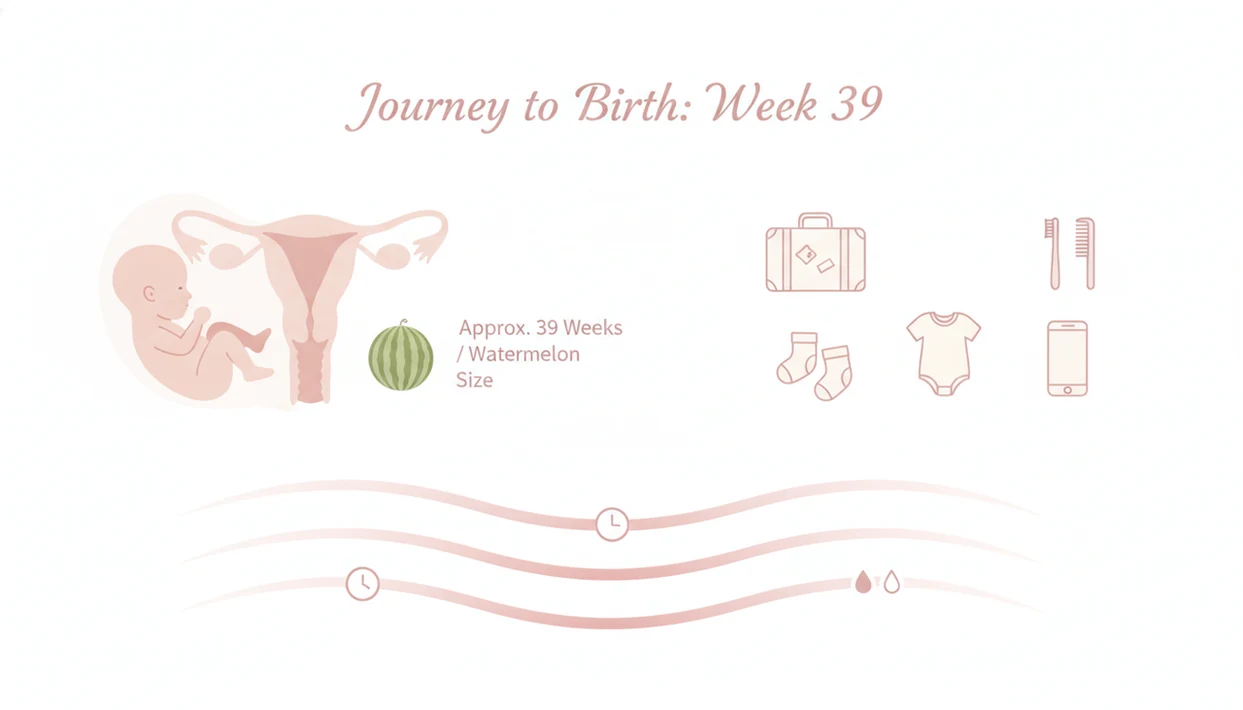
Quick Answers at Week 39
At 39 weeks pregnant, your baby is full term and often around small-watermelon size, while your main job is to watch movement, recognize labor signs, and keep your weekly care plan.
- Baby size: About 19 to 21 inches long and often around 7 to 8 pounds, with healthy variation.
- Symptoms: pelvic pressure, Braxton Hicks, backache, discharge changes, fatigue, frequent urination, sleep disruption
- Appointments: Usually a weekly prenatal visit with blood pressure, urine, fetal heartbeat, fundal height, movement review, and labor planning.
- Ultrasound: Not always routine; may be used with a biophysical profile or growth/fluid check if your OB-GYN or midwife has concerns.
Week 39 at a Glance
| Topic | Week 39 |
|---|---|
| Baby size | Often about 19 to 21 inches long and 7 to 8 pounds, roughly small-watermelon size. |
| Ultrasound | May be recommended for fluid level, growth, position, or a biophysical profile if clinically needed. |
| Symptoms | Pelvic pressure, stronger Braxton Hicks, backache, discharge or mucus plug changes, fatigue, and frequent urination. |
| Appointments | Weekly check with blood pressure, urine, fetal heartbeat, fundal height, movement review, and labor instructions. |
| Key milestone | Baby is considered full term, while the brain, lungs, fat stores, and placenta-supported growth continue until birth. |
TL;DR
At week 39, your baby is full term and commonly about the size of a small watermelon. Track movement, keep your weekly appointment, and call your care team for reduced movement, leaking fluid, heavy bleeding, severe symptoms, or contractions that match their labor instructions.
- Baby is still gaining fat and practicing breathing movements.
- Common symptoms include pelvic pressure, Braxton Hicks, discharge changes, backache, and poor sleep.
- Use a contraction timer and review when to go to the hospital before labor starts.
What does 39 weeks pregnant mean?
Being 39 weeks pregnant means you are 39 weeks from the first day of your last menstrual period and about one week from a 40-week due date. Pregnancy dating is still an estimate, so birth around this point can be normal when your OB-GYN or midwife has no concerns.
At 39 weeks gestation, early pregnancy milestones such as implantation, hCG rise, and gestational sac visualization are long behind you; the focus now is fetal wellbeing, placental function, labor readiness, and your birth plan. Many clinicians still recommend continuing prenatal vitamins, including folic acid if it remains part of your prescribed prenatal, unless your care team advises otherwise.
How big is the baby at week 39?
At week 39, a baby is typically about 19 to 21 inches long and often weighs around 7 to 8 pounds, although healthy newborn size varies widely. The lungs and brain continue maturing, the skin is smoother from added fat, and many babies are head-down in preparation for birth.
Your baby’s reflexes are active, nails may reach the fingertips, and the digestive tract contains meconium, the first stool. Movement may feel more like rolls, stretches, and pressure than sharp kicks because space is tight, but the pattern should remain familiar. If you are unsure whether movement has changed, use a baby kick counter and contact your provider.
For comparison, many parents picture a baby at this stage as about the size of a small watermelon or mini pumpkin. Size estimates from ultrasound or belly measurements are helpful but imperfect, and clinicians interpret them alongside growth history, fluid level, placenta health, and the overall pregnancy picture.
What symptoms at week 39 are common?
Common symptoms at week 39 include pelvic pressure, lightning crotch, backache, swollen feet, frequent urination, constipation, heartburn, fatigue, and stronger Braxton Hicks contractions. Vaginal discharge may increase, and some people lose part of the mucus plug, which can look clear, creamy, pink, or slightly blood-streaked.
Because the baby may sit lower in the pelvis, breathing can feel easier while bladder pressure increases. Sleep is often difficult due to discomfort, bathroom trips, and anticipation; it is completely reasonable to feel excited, impatient, uncertain, or overwhelmed this close to birth. Gentle movement, hydration, rest, and calming routines such as pregnancy meditation may help you cope, but new or severe symptoms deserve a call to your care team.
Looking back at 38 weeks pregnant and ahead to 40 weeks pregnant can help you understand which changes are gradual and which may signal labor is close.
What happens at a week 39 appointment?
A week 39 prenatal appointment often includes blood pressure, weight, urine testing, fundal height, fetal heartbeat, and questions about movement, contractions, leaking fluid, headaches, swelling, and bleeding. ACOG and NHS guidance commonly emphasize reporting reduced fetal movement promptly rather than waiting to see if it improves.
Your provider may discuss cervical checks, membrane sweep options, induction timing, birth preferences, and what to do if labor begins. Cervical dilation and effacement can be useful information, but many clinicians caution that they do not reliably predict the exact day labor will start. Some people are several centimeters dilated for days, while others have little change before active labor begins.
If your due date feels uncertain, a due date calculator can explain dating, but your clinician’s dating record is most important. Extra monitoring, such as a nonstress test or biophysical profile, may be recommended if there are concerns about movement, blood pressure, fluid levels, growth, diabetes, or other medical factors.
How can you tell labor is starting?
Labor may be starting when contractions become longer, stronger, closer together, and continue despite rest, hydration, or position changes. Other possible signs include water breaking, bloody show, increasing pelvic pressure, low back cramping, diarrhea, or a sudden change in contraction pattern.
Early labor can be slow, especially with a first baby, and not every person has the same sequence of signs. Review the stages of labor, practice coping tools such as breathing exercises for labor, and keep your hospital bag, documents, feeding supplies, and ride plan ready. If you want a broader checklist, see this guide on how to prepare for labor.
Call your maternity unit or provider for instructions if contractions follow the pattern they gave you, your water breaks, bleeding is more than spotting, or movement is reduced. If you are pregnant 39 weeks with high blood pressure, diabetes, a planned cesarean, growth concerns, or another medical factor, follow your individualized plan over general timing rules.
Limitations & Safety
This week’s information is general and cannot diagnose labor, fetal wellbeing, blood pressure problems, infection, or complications. Your medical history, baby’s growth, placental health, and local maternity guidance can change what is safest for you.
- Seek urgent medical advice for decreased or absent fetal movement, even if you think the baby is “just running out of room.”
- Call promptly for heavy bleeding, fluid leaking or a gush of fluid, fever, severe abdominal pain, or contractions before your provider’s recommended threshold.
- Get urgent care for severe headache, vision changes, chest pain, shortness of breath, fainting, sudden facial or hand swelling, or right upper belly pain.
- If you have high blood pressure, diabetes, a planned cesarean, reduced growth, multiple pregnancy, or other risk factors, follow your individualized plan.
- This page is educational and not a substitute for care from your midwife, obstetrician, OB-GYN, or maternity triage team.
Frequently Asked Questions
Is 39 weeks pregnant full term?
Yes. ACOG dating terminology commonly defines 39 weeks 0 days through 40 weeks 6 days as full term. Individual factors such as blood pressure, diabetes, fetal growth, placental health, or a planned cesarean can still change your care plan.
How big is my baby at 39 weeks pregnant?
Many babies at this stage are about 19 to 21 inches long and weigh around 7 to 8 pounds. Healthy babies can be smaller or larger, and late-pregnancy size estimates from ultrasound or fundal height are not exact.
What symptoms are normal at 39 weeks pregnant?
Common symptoms include pelvic pressure, Braxton Hicks contractions, backache, frequent urination, swollen feet, fatigue, heartburn, and increased vaginal discharge. Symptoms that are severe, sudden, or worrying should be discussed with your provider.
How do I know if contractions are real labor?
Real labor contractions usually become stronger, longer, and closer together over time and do not fade with rest, hydration, or position changes. Braxton Hicks contractions are often irregular and may ease when you change activity. Follow the contraction timing guidance from your maternity team.
What happens at a 39-week prenatal appointment?
A week 39 visit often includes blood pressure, urine testing, weight, fundal height, fetal heartbeat, and a discussion of fetal movement and labor symptoms. Your provider may also discuss cervical checks, membrane sweep options, induction timing, and when to call or come in.
Should I call if my baby is moving less near my due date?
Yes. ACOG and NHS guidance commonly advise contacting your maternity unit or clinician promptly for reduced or absent fetal movement, even late in pregnancy. Do not assume movement is lower only because space is tight.