 Pregnancy
40 Weeks Pregnant
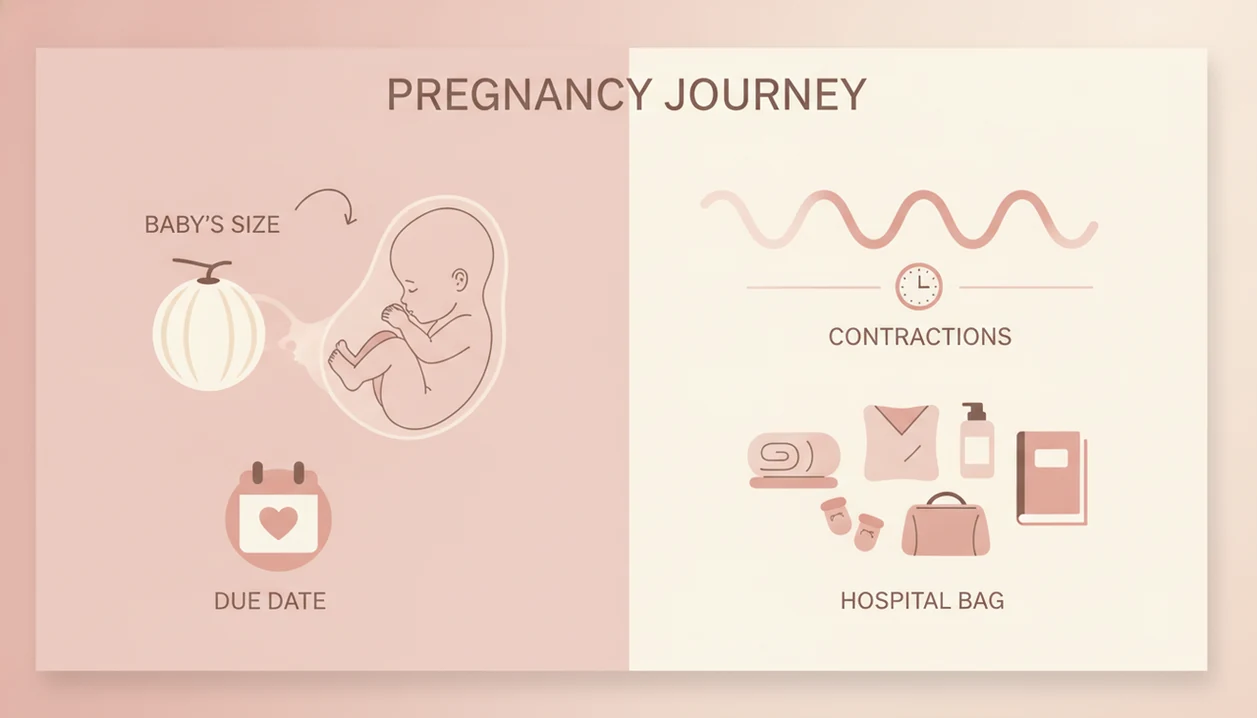
Quick Answers at Week 40
At 40 weeks pregnant, your baby is roughly the size of a small pumpkin or watermelon, and the main takeaway is that your due date is an estimate while labor may begin any day.
- Baby size: About 20 inches long and often around 7 to 8 pounds, with wide healthy variation.
- Symptoms: pelvic pressure, backache, contractions, cramping, discharge changes, frequent urination, fatigue, insomnia, swelling
- Appointments: Blood pressure, fetal heartbeat, position check, symptom review, and possible discussion of cervical check, membrane sweep, monitoring, or induction timing.
- Ultrasound: Not always routine, but may be used to check position, amniotic fluid, growth, or wellbeing if clinically indicated.
Week 40 at a Glance
| Topic | Week 40 |
|---|---|
| Baby size | Roughly small-pumpkin or watermelon size; often about 20 inches and 7 to 8 pounds. |
| Ultrasound | May be offered if your OB-GYN or midwife wants to assess position, fluid, growth, or fetal wellbeing. |
| Symptoms | Pelvic pressure, Braxton Hicks or labor contractions, backache, cramping, discharge changes, fatigue, and sleep disruption. |
| Appointments | Often include blood pressure, fetal heartbeat, abdominal assessment, position review, and labor or induction planning. |
| Key milestone | Your due date has arrived, but many pregnancies continue beyond the estimated date with appropriate monitoring. |
TL;DR
Week 40 is full term, and your baby may arrive soon, but the due date is still only an estimate. The priority now is watching movement, recognizing labor signs, and following your clinician’s plan for monitoring or induction discussions if pregnancy continues.
- Baby is commonly around 20 inches and 7 to 8 pounds, though normal size varies.
- Call promptly for reduced movement, heavy bleeding, fluid leakage, severe symptoms, or concerns about contractions.
- Expect close review with your OB-GYN or midwife, especially if you remain pregnant after the due date.
What does 40 weeks pregnant mean?
Being 40 weeks pregnant means you are about 280 days from the first day of your last menstrual period, which is the standard way clinicians date pregnancy. Your due date is an estimate rather than an expiration date; a due date calculator can help confirm timing, but your OB-GYN or midwife’s dating and monitoring guide decisions.
At 40 weeks gestation, the focus is no longer early markers such as implantation, hCG changes, or seeing a gestational sac; the focus is fetal movement, labor signs, amniotic fluid, placenta function when assessed, and maternal wellbeing. It is completely reasonable to feel excited, impatient, uncertain, or overwhelmed as the waiting becomes more intense.
How is your baby developing at week 40?
At week 40, most major organs are ready for life outside the uterus, and the lungs are typically mature enough for breathing after birth. Your baby continues building fat, practicing reflexes, swallowing amniotic fluid, and shedding some vernix and lanugo. Skull bones remain flexible to help the head move through the birth canal.
Movement patterns may feel different because space is tight, but your baby should still move regularly. Many clinicians advise contacting your maternity unit or care team for reduced or unusual movement rather than waiting for the next appointment.
How big is your baby at this stage?
At this stage, an average baby is roughly the size of a small pumpkin or watermelon, often around 20 inches long and about 7 to 8 pounds, although healthy newborn sizes vary widely. Your baby is commonly head-down with the head low in the pelvis, but position is confirmed by your clinician.
If you want to compare late-pregnancy changes, looking back at 39 weeks pregnant can show how little growth may change from one week to the next. The key focus now is not a single size number, but ongoing wellbeing, movement, position, and whether labor begins on its own.
What symptoms are common during week 40?
Symptoms at week 40 commonly include pelvic pressure, backache, Braxton Hicks contractions, cramping, frequent urination, loose stools, swelling, fatigue, insomnia, and thicker vaginal discharge. You may notice the mucus plug or a bloody show, but ACOG and NHS guidance commonly emphasize that these signs do not always mean labor will start immediately.
Real labor contractions usually become longer, stronger, closer together, and harder to talk through. A contraction timer can help you notice a pattern, but timing is only one part of the picture; fluid leakage, bleeding, pain level, fetal movement, and your care team’s instructions also matter.
What happens at appointments around your due date?
Appointments around your due date often include blood pressure, urine testing if indicated, fetal heartbeat, fundal height or abdominal assessment, and discussion of your baby’s position. Your clinician may offer a cervical check, membrane sweep, nonstress test, ultrasound, or biophysical profile depending on your pregnancy, local practice, and risk factors.
Your care team may also review when to call, when to come in, whether to continue prenatal vitamins and folic acid as advised, and whether induction should be discussed if pregnancy continues. If labor symptoms start, follow your local instructions and review when to go to the hospital, especially if this is your first birth or you live far away.
What if you are still pregnant after your due date?
If you are still pregnant after your due date, that can be normal because due dates are estimates and spontaneous labor often starts before or after the predicted day. If you reach 41 weeks pregnant, your clinician may recommend closer monitoring and discuss induction timing based on your health, baby’s wellbeing, and local guidelines.
While you wait, focus on rest, hydration, simple meals, and practical preparation rather than trying unproven methods to force labor. Many clinicians recommend checking before using herbs, castor oil, nipple stimulation, medications, supplements, or other labor-starting techniques, especially if you have a prior cesarean, hypertension, diabetes, or other risk factors.
Limitations & Safety
The safest approach at week 40 is to use this page as general education and follow your own maternity care team’s instructions.
- This page is not a diagnosis, treatment plan, or substitute for care from your OB-GYN, midwife, maternity unit, or emergency services.
- Call your clinician or maternity unit promptly for reduced fetal movement, heavy bleeding, severe abdominal pain, fever, fainting, severe headache, vision changes, sudden swelling, or concerns about blood pressure.
- Seek guidance right away if your water breaks, you think fluid is leaking, contractions are very painful or close together, or you feel something is not right.
- If you have a high-risk pregnancy, prior cesarean, twins, diabetes, hypertension, growth concerns, or Group B strep instructions, follow your individualized plan.
- Do not try medications, supplements, castor oil, or other induction methods unless your clinician specifically says they are safe for you.
Frequently Asked Questions
Is week 40 the same as my due date?
Yes, week 40 is the standard point used as the estimated due date, counted from the first day of the last menstrual period. Many clinicians stress that the due date is an estimate, and healthy pregnancies may deliver before or after this day.
How big is my baby at 40 weeks pregnant?
At 40 weeks pregnant, many babies are around 20 inches long and weigh about 7 to 8 pounds. Normal newborn size varies widely, so your clinician will focus on growth pattern, position, movement, and wellbeing rather than one exact number.
What symptoms are common when pregnant 40 weeks?
Common symptoms include pelvic pressure, back pain, cramps, Braxton Hicks contractions, frequent urination, fatigue, sleep trouble, swelling, and increased discharge. Mucus plug loss or bloody show can happen before labor, but timing varies from person to person.
How do I know if contractions are real labor?
Real labor contractions usually become stronger, longer, and closer together over time and do not settle with rest, hydration, or position changes. ACOG and NHS-style guidance commonly recommends calling your maternity unit or clinician using the instructions they gave you, especially if your water breaks, bleeding occurs, or movement decreases.
What happens at a due-date pregnancy appointment?
A due-date visit may include blood pressure, urine checks if needed, fetal heartbeat, assessment of baby’s position, and discussion of symptoms. Depending on your situation, your clinician may offer a cervical check, membrane sweep, nonstress test, ultrasound, or induction discussion.
Do I need an ultrasound at 40 weeks gestation?
Not everyone needs an ultrasound at 40 weeks gestation. Many clinicians use ultrasound when there is a reason to check position, amniotic fluid, growth, placenta-related wellbeing, or another concern.
Should I try to start labor naturally at home?
Do not try to force labor at home without checking with your clinician first. Research and clinical guidance are cautious about unproven methods, and options such as castor oil, herbs, nipple stimulation, medications, or supplements may not be safe for every pregnancy.