 Pregnancy
35 Weeks Pregnant
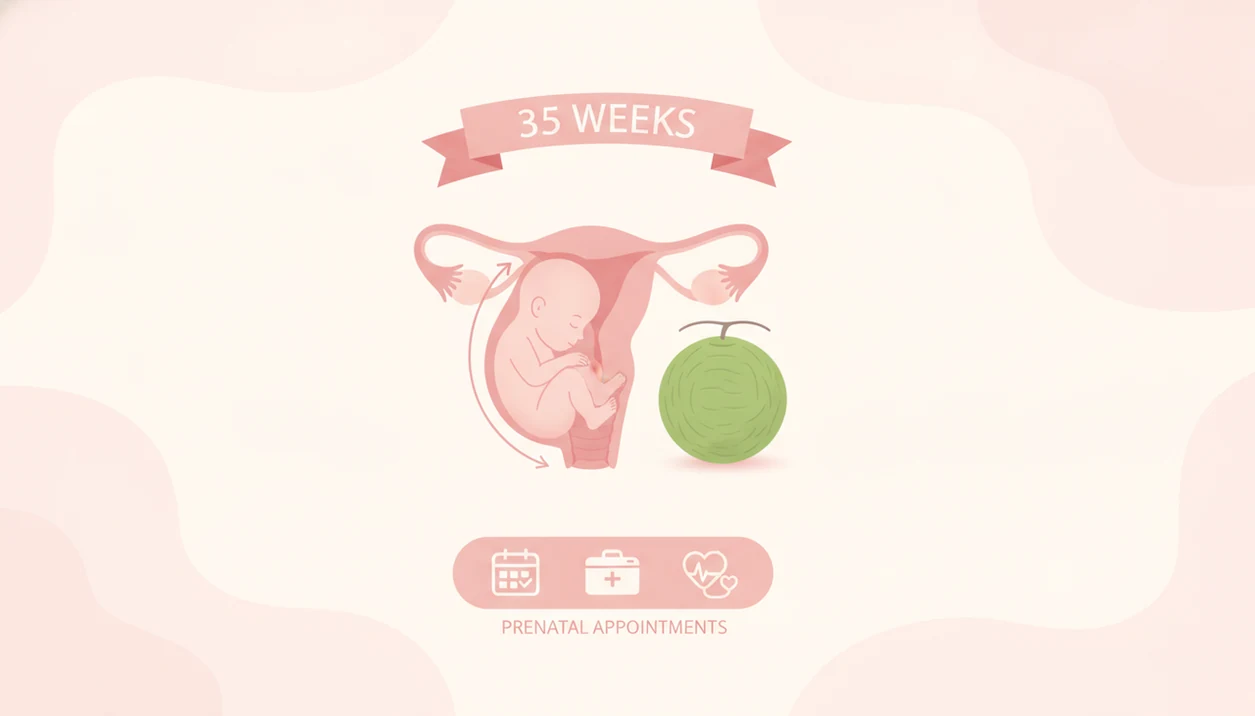
Quick Answers at Week 35
At 35 weeks pregnant, your baby is often about 18 inches long and 5 to 6 pounds, and the main focus is daily movement, late-pregnancy symptoms, and getting ready for labor signs.
- Baby size: About the size of a honeydew melon, though normal growth varies.
- Symptoms: pelvic pressure, Braxton Hicks contractions, heartburn, swelling, back or hip pain, frequent urination, disrupted sleep
- Appointments: Visits often review blood pressure, fetal heartbeat, fundal height, symptoms, fetal position, and upcoming Group B strep screening.
- Ultrasound: Not routine for everyone this week, but may be used if your clinician wants to check growth, fluid, placenta concerns, or position.
Week 35 at a Glance
| Topic | Week 35 |
|---|---|
| Baby size | Often about 18 inches long and roughly 5 to 6 pounds; commonly compared with a honeydew melon. |
| Ultrasound | Usually done only when clinically indicated, such as checking growth, fluid level, placenta, or fetal position. |
| Symptoms | Braxton Hicks, pelvic pressure, heartburn, swelling, frequent urination, back or hip pain, and sleep disruption are common. |
| Appointments | Prenatal care may include blood pressure, fetal heartbeat, fundal height, symptom review, fetal position, and planning for Group B strep screening. |
| Key milestone | Lungs, brain, and nervous system are still maturing while fat gain continues before birth. |
TL;DR
At 35 weeks, your baby is usually gaining fat, practicing breathing movements, and continuing brain, lung, and nervous system development. Your care team will focus on movement patterns, fetal position, blood pressure, symptoms, and knowing when to call.
- Baby size is often compared with a honeydew melon, around 5 to 6 pounds on average.
- Daily movement should continue, even if it feels more like rolls, stretches, or pressure.
- Call your OB-GYN or midwife promptly for reduced movement, leaking fluid, bleeding, or regular painful contractions before 37 weeks.
What does being 35 weeks pregnant mean?
Being 35 weeks pregnant means you are in the third trimester, about five weeks from a 40-week due date. Gestational age is counted from the first day of your last menstrual period, not from implantation, so individual fetal size, symptoms, and appointment timing can vary. By this stage, the gestational sac and early hCG-tracking phase are long behind you; care usually focuses on fetal growth, movement, your blood pressure, and signs that labor may be starting. For nearby milestones, see the pregnancy week-by-week guide, 34 weeks pregnant, and 36 weeks pregnant.
What is happening with baby development at week 35?
At week 35, the baby’s lungs, brain, and nervous system are still maturing while steady fat gain helps with temperature control after birth. The kidneys are working, the liver is continuing to develop, and the digestive system is practicing for feeding. The placenta continues supporting oxygen and nutrient exchange, and many babies are head-down by now, although position can still change before labor.
Your baby should still move every day. Because space is tighter, movements may feel like stretching, rolling, pushing, or shifting rather than big kicks. Many clinicians advise calling your maternity care team if your usual movement pattern changes or you feel worried; a baby kick counter can help you track what is normal for you.
How big is baby at 35 weeks?
At 35 weeks gestation, a baby is often about 18 inches long and roughly 5 to 6 pounds, though normal measurements vary widely. A common size comparison is a honeydew melon. Ultrasound estimates can be helpful, but they are not exact; growth trends, fundal height, fetal movement, and your clinician’s assessment matter more than one number.
If you are unsure how your due date was calculated, review the date with your provider or use a due date calculator as a general reference. Your OB-GYN or midwife may compare fundal height, fetal movement, ultrasound findings, placenta-related concerns, and your medical history to decide whether additional monitoring is needed.
What symptoms are common during week 35?
Common symptoms at week 35 include Braxton Hicks contractions, pelvic pressure, back or hip pain, frequent urination, constipation, heartburn, shortness of breath, leg cramps, and swelling in the feet or ankles. Vaginal discharge may increase, and sleep may feel more fragmented. ACOG and NHS guidance commonly emphasizes getting urgent advice for sudden severe swelling, bleeding, leaking fluid, severe headache, vision changes, intense pain, or reduced fetal movement.
Rest, hydration, gentle movement, small meals, side-lying sleep, and supportive pillows may make symptoms at week 35 more manageable. Keep taking prenatal vitamins, including folic acid if your clinician recommends continuing it, and ask before starting or stopping any medication or supplement. If tightening comes and goes irregularly, it may be Braxton Hicks; if contractions become regular, painful, and closer together, tracking them with a contraction timer can help you describe the pattern.
What appointments and checks happen this week?
A 35-week prenatal visit often includes blood pressure, weight, urine testing when indicated, fundal height, fetal heartbeat, symptom review, and a discussion of fetal position. Your clinician may also talk about Group B strep screening, commonly done around 36 to 37 weeks, and review signs of labor, preterm labor, or preeclampsia. If you are pregnant 35 weeks with a higher-risk condition, your monitoring schedule may be more individualized.
This is a useful time to confirm your birth preferences, hospital route, support person plan, pediatrician choice, and postpartum help. A practical third trimester checklist can help you organize essentials without trying to predict every detail of labor, birth, or recovery.
How can you prepare for the final weeks?
This week, preparation means knowing your plan, your warning signs, and who to call rather than trying to control every detail. Pack basic hospital items, install the car seat, keep important numbers accessible, and ask your provider when to call for contractions, leaking fluid, bleeding, reduced movement, or other symptoms. It is normal to feel excited, uncertain, or overwhelmed as birth gets closer.
Because labor timing varies, ask your care team for instructions tailored to your pregnancy, distance from the hospital, and medical history. General guidance on when to go to the hospital can help you form questions, but your provider’s advice should guide your decisions.
Limitations & Safety
This page provides general education and cannot replace medical advice from your own maternity care team.
- This information is not a diagnosis, treatment plan, or substitute for care from an OB-GYN, midwife, or other qualified clinician.
- Call your provider urgently for decreased fetal movement, vaginal bleeding, leaking fluid, regular painful contractions before 37 weeks, severe headache, vision changes, chest pain, severe abdominal pain, fever, or sudden swelling of the face or hands.
- If you have a high-risk pregnancy, twins or multiples, placenta concerns, hypertension, diabetes, prior preterm birth, or reduced fetal growth, your monitoring plan may be different.
- Always follow your own maternity care team’s instructions about appointments, testing, medications, supplements, and when to seek urgent care.
Frequently Asked Questions
How many months is 35 weeks pregnant?
At 35 weeks, pregnancy is often described as about eight months along. Clinicians usually use weeks of gestation instead of months because calendar months vary and week-based dating is more precise for prenatal care.
What should baby movement feel like at 35 weeks?
Movement should still happen every day, but it may feel more like rolls, stretches, or pressure because there is less room. Many clinicians advise contacting your provider promptly if movement is reduced, absent, or noticeably different from your baby’s usual pattern.
Is pelvic pressure normal at 35 weeks pregnant?
Mild pelvic pressure can be common at this stage as the baby grows, drops lower, or presses on the pelvis and bladder. Call your provider if pressure is severe or comes with regular contractions, bleeding, leaking fluid, fever, or a strong feeling that something is not right.
What appointments happen around week 35?
A visit around this time may include blood pressure, fetal heartbeat, fundal height, symptom review, and discussion of fetal position. Your provider may also prepare you for Group B strep screening, which is commonly done around 36 to 37 weeks.
Can labor start at 35 weeks?
Labor can start at 35 weeks, but birth before 37 weeks is considered preterm. ACOG and NHS guidance commonly recommends urgent contact with your maternity care team for regular painful contractions, leaking fluid, bleeding, or persistent pelvic pressure.
Do you get an ultrasound at 35 weeks gestation?
An ultrasound is not routine for everyone during week 35. Your OB-GYN or midwife may order one if they want to assess growth, amniotic fluid, fetal position, placenta concerns, or another pregnancy-specific issue.