 Pregnancy
13 Weeks Pregnant: What to Expect This Week
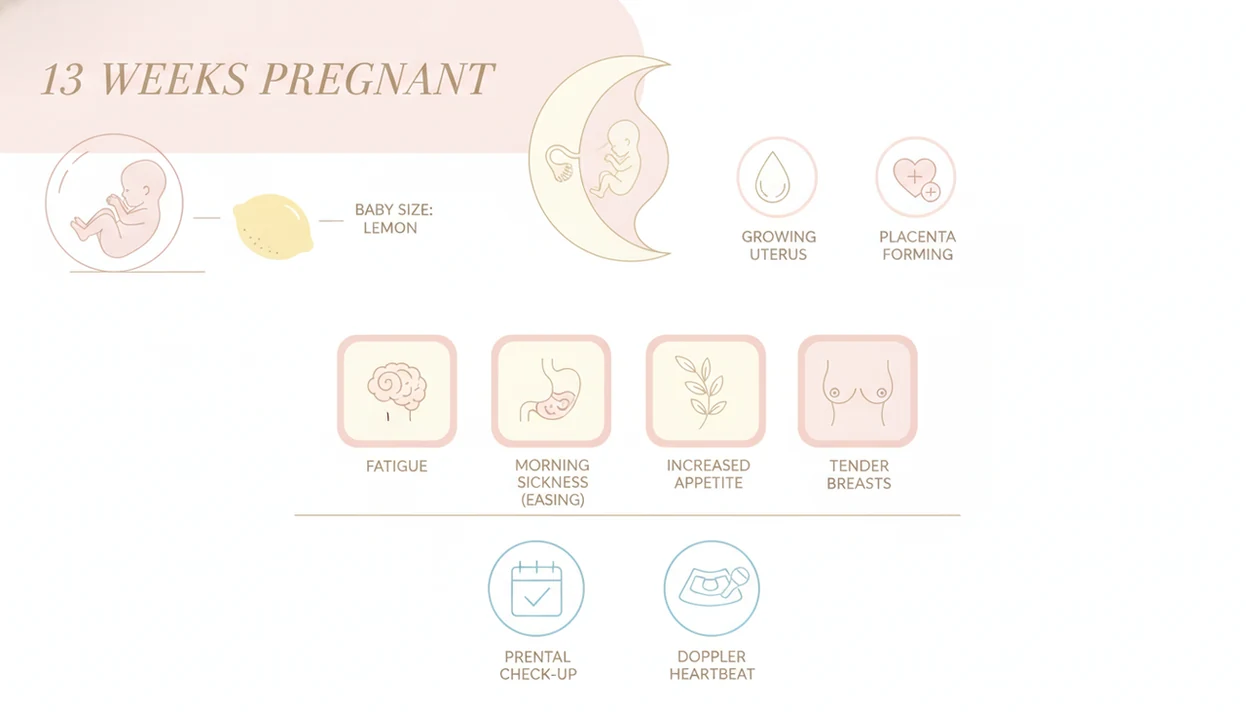
Quick Answers at Week 13
At 13 weeks pregnant, your baby is about the size of a lemon or peach, and the main takeaway is that early development is well underway while many first-trimester symptoms may start to ease.
- Baby size: About 2.9 inches, or 7.4 centimeters, crown to rump and around 0.8 ounces, or 23 grams
- Symptoms: improving nausea, fatigue, bloating, constipation, breast tenderness, headaches, dizziness, increased discharge, mild cramping, round ligament discomfort
- Appointments: Routine prenatal care may include blood pressure, weight, urine testing, symptom review, and screening discussions
- Ultrasound: Nuchal translucency screening, if planned, is commonly completed by 13 weeks and 6 days; other ultrasounds depend on dating, symptoms, and provider guidance
Week 13 at a Glance
| Topic | Week 13 |
|---|---|
| Baby size | About 2.9 inches crown to rump and roughly 0.8 ounces, often compared with a lemon, peach, or small plum |
| Ultrasound | Some first-trimester screening ultrasounds, such as nuchal translucency, may still be time-sensitive this week |
| Symptoms | Nausea may improve, while bloating, constipation, headaches, breast tenderness, fatigue, and round ligament discomfort can continue |
| Appointments | A prenatal visit may include vital signs, urine testing, symptom review, fetal heart activity check, and screening choices |
| Key milestone | The baby’s body is becoming more proportional, organs are maturing, and the intestines are settling into the abdomen |
TL;DR
At 13 weeks pregnant, your baby is roughly lemon- or peach-sized and measures about 2.9 inches from crown to rump. This is a transition point near the end of the first trimester, when some nausea and fatigue may ease but routine prenatal care and screening timing still matter.
- Baby development: organs are formed and continuing to mature, with small movements usually still too subtle to feel.
- Common symptoms: bloating, constipation, breast tenderness, headaches, dizziness, discharge, and round ligament discomfort.
- Care this week: keep taking prenatal vitamins with folic acid, follow your OB-GYN or midwife’s screening plan, and call promptly for concerning symptoms.
What does 13 weeks pregnant mean?
Being pregnant 13 weeks means you are near the end of the first trimester or just entering the second trimester, depending on how your clinician counts pregnancy weeks. Pregnancy dating is usually based on the first day of your last menstrual period, so 13 weeks gestation is measured from that date rather than from conception.
At this stage, the embryo is now called a fetus, major organs are formed, and the placenta is continuing to mature as it supports the pregnancy. It is normal to feel excited, uncertain, or oddly in-between right now, especially if symptoms are changing from day to day.
How is the baby developing at week 13?
At week 13, the baby’s body is becoming more proportional, the organs are continuing to mature, and tiny movements are happening even though you usually cannot feel them yet. Bones are hardening, fingers may show unique fingerprints, and the intestines are moving into the abdomen.
Facial features are also refining during early pregnancy week 13. The eyes remain closed, the ears are moving toward their final position, and vocal cords are developing. If you are tracking growth week by week, you can compare this stage with 12 weeks pregnant and see what changes next at 14 weeks pregnant.
How big is the baby at week 13?
At week 13, a typical baby measures about 2.9 inches, or 7.4 centimeters, from crown to rump and weighs around 0.8 ounces, or 23 grams. Common size comparisons include a lemon, peach, or small plum, but exact measurements vary because babies grow at slightly different rates.
Many clinicians use early ultrasound measurements and the last menstrual period to confirm or adjust pregnancy dating. If your dates feel unclear, a due date calculator can estimate timing, but your OB-GYN or midwife may rely on ultrasound findings and your medical history for the most appropriate due date.
What symptoms are common at week 13?
Symptoms at week 13 often include improving nausea, fatigue, bloating, constipation, breast tenderness, headaches, dizziness, increased vaginal discharge, mild cramping, and round ligament pain. A small bump may begin to show, especially in later pregnancies, though body changes vary widely.
Hormonal shifts, including changes in hCG levels and placental development, may be part of why some people start to feel better as the second trimester approaches. Your uterus is growing upward from the pelvis, which can create stretching sensations on one or both sides of the lower abdomen. Gentle movement, hydration, fiber-rich foods, and rest may help common discomforts, and a pregnancy tracker can be useful alongside your prenatal care plan.
What appointments and screening may happen at 13 weeks gestation?
At 13 weeks gestation, a prenatal appointment may include blood pressure, weight, urine testing, symptom review, and discussion of screening options. Many clinicians may also try to check fetal heart activity with Doppler, although hearing it depends on fetal position, body type, equipment, and exact dating.
ACOG and NHS-style prenatal guidance commonly emphasizes shared decision-making around screening rather than one single required path for everyone. This week can be the final window for some first-trimester screening tests, such as nuchal translucency ultrasound, which is typically done through 13 weeks and 6 days. Noninvasive prenatal testing may already be available, and some diagnostic testing options have specific timing limits, so ask which tests fit your pregnancy, history, and preferences.
How can you care for yourself during early pregnancy week 13?
During early pregnancy week 13, self-care usually means staying consistent with prenatal vitamins, folic acid, hydration, regular meals, gentle movement if cleared, and enough rest. If nausea is improving, this can be a good time to rebuild balanced eating habits without trying to make your routine perfect.
If anxiety, mood changes, or stress feel heavy, pregnancy-safe relaxation practices such as pregnancy meditation may be useful. A broad pregnancy week-by-week guide can help you understand upcoming milestones, and comparing tools in a best pregnancy app overview may help you choose support that matches your style.
Limitations & Safety
This page is educational and cannot diagnose symptoms, confirm pregnancy dating, or replace care from your OB-GYN, midwife, or other qualified healthcare professional.
- Call your healthcare provider promptly for heavy bleeding, severe abdominal or shoulder pain, fainting, fever, persistent vomiting, signs of dehydration, or worsening one-sided pelvic pain.
- Seek urgent care for severe headache, vision changes, chest pain, shortness of breath, seizures, or symptoms that feel sudden or alarming.
- Screening and ultrasound timing can vary by country, clinic, medical history, and pregnancy dating, so follow your provider’s schedule.
- If you have a high-risk pregnancy, previous pregnancy complications, or a chronic medical condition, ask your clinician which symptoms and appointments need closer monitoring.
- Do not start, stop, or change medications or supplements without medical guidance, including over-the-counter products and herbal remedies.
Frequently Asked Questions
How big is my baby at 13 weeks pregnant?
At this week, a typical baby is about 2.9 inches from crown to rump and weighs around 0.8 ounces. Many clinicians compare that size with a lemon, peach, or small plum, while noting that normal measurements vary.
Is 13 weeks pregnant the second trimester?
Week 13 is often treated as the end of the first trimester, though some clinicians describe it as the start of the second trimester. Either way, you are moving into a transition stage when nausea and fatigue may begin to improve for some people.
What symptoms are common at 13 weeks pregnant?
Common symptoms include improving nausea, fatigue, bloating, constipation, breast tenderness, headaches, dizziness, increased discharge, and mild stretching or round ligament pain. ACOG-style prenatal guidance commonly notes that symptoms vary widely, and having fewer symptoms does not automatically mean something is wrong.
Can I feel the baby move at week 13?
The baby can move at week 13, but most people cannot feel those movements yet. First noticeable flutters are commonly felt later, often around 16 to 22 weeks, and may be noticed earlier in a later pregnancy.
What tests or appointments happen around week 13?
A routine prenatal visit may include blood pressure, weight, urine testing, symptom review, and discussion of screening choices. If first-trimester screening with nuchal translucency is planned, many clinicians use 13 weeks and 6 days as the upper timing limit.
Is cramping normal at 13 weeks pregnant?
Mild, brief cramping or stretching can be common as the uterus grows and ligaments stretch. Call your provider promptly if pain is severe, one-sided, worsening, or accompanied by heavy bleeding, fever, fainting, or shoulder pain.
Should I still take folic acid and prenatal vitamins at week 13?
Yes, continue prenatal vitamins and folic acid as directed unless your clinician tells you otherwise. Many clinicians recommend staying consistent with prenatal supplementation because nutritional needs continue as the placenta, uterus, blood volume, and baby grow.