 Pregnancy
9 Weeks Pregnant: What to Expect This Week
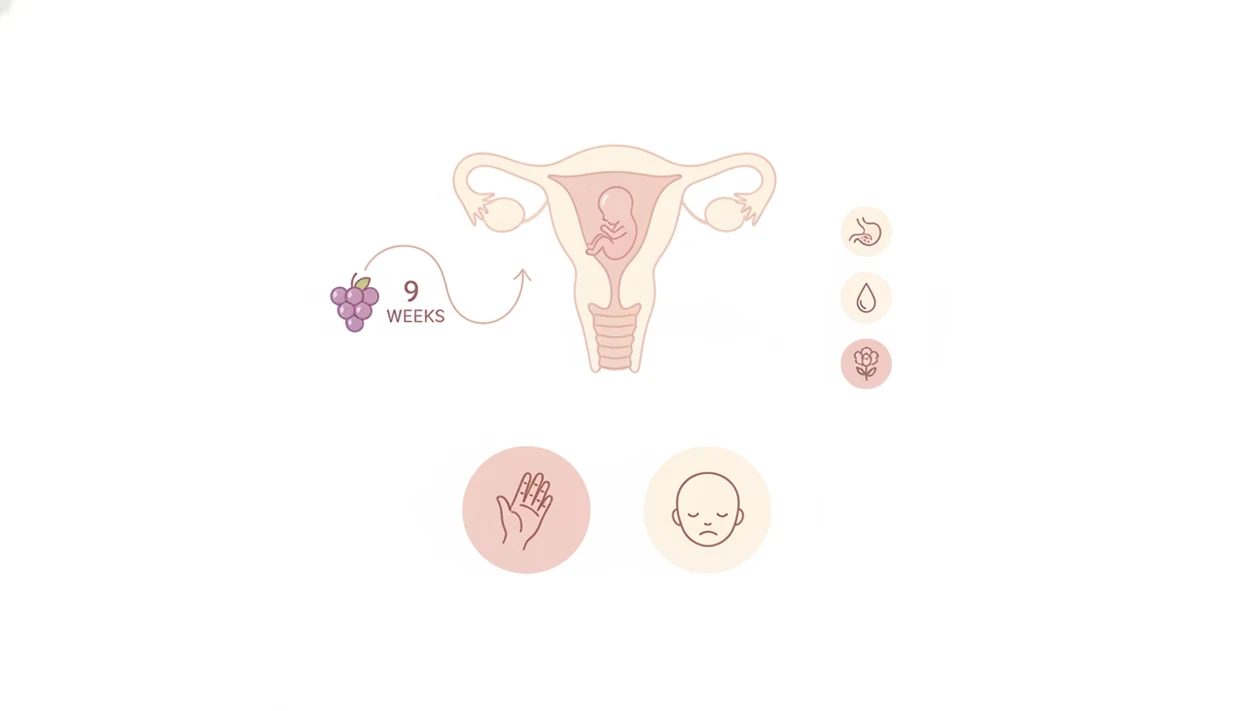
Quick Answers at Week 9
At 9 weeks pregnant, your baby is about the size of a grape or green olive, and the main takeaway is rapid early development alongside strong first-trimester symptoms for many people.
- Baby size: about 0.8 to 1 inch long from crown to rump
- Symptoms: nausea, fatigue, breast tenderness, bloating, constipation, frequent urination, food aversions, mood changes
- Appointments: a first prenatal visit may happen between 8 and 12 weeks, often with history, urine testing, blood work, and due date review
- Ultrasound: a dating ultrasound may confirm gestational age, heartbeat, pregnancy location, and number of babies if your clinician recommends it
Week 9 at a Glance
| Topic | Week 9 |
|---|---|
| Baby size | About 0.8 to 1 inch crown to rump, often compared with a grape, cherry, or green olive |
| Ultrasound | May show the embryo, heartbeat, gestational sac, pregnancy location, and whether there is more than one baby |
| Symptoms | Nausea, fatigue, tender breasts, bloating, constipation, frequent urination, discharge changes, headaches, and mood shifts |
| Appointments | First prenatal visit may include medical history, blood pressure, weight, urine testing, blood work, supplement review, and due date discussion |
| Key milestone | Early facial features, eyelids, fingers, toes, limbs, heart, digestive structures, and reproductive tissue continue developing rapidly |
TL;DR
At week 9, the baby is roughly grape-sized and developing quickly in the head, face, limbs, heart, and early organs. Many symptoms at week 9 are driven by changing pregnancy hormones, and this is a common window for a first prenatal visit or dating ultrasound.
- Baby size is commonly estimated at about 0.8 to 1 inch from crown to rump.
- Nausea, fatigue, breast tenderness, bloating, frequent urination, and mood changes are common.
- Ask your OB-GYN or midwife about prenatal vitamins, folic acid, medications, screening options, and warning signs.
What 9 weeks pregnant means
Pregnant 9 weeks usually means you are nine weeks from the first day of your last menstrual period, not nine weeks from conception. Clinicians commonly date pregnancy this way because ovulation and conception timing can be uncertain, while the last menstrual period gives a consistent starting point for estimating gestational age.
This point in early pregnancy week 9 follows implantation, and your body is responding to hormones such as hCG and progesterone while the placenta continues developing. If your dates are uncertain, an OB-GYN or midwife may use ultrasound measurements to refine your estimated due date. You can compare this stage with the wider pregnancy week-by-week timeline, or use a due date calculator if you know your last period date or conception estimate.
Baby development and size at week 9
During week 9, the baby is commonly estimated at about 0.8 to 1 inch long from crown to rump, similar to a grape, cherry, or green olive. Many clinicians use crown-to-rump length on ultrasound in the first trimester because it can help confirm gestational age when menstrual dates are unclear.
The head is still large compared with the body, the heart is beating, facial features are becoming more defined, and tiny arms and legs are lengthening. Fingers and toes are forming, eyelids are developing, and early ears, digestive structures, and reproductive tissue continue to mature. Tiny spontaneous movements may begin, but they are too small to feel. If you are looking ahead, 10 weeks pregnant often brings more noticeable changes in fetal shape and proportions.
Common symptoms and body changes
Common symptoms at week 9 include nausea, food aversions, fatigue, tender breasts, bloating, constipation, increased discharge, frequent urination, headaches, and emotional ups and downs. Research and clinical guidance commonly describe wide variation in first-trimester symptoms, so strong symptoms do not guarantee a problem-free pregnancy and mild symptoms do not automatically mean something is wrong.
Your uterus is growing, but many people do not have a clear bump yet. Clothing may feel tighter because of bloating and hormone-related digestion changes. It is also normal to feel excited, uncertain, or overwhelmed when your body is changing faster than your routine can keep up. For day-to-day support, a pregnancy tracker can help you note symptoms, questions, appointments, and changes to discuss with your prenatal care team.
Appointments and tests around this week
Around week 9, a first prenatal appointment may include medical history, blood pressure, weight, urine testing, blood work, and a review of medications, supplements, and health conditions. ACOG and NHS guidance commonly emphasize early prenatal care to confirm dating, identify risk factors, and personalize advice for the pregnancy.
Some pregnancies also have a dating ultrasound to check the gestational sac, embryo, heartbeat, pregnancy location, gestational age, or number of babies. Blood tests may include blood type and Rh factor, complete blood count, immunity checks, and screening for certain infections, depending on local guidance. Genetic screening options are often discussed now; some blood-based screening can begin around 10 weeks, while nuchal translucency ultrasound is usually scheduled later in the first trimester.
Practical next steps this week
This week, practical priorities include taking a prenatal vitamin with folic acid, staying hydrated, eating small balanced meals if nausea is present, and avoiding alcohol, smoking, and unsafe medications unless cleared by a clinician. Many clinicians also recommend bringing a list of prescriptions, over-the-counter medicines, supplements, allergies, prior pregnancies, and family history to your first visit.
Gentle movement, rest, and symptom tracking can make the first trimester easier to manage. If anxiety, poor sleep, or nausea-related stress is building, calming routines may help alongside medical care. Some people use short pregnancy meditation sessions for relaxation. If you were just at 8 weeks pregnant, this stage may feel similar, with gradual rather than dramatic changes.
Limitations & Safety
Limitations and safety guidance mean this page is general education and urgent symptoms should be discussed with a qualified healthcare professional promptly.
- This page is not a diagnosis, treatment plan, or substitute for prenatal care.
- Contact your clinician promptly for heavy bleeding, severe one-sided pain, fainting, shoulder pain, fever, severe dehydration, or persistent vomiting.
- Seek urgent care if you have symptoms of ectopic pregnancy, severe abdominal pain, or bleeding with dizziness or weakness.
- Medication, supplement, exercise, and travel decisions should be personalized with your healthcare professional.
- Pregnancy dating can change after ultrasound, especially if periods are irregular or conception timing is uncertain.
Frequently Asked Questions
How big is the baby at 9 weeks pregnant?
At this stage, the baby is commonly estimated at about 0.8 to 1 inch long from crown to rump. Many clinicians and pregnancy references compare this with a grape, cherry, or green olive, though exact size varies.
What symptoms are common during week 9?
Symptoms at week 9 commonly include nausea, fatigue, breast tenderness, bloating, constipation, frequent urination, food aversions, and mood changes. Clinicians generally consider variation normal, but severe dehydration, persistent vomiting, heavy bleeding, or significant pain should be checked promptly.
Can you hear a heartbeat at 9 weeks gestation?
A heartbeat may be seen on ultrasound at 9 weeks gestation if the pregnancy is developing and the dates are accurate. Many clinicians do not rely on a handheld Doppler this early because it may not consistently detect the heartbeat yet.
Do you have a baby bump this early?
Many people do not have a clear baby bump this early, especially in a first pregnancy. Bloating and hormone-related digestion changes can still make clothes feel tighter before the uterus is noticeably rising.
What appointments might happen around 9 weeks pregnant?
A first prenatal visit often happens between 8 and 12 weeks. It may include medical history, blood pressure, urine testing, blood work, due date review, discussion of prenatal vitamins and folic acid, and sometimes a dating ultrasound depending on your care plan.
Is cramping normal at week 9?
Mild, occasional cramping can happen as the uterus grows and pregnancy hormones affect digestion. ACOG and NHS-style safety guidance commonly advise seeking prompt care for severe pain, one-sided pain, shoulder pain, fainting, heavy bleeding, fever, or pain with dizziness.