 Pregnancy
7 Weeks Pregnant: What to Expect This Week
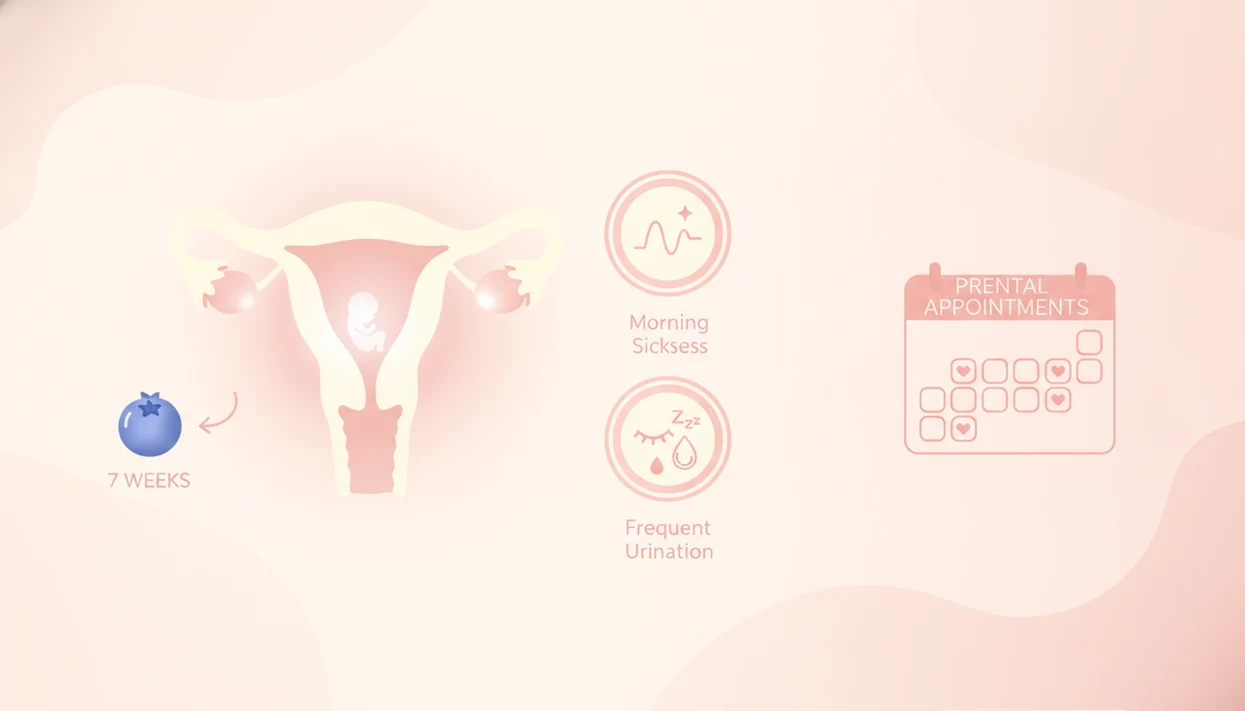
Quick Answers at Week 7
At 7 weeks pregnant, your embryo is about blueberry-sized, and the main focus is rapid organ development plus early prenatal planning.
- Baby size: about 7 to 10 millimeters crown to rump, often compared with a blueberry
- Symptoms: nausea, fatigue, breast tenderness, bloating, food aversions, heightened smell, mood changes, frequent urination
- Appointments: some first prenatal visits happen now, though many clinicians schedule them around weeks 8 to 10
- Ultrasound: may show a gestational sac, embryo, crown-rump length, and cardiac activity, depending on dating and scan type
Week 7 at a Glance
| Topic | Week 7 |
|---|---|
| Baby size | Often compared with a blueberry; roughly 7 to 10 millimeters crown to rump, with normal variation. |
| Ultrasound | A transvaginal scan may help confirm location, estimate gestational age, and sometimes show cardiac activity. |
| Symptoms | Nausea, fatigue, sore breasts, bloating, mild cramping, food aversions, and frequent urination are common. |
| Appointments | Some visits happen this week, but many OB-GYN or midwife practices schedule the first prenatal visit around weeks 8 to 10. |
| Key milestone | The brain, heart, limb buds, early facial structures, placenta, and umbilical cord are developing quickly. |
TL;DR
Week 7 is an early pregnancy stage when the embryo is still tiny but developing major body systems quickly. Symptoms can feel intense or surprisingly mild, and both patterns can occur while you wait for early prenatal care.
- Baby size is commonly compared with a blueberry, around 7 to 10 millimeters crown to rump.
- Common symptoms include nausea, fatigue, breast tenderness, bloating, food aversions, and frequent urination.
- Call your clinician for heavy bleeding, severe one-sided pain, fainting, fever, shoulder pain, or dehydration symptoms.
What Does 7 Weeks Pregnant Mean?
Being 7 weeks pregnant means you are about five weeks past conception because pregnancy is dated from the first day of your last menstrual period. At this stage, the baby is medically called an embryo, and early pregnancy week 7 is a time of rapid growth, changing hCG levels, and early placental development.
If your dates feel uncertain, use a due date calculator and review the full pregnancy week-by-week guide to see how this stage fits into the first trimester. Many clinicians confirm dating with your last menstrual period, ovulation history when known, and sometimes ultrasound measurements.
How Is the Baby Developing During Week 7?
During week 7, the embryo is developing major body systems quickly, including the brain, spinal cord, heart, limb buds, eyes, ears, mouth, and early digestive structures. The placenta and umbilical cord are also continuing to develop so they can support oxygen and nutrient exchange as pregnancy progresses.
The head can look large compared with the body because brain growth is especially active. Tiny paddles that will become hands and feet are becoming more visible, and early facial areas are beginning to take shape; normal timing can vary slightly, especially if ovulation or implantation happened later than expected.
How Big Is the Baby at Week 7?
At this stage, the embryo is commonly compared with a blueberry and may measure roughly 7 to 10 millimeters from crown to rump. Many clinicians use crown-rump length on early ultrasound to estimate gestational age, but size estimates are approximate because ovulation timing, implantation timing, and ultrasound angle can affect measurements.
If you are comparing weeks, look back at 6 weeks pregnant or ahead to 8 weeks pregnant to understand how quickly size and development change in early pregnancy.
What Symptoms Are Common at Week 7?
Symptoms at week 7 commonly include nausea, vomiting, fatigue, sore breasts, bloating, mild cramping, food aversions, heightened smell, mood changes, and frequent urination. Research suggests hormone changes, including rising hCG, are one reason symptoms can feel strong, but symptom intensity does not reliably measure pregnancy health.
Your body is increasing blood volume, supporting early placental growth, and adjusting to pregnancy hormones. Mild pelvic pulling or brief cramps can happen as the uterus changes, but severe pain, heavy bleeding, dizziness, or shoulder pain should be discussed with an OB-GYN, midwife, or urgent care clinician promptly.
What Appointments, Ultrasound, or Tests Might Happen This Week?
This week, appointments may happen for some people, but many practices schedule the first prenatal visit around weeks 8 to 10. A visit may include medical history, medication review, blood pressure, urine testing, blood work, prenatal vitamin guidance, folic acid counseling, and discussion of screening options.
An ultrasound around 7 weeks gestation may be done to confirm the pregnancy location, look for a gestational sac and embryo, estimate gestational age, check for multiples, or evaluate pain or bleeding. Cardiac activity is often visible on transvaginal ultrasound around this time, but exact visibility depends on dating accuracy, equipment, scan type, and embryo position.
For ongoing check-ins, a pregnancy tracker or pregnancy app can help you record symptoms, questions, appointments, and milestones to discuss with your care team.
What Self-Care Helps During Early Pregnancy Week 7?
Self-care now focuses on hydration, small frequent meals, rest, prenatal vitamins with folic acid, and avoiding alcohol, smoking, and medications that have not been cleared by a clinician. ACOG and NHS guidance commonly emphasizes checking medication safety in pregnancy and seeking help if vomiting makes it hard to keep fluids down.
For nausea, bland foods, ginger, vitamin B6, or other clinician-approved options may help some people. If you are pregnant 7 weeks and feeling excited one hour and overwhelmed the next, that emotional whiplash is common enough to be worth treating gently, not judging.
Gentle routines such as sleep support, light movement if approved, journaling questions, or pregnancy meditation may help you feel more grounded between appointments. These tools do not replace clinical care, but they can support day-to-day coping.
What Should You Ask Your Clinician?
You should ask which medications and supplements are safe, how to manage nausea, what foods to avoid, when screening tests are offered, and which symptoms require urgent care. It is also reasonable to ask how your due date will be confirmed and whether early ultrasound is recommended based on your health history.
Bring your last menstrual period date, pregnancy test date, medication list, allergies, medical conditions, prior pregnancy history, and any fertility treatment details. If you have spotting, cramping, severe nausea, or uncertainty about dates, write down when symptoms started and what makes them better or worse.
Limitations & Safety
The safest approach this week is to use this information as general education and follow individualized guidance from your own clinician.
- This page is not a diagnosis or personalized medical advice.
- Pregnancy dating can vary; your clinician may adjust your due date after ultrasound or clinical review.
- Seek urgent medical care for heavy bleeding, severe abdominal or one-sided pelvic pain, fainting, shoulder pain, fever, or signs of dehydration.
- Contact your clinician before starting, stopping, or changing medications, supplements, or treatments during pregnancy.
- If you have a high-risk pregnancy, fertility treatment pregnancy, prior ectopic pregnancy, or significant medical condition, follow individualized guidance from your care team.
Frequently Asked Questions
What size is the baby at 7 weeks pregnant?
The embryo is often compared with a blueberry at this stage. A typical crown-rump length may be around 7 to 10 millimeters, but many clinicians emphasize that normal measurements vary based on dating and ultrasound technique.
What symptoms are common during week 7?
Common symptoms include nausea, fatigue, breast tenderness, bloating, mild cramping, food aversions, heightened smell, mood changes, and frequent urination. Research suggests hormone changes, including hCG, contribute to many symptoms, but having stronger or milder symptoms does not reliably indicate pregnancy health.
Can you see a heartbeat at 7 weeks gestation?
Cardiac activity is often visible on a transvaginal ultrasound around this time. Visibility depends on exact dating, equipment, scan type, and embryo position, so your OB-GYN or midwife should interpret the findings and explain whether follow-up is needed.
Do I need a prenatal appointment this week?
You may have a prenatal appointment this week, but many clinics schedule the first visit around weeks 8 to 10. Earlier care may be recommended for pain, bleeding, uncertain dates, fertility treatment, prior pregnancy loss, or specific health conditions.
What might an ultrasound show in early pregnancy week 7?
An ultrasound may show the pregnancy location, gestational sac, embryo, crown-rump length, and sometimes cardiac activity. Many clinicians use early ultrasound when dates are uncertain, symptoms need evaluation, or there is a reason to confirm location and development.
When should I call a doctor or midwife?
Call promptly for heavy bleeding, severe or one-sided pelvic pain, fainting, shoulder pain, fever, or vomiting that prevents you from keeping fluids down. ACOG and NHS guidance commonly treats these as symptoms that need timely medical assessment, especially if they feel severe or urgent.