 Pregnancy
11 Weeks Pregnant: What to Expect This Week
Quick Answers at Week 11
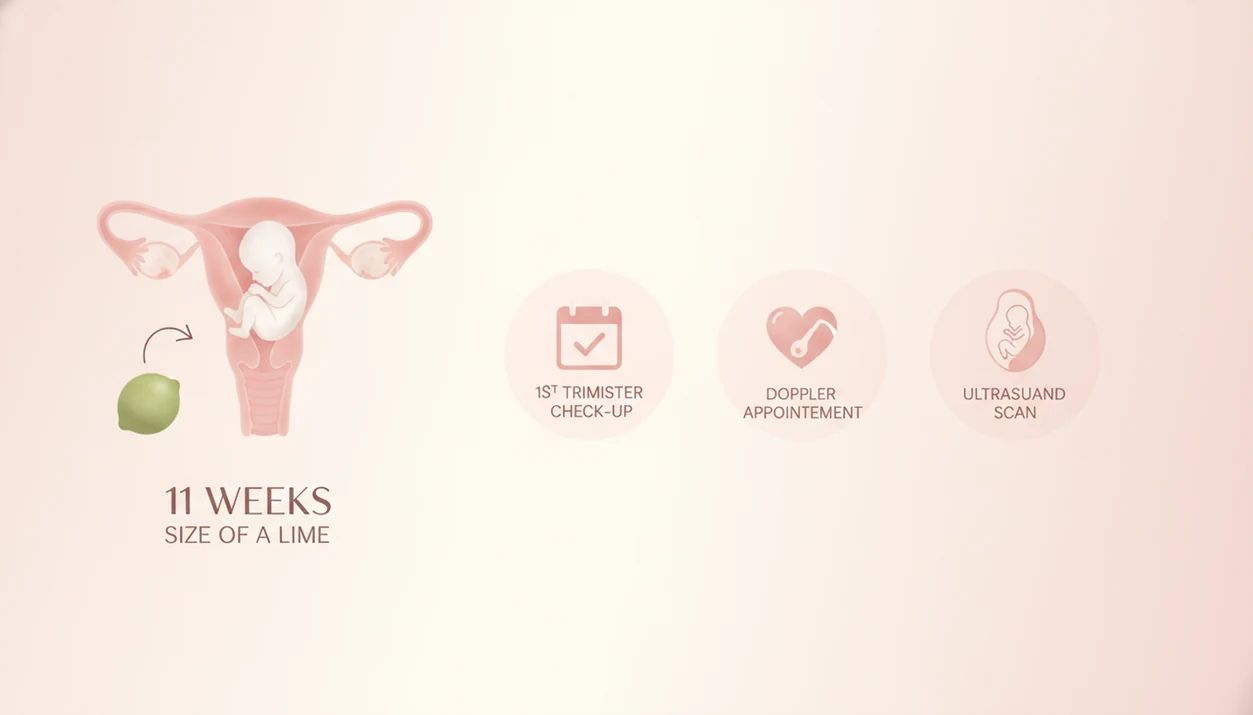
At 11 weeks pregnant, your baby is about the size of a fig or small lime, and the main takeaway is rapid growth, refining organs, and first-trimester screening decisions.
- Baby size: about 1.5 to 2 inches crown to rump, roughly 4 to 5 centimeters
- Symptoms: nausea, fatigue, breast tenderness, bloating, constipation, mood changes, frequent urination
- Appointments: a routine prenatal visit may include blood pressure, weight, urine testing, blood work, and screening discussions
- Ultrasound: may be used for dating, heartbeat confirmation, or nuchal translucency screening if recommended
Week 11 at a Glance
| Topic | Week 11 |
|---|---|
| Baby size | About a fig, Brussels sprout, or small lime; around 1.5 to 2 inches crown to rump |
| Ultrasound | May confirm gestational age, check heartbeat, or begin first-trimester screening discussions |
| Symptoms | Nausea, fatigue, bloating, constipation, tender breasts, mood shifts, and frequent urination are common |
| Appointments | Routine prenatal care may include blood pressure, urine testing, blood work, and review of medications or supplements |
| Key milestone | Major organs are formed and continuing to mature while facial features, fingers, toes, and early movements become more defined |
TL;DR
At 11 weeks pregnant, the baby is roughly fig-to-small-lime sized, and development is focused on growth and refinement rather than forming brand-new major organs. This week often centers on managing first-trimester symptoms, continuing prenatal vitamins, and discussing ultrasound or screening options with an OB-GYN or midwife.
- Baby length is about 1.5 to 2 inches crown to rump, though ultrasound dating is more precise than size comparisons.
- Symptoms at week 11 may include nausea, fatigue, breast tenderness, bloating, constipation, mood changes, and frequent urination.
- Appointments may involve urine testing, blood work, dating review, or first-trimester screening such as nuchal translucency or blood tests.
What Does 11 Weeks Pregnant Mean?
At week 11, you are in the first trimester and nearing the end of month three, with gestational age usually counted from the first day of your last menstrual period. Fetal age is typically about two weeks less than 11 weeks gestation because pregnancy dating begins before ovulation and conception.
If your dates are uncertain, many clinicians use early ultrasound measurements along with menstrual history to refine the estimated due date. Earlier signs such as a gestational sac are less central now than crown-to-rump length, heartbeat, and overall fetal growth.
Being pregnant 11 weeks can feel exciting and unsettling at the same time, especially when symptoms change from day to day.
Baby Development During Week 11
During week 11, the baby is now called a fetus, and development is focused on rapid growth, organ refinement, and more defined body features. The brain, heart, kidneys, liver, and intestines continue maturing, while tiny fingers and toes are separating and facial features are becoming easier to recognize.
The head is still large compared with the body because the brain is growing quickly. Eyelids are forming and may remain fused for many weeks, ears are moving toward their final position, tooth buds are developing, and the external genitals are beginning to form, although sex is often not clear on ultrasound yet.
The placenta is also maturing after implantation and gradually taking on more support functions, while hCG and other pregnancy hormones continue to influence symptoms. For a week-by-week view of what comes next, explore the full pregnancy week-by-week guide or compare this stage with 10 weeks pregnant and 12 weeks pregnant.
How Big Is the Baby at Week 11?
At week 11, the baby is about 1.5 to 2 inches long crown to rump, or roughly 4 to 5 centimeters, and is often compared with a fig, Brussels sprout, or small lime. Weight is roughly a quarter ounce, but normal fetal growth varies, and ultrasound measurements are more precise than fruit-size comparisons.
Your uterus is also growing, even if you do not look obviously pregnant yet. Some people notice a softer waistline or tighter clothing, while others see little outward change; body type, abdominal muscle tone, bloating, prior pregnancies, and exact dating all affect when a bump appears.
Body Changes and Symptoms at Week 11
Symptoms at week 11 commonly include nausea, food aversions, fatigue, breast tenderness, bloating, constipation, headaches, mood shifts, and frequent urination. ACOG and NHS guidance commonly describe these first-trimester symptoms as hormone-related, especially as hCG, progesterone, expanding blood volume, and a growing uterus affect the body.
Some discomforts may begin easing soon, but it is also normal for nausea and fatigue to continue for several more weeks. Light cramping can happen as the uterus grows and ligaments stretch, but severe pain, one-sided pain, heavy bleeding, fever, fainting, or signs of dehydration should be checked promptly.
Vaginal discharge may increase in pregnancy, but discharge with odor, itching, burning, or pain deserves medical evaluation. Gentle routines can help some people manage stress and discomfort, including short sessions from pregnancy meditation or a simple daily log in a pregnancy tracker.
Appointments, Ultrasound, and Tests Around Week 11
Around week 11, prenatal care may include a routine visit, blood pressure check, weight, urine testing, blood work, and discussion of screening options. Many clinicians also review symptoms, medical and family history, medications, vaccines, nutrition, and whether prenatal vitamins with folic acid are being taken as directed.
Some people have an ultrasound at this stage to confirm gestational age, check the heartbeat, or evaluate early anatomy. First-trimester screening may also be discussed, including nuchal translucency ultrasound between 11 weeks and 13 weeks 6 days, blood tests, or noninvasive prenatal testing, which is typically available from about 10 weeks onward.
If your dates are uncertain, a due date calculator can give an estimate, but an OB-GYN or midwife may adjust the due date based on ultrasound and clinical history. If you are choosing tools for tracking appointments and symptoms, see the best pregnancy app guide.
Practical Tips for Early Pregnancy Week 11
In early pregnancy week 11, small daily habits often help more than major lifestyle changes. Aim for regular meals or snacks if nausea is present, drink fluids throughout the day, continue your prenatal vitamin as directed, and prioritize rest when fatigue is strong.
Light activity is often considered safe in uncomplicated pregnancies, but ACOG-style guidance generally recommends asking your clinician for individualized advice if you have bleeding, pain, medical conditions, or exercise restrictions. It can also help to write down questions before your appointment about safe medications, nausea treatment, constipation, prenatal testing, exercise, work exposures, travel, and when to call the office.
Some parents begin exploring later pregnancy resources early, such as hypnobirthing, while keeping the focus this week on first-trimester care, screening decisions, and symptom management.
Limitations & Safety
This page is educational and cannot diagnose symptoms, confirm fetal development, or replace care from your healthcare professional.
- Contact your healthcare professional urgently for heavy bleeding, severe abdominal or pelvic pain, fainting, fever, persistent vomiting, or signs of dehydration.
- Call your clinician if you have one-sided pain, shoulder pain, worsening dizziness, or symptoms that feel unusual for you.
- Screening tests estimate risk; diagnostic tests and medical counseling are needed to confirm many conditions.
- Pregnancy symptoms and fetal measurements vary. Your clinician can interpret findings in the context of your dates, history, and ultrasound results.
- If you are unsure whether a symptom is normal, it is safer to contact your OB-GYN, midwife, or local maternity unit for guidance.
Frequently Asked Questions
How big is my baby at 11 weeks pregnant?
At this stage, the baby is commonly compared with a fig or small lime. Average crown-to-rump length is about 1.5 to 2 inches, or 4 to 5 centimeters, though clinicians rely on ultrasound measurements rather than food comparisons when precision matters.
Can I feel the baby move at 11 weeks?
Usually, no—you are unlikely to feel movement this early. The fetus may be making small movements, but many clinicians note that first noticeable movement is more often felt later in the second trimester, commonly around 16 to 22 weeks.
Is it normal to still feel nauseous at 11 weeks pregnant?
Yes, nausea and food aversions are still common in week 11. ACOG and NHS guidance commonly link these symptoms to first-trimester hormone changes, and while many people improve near the second trimester, some symptoms last longer.
What appointments or tests happen at week 11?
A visit may include blood pressure, weight, urine testing, blood work, symptom review, and discussion of screening choices. Many clinicians also discuss ultrasound dating, nuchal translucency screening, or noninvasive prenatal testing depending on timing, availability, and your preferences.
Should I have a baby bump at 11 weeks pregnant?
Not necessarily; some people notice a small waistline change, while others do not look pregnant yet. Bloating, body type, prior pregnancies, abdominal muscle tone, uterine position, and exact dating can all affect when a bump appears.
Is cramping normal around week 11?
Mild, brief cramping can happen as the uterus grows and ligaments stretch. Severe pain, one-sided pain, heavy bleeding, fever, fainting, or pain that feels unusual should be assessed promptly by a clinician.