 Pregnancy
2 Weeks Pregnant: What to Expect This Week
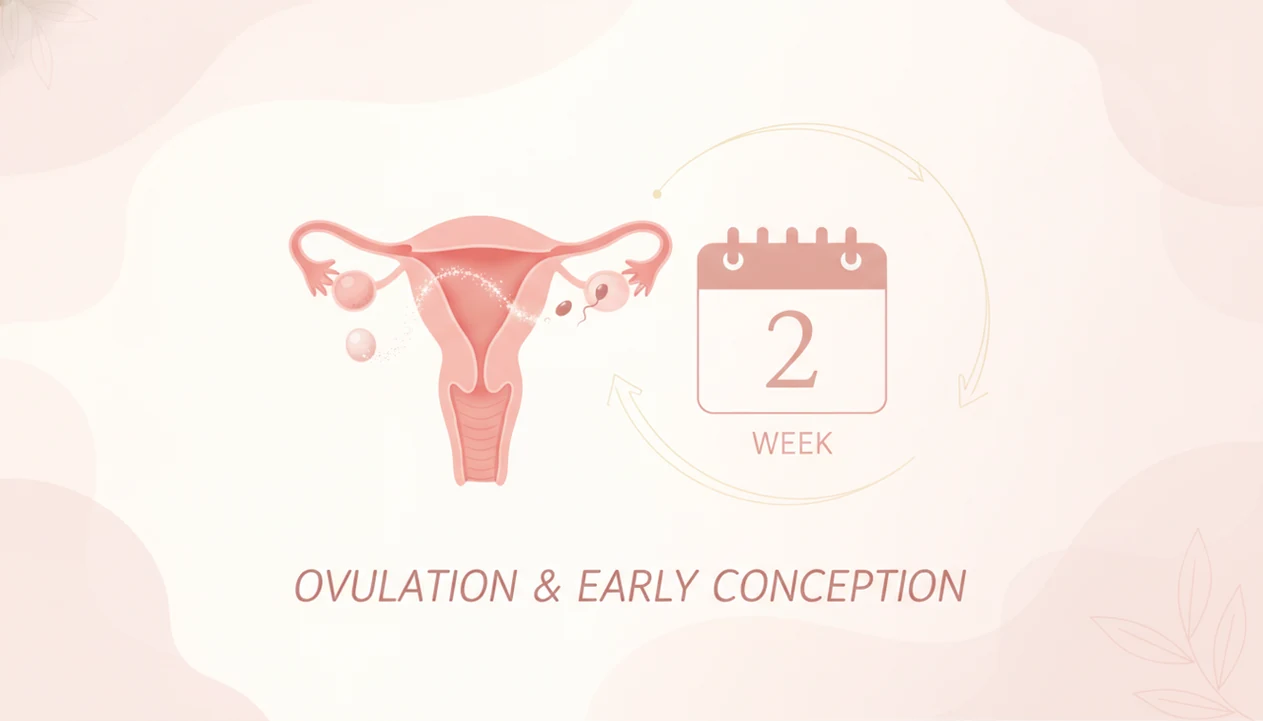
Quick Answers at Week 2
At 2 weeks pregnant, there is usually no measurable baby yet because ovulation and possible conception are the main events.
- Baby size: No visible embryo yet; if fertilization occurs, the zygote is microscopic.
- Symptoms: slippery cervical mucus, mild pelvic twinges, bloating, breast tenderness, libido changes, basal temperature shift
- Appointments: Usually no routine prenatal visit, but an OB-GYN, midwife, or clinician can help with medication review, fertility care, or health conditions.
- Ultrasound: Too early to see a gestational sac, embryo, or heartbeat.
Week 2 at a Glance
| Topic | Week 2 |
|---|---|
| Baby size | Usually no measurable baby yet; a fertilized egg would be microscopic. |
| Ultrasound | No visible pregnancy, gestational sac, or placenta at this stage. |
| Symptoms | Mostly ovulation-related signs such as fertile cervical mucus, mild cramping, bloating, or breast tenderness. |
| Appointments | No routine prenatal appointment for most people; consider preconception care if you use medications or have medical concerns. |
| Key milestone | Ovulation may occur, and conception may happen if sperm meets the egg in the fallopian tube. |
TL;DR
Week 2 is usually about ovulation and possible conception, not a visible pregnancy yet. Dating is commonly counted from the first day of the last menstrual period, so hCG, implantation, and a positive test typically come later.
- Baby size: usually none to measure; a fertilized egg would be microscopic.
- Common signs: fertile cervical mucus, mild pelvic twinges, bloating, breast tenderness, and a post-ovulation temperature rise.
- Best next steps: take prenatal vitamins with folic acid, avoid alcohol and smoking, and ask a clinician about medication safety if needed.
What does 2 weeks pregnant mean?
Being 2 weeks pregnant usually means you are in the second week of gestational age, counted from the first day of your last menstrual period rather than from conception. In a typical 28-day cycle, ovulation often happens near the end of this week, and fertilization may occur soon after. ACOG and NHS guidance commonly use last menstrual period dating because the exact day of conception is often hard to know. For the full timeline, see our pregnancy week-by-week guide.
What is developing during week 2?
During week 2, there may not be an embryo yet because the egg is usually preparing for ovulation or has only just been released. The ovary releases a mature egg, sperm can travel through fertile cervical mucus, and fertilization may occur in the fallopian tube. If fertilization happens, a single-cell zygote begins the earliest stage of development as it starts moving toward the uterus.
This stage is best understood as the setup for pregnancy rather than a week of visible fetal growth. Implantation usually happens later, and the placenta has not formed yet. To estimate timing from your cycle dates, try the due date calculator.
What symptoms can happen at week 2?
Symptoms at week 2 are usually ovulation-related rather than caused by pregnancy hormones. Many clinicians associate this fertile-window phase with clear, stretchy cervical mucus, mild one-sided pelvic discomfort, breast tenderness, bloating, increased libido, or a slight basal body temperature rise after ovulation. Classic early pregnancy symptoms usually depend on rising hCG, which typically does not increase until after implantation.
Tracking patterns can make early pregnancy week 2 easier to interpret, especially if your cycles are shorter, longer, or irregular. A pregnancy tracker can help you record dates, symptoms at week 2, and possible fertile-window signs, but it cannot confirm ovulation or pregnancy on its own. It is also normal to feel both hopeful and uncertain when every small body change seems important.
How big is the baby in early pregnancy week 2?
In early pregnancy week 2, there is usually no measurable baby size because an embryo may not exist yet. If fertilization occurs, the zygote is microscopic—about the size of the original egg cell and far smaller than a poppy seed. Ultrasound cannot show a gestational sac, embryo, heartbeat, or placenta at this stage.
Size comparisons become more meaningful after implantation and early embryonic development begin. If you are looking ahead, the next stage is covered in 3 weeks pregnant, when fertilization and early cell division are usually the focus.
What appointments and practical steps help during week 2?
Most people do not need a routine prenatal appointment during week 2 unless they are already working with an OB-GYN, midwife, fertility specialist, or another clinician. Many clinicians recommend taking prenatal vitamins with folic acid before conception, reviewing prescription and over-the-counter medications for pregnancy safety, avoiding smoking and alcohol, and asking about chronic conditions such as diabetes, thyroid disease, or high blood pressure.
If you are trying to conceive and are pregnant 2 weeks by last menstrual period dating, timing intercourse or insemination in the days before ovulation and on ovulation day may help because sperm can live for several days in fertile cervical mucus. Gentle stress management, sleep, hydration, and practices like pregnancy meditation may support overall wellbeing, though they do not guarantee conception.
Limitations & Safety
This page is educational and cannot diagnose pregnancy, confirm ovulation, or replace care from a qualified healthcare professional.
- Home pregnancy tests are usually negative this early because implantation and a meaningful hCG rise have typically not happened yet.
- Contact a healthcare professional promptly for severe pelvic pain, heavy bleeding, fainting, fever, or symptoms that feel urgent.
- If you take prescription medicines, have a chronic condition, or have a history of pregnancy complications, ask a clinician before changing treatment or supplements.
- Cycle timing varies; ovulation may happen earlier or later than day 14, especially with irregular cycles.
- If you are receiving fertility treatment, follow the testing and medication schedule provided by your care team.
Frequently Asked Questions
Are you actually pregnant at 2 weeks pregnant?
You may not be biologically pregnant yet. Many clinicians date pregnancy from the first day of the last menstrual period, so week 2 often lines up with ovulation and possible conception rather than an implanted embryo.
What symptoms are common at week 2?
Symptoms are usually related to ovulation, not hCG. Common signs can include slippery cervical mucus, mild pelvic cramping, bloating, breast tenderness, increased libido, or a small rise in basal body temperature after ovulation.
How big is the baby at 2 weeks pregnant?
There is usually no measurable baby yet. If fertilization occurs near the end of the week, the fertilized egg is microscopic and cannot be seen on ultrasound.
Can I take a pregnancy test during week 2?
A home pregnancy test is usually too early during week 2. Most tests work after implantation, when hCG rises enough to detect, often around the time of a missed period or shortly after.
Do I need a doctor appointment during week 2?
Most people do not need a routine prenatal visit this early. A preconception or early planning appointment with an OB-GYN, midwife, or clinician can be helpful if you take medications, have a chronic condition, are using fertility treatment, or have concerns about your cycle.
Can ultrasound show anything at 2 weeks gestation?
Ultrasound usually cannot show a pregnancy at 2 weeks gestation. A gestational sac, embryo, heartbeat, and placenta are not visible yet because implantation typically has not occurred.