 Pregnancy
10 Weeks Pregnant: What to Expect This Week
Quick Answers at Week 10
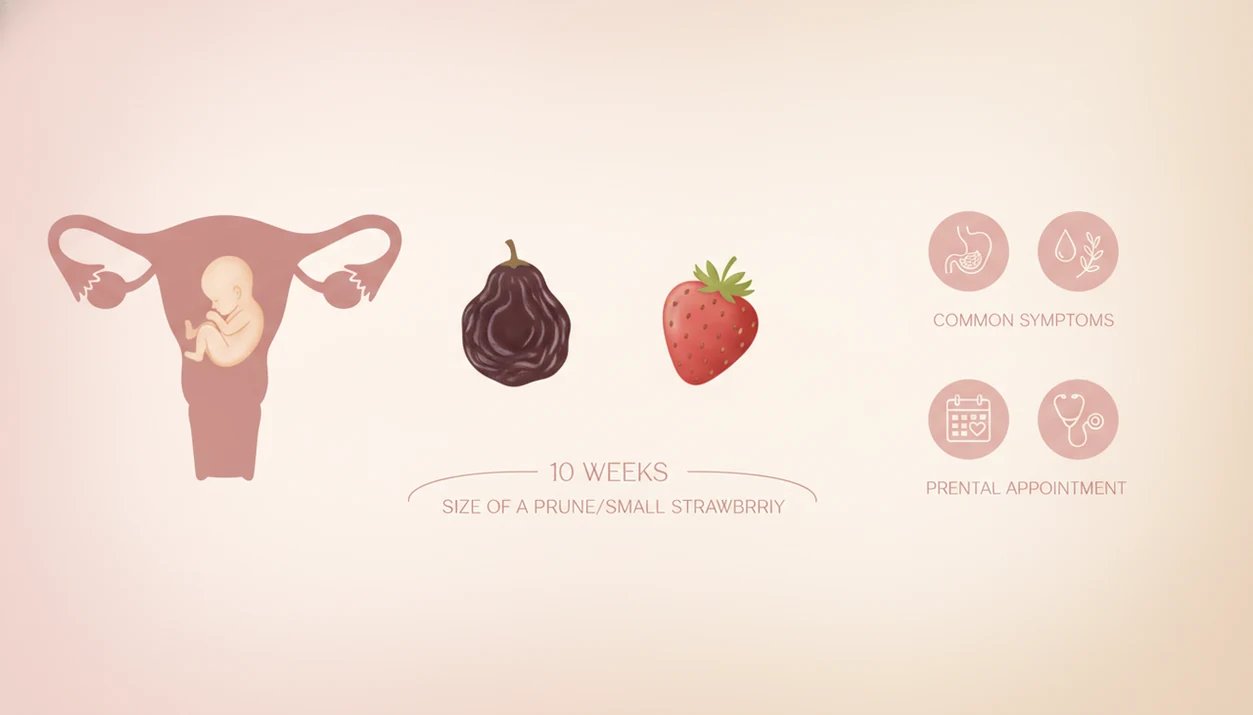
At 10 weeks pregnant, your baby is about the size of a prune or small strawberry, and the main takeaway is that early organ development is continuing as the fetal stage begins.
- Baby size: about 3 to 3.5 cm crown to rump, often compared with a prune, kumquat, or small strawberry
- Symptoms: nausea, food aversions, fatigue, breast tenderness, bloating, constipation, frequent urination, headaches, mood changes
- Appointments: first prenatal visit may happen around now, with health history, blood pressure, urine and blood tests, due date review, and screening discussion
- Ultrasound: a dating scan may confirm gestational age; heartbeat is usually present, but handheld Doppler detection can still be inconsistent
Week 10 at a Glance
| Topic | Week 10 |
|---|---|
| Baby size | About 3 to 3.5 cm crown to rump, similar to a prune or small strawberry |
| Ultrasound | May show a gestational sac, yolk sac, fetal pole, movement, and heartbeat depending on timing and equipment |
| Symptoms | Nausea, fatigue, breast tenderness, bloating, constipation, frequent urination, headaches, and mood swings may continue |
| Appointments | Many first prenatal visits occur between 8 and 12 weeks with an OB-GYN, midwife, or other prenatal clinician |
| Key milestone | The embryo is transitioning into the fetal stage while major organs, bones, muscles, fingers, toes, eyelids, and ears keep developing |
TL;DR
At 10 weeks pregnant, your baby is roughly prune-sized and is entering the fetal stage while major organs and body structures continue developing. Symptoms may still be intense, and this is a common time for a first prenatal visit, dating ultrasound, or screening discussion.
- Baby size is commonly about 3 to 3.5 cm from crown to rump.
- Symptoms at week 10 often include nausea, fatigue, breast tenderness, bloating, and mood changes.
- Ask your OB-GYN or midwife about prenatal vitamins, folic acid, screening options, and when to seek urgent care.
What 10 weeks pregnant means
10 weeks pregnant means gestational age is usually counted from the first day of your last menstrual period, not from the exact day of conception. You are in the first trimester, about two weeks from the end of it, and your estimated due date is best confirmed by your clinician using menstrual dates and, when appropriate, ultrasound measurements.
If you are still confirming dates, a due date calculator can give an estimate, but early ultrasound is often more accurate when cycles are irregular. For a broader timeline, compare this stage with the full pregnancy week-by-week guide.
Baby development and size at week 10
At week 10, your baby is commonly about 3 to 3.5 centimeters crown to rump, or around the size of a prune, kumquat, or small strawberry. Many clinicians use crown-to-rump length in early pregnancy because curled positioning makes head-to-toe measurement less useful.
This is early pregnancy week 10, when the embryo is transitioning into the fetal stage. The head is still large compared with the body, eyelids are forming, ears are developing, and tiny fingers and toes are becoming more separate. Early bones, muscles, tooth buds, and major organs continue developing, although they are not ready to function independently.
A heartbeat is usually present by this stage and may be seen on ultrasound, along with structures such as the gestational sac, depending on timing and image quality. Hearing it with a handheld Doppler can be inconsistent this early; positioning, dates, body anatomy, and equipment all matter.
Symptoms and body changes this week
Symptoms at week 10 commonly include nausea, food aversions, fatigue, breast tenderness, frequent urination, bloating, constipation, increased vaginal discharge, headaches, and mood swings. ACOG and NHS guidance commonly note that symptom patterns vary widely, and symptom intensity alone does not reliably show how a pregnancy is progressing.
Your uterus is growing, but many people are not visibly showing yet, especially in a first pregnancy. Bloating can make clothes feel tighter before a true bump appears. Gentle movement, fluids, fiber-rich foods, and rest may help with comfort, but persistent vomiting or dehydration needs medical attention.
It is normal to feel excited one moment and uncertain or overwhelmed the next, especially while waiting for appointments or scan reassurance. If stress feels high, short grounding routines or a guided pregnancy meditation may be useful alongside practical support from your clinician, partner, family, or trusted friends.
Appointments, scans, and screening around 10 weeks gestation
A first prenatal appointment often happens between 8 and 12 weeks, so week 10 may include medical history, blood pressure, weight, urine testing, blood tests, medication review, and discussion of symptoms. Your OB-GYN, midwife, or prenatal clinician may also estimate your due date, review miscarriage warning signs, and explain prenatal screening options.
Depending on your location and health history, you may be offered a dating ultrasound, blood type and Rh testing, anemia screening, infectious disease screening, urine culture, and genetic screening choices. Noninvasive prenatal testing is often available from about this point in pregnancy, but eligibility, timing, and insurance coverage vary.
Before your visit, write down the first day of your last menstrual period, prior pregnancies, medications, supplements, allergies, family history, and any bleeding or pain. Using a pregnancy tracker can help you record symptoms and questions so the appointment is more focused and less stressful.
Practical next steps when pregnant 10 weeks
When pregnant 10 weeks, the most useful next steps are to keep taking a prenatal vitamin as advised, get enough folic acid, avoid alcohol and smoking, review medication safety, and plan regular prenatal care. Many clinicians also recommend discussing food safety, caffeine, exercise, travel, and any work or environmental exposures that may matter for your health history.
The placenta is continuing to develop and will take on more support as pregnancy progresses, while hCG and other hormones may still contribute to first-trimester symptoms. If you like guided support, a structured resource such as a pregnancy app can help organize weekly changes, appointments, and questions.
You can also look back at 9 weeks pregnant or ahead to 11 weeks pregnant to understand how quickly first-trimester development changes.
Limitations & Safety
This page is general education and cannot diagnose symptoms, confirm viability, or replace care from your OB-GYN, midwife, or other qualified healthcare professional.
- Seek urgent medical advice for heavy bleeding, severe one-sided pelvic pain, fainting, shoulder-tip pain, fever, severe dehydration, or persistent vomiting.
- Call your clinician if you have painful cramping, unusual discharge with odor or itching, burning with urination, or symptoms that worry you.
- Medication, supplement, exercise, travel, and food-safety advice can differ based on your health history, so confirm personal recommendations with your healthcare professional.
- If your dates, symptoms, or ultrasound findings do not match averages, your clinician can interpret them in context; normal pregnancy variation is common.
- ACOG and NHS guidance commonly emphasize prompt assessment for severe pain, heavy bleeding, fainting, fever, or dehydration in early pregnancy.
Frequently Asked Questions
How big is my baby at 10 weeks pregnant?
At this stage, your baby is often about 3 to 3.5 centimeters from crown to rump. Many clinicians compare this with a prune, kumquat, or small strawberry, but exact size varies with dating and measurement.
What is developing in the baby at week 10?
The baby is entering the fetal stage, while major organs continue developing. Fingers and toes are becoming more distinct, eyelids and ears are forming, and early bones, muscles, and tooth buds are developing.
Is it normal to still feel very nauseous at 10 weeks pregnant?
Yes, nausea and food aversions are common in week 10 because pregnancy hormones remain high. Contact a clinician if you cannot keep fluids down, are losing weight, feel dizzy, or have signs of dehydration.
Can you hear the heartbeat at 10 weeks gestation?
A heartbeat is usually present and may be visible on ultrasound by this point. A handheld Doppler may or may not detect it this early, so not hearing it immediately does not always mean something is wrong.
What appointments happen around week 10?
Many people have a first prenatal visit between 8 and 12 weeks. This may include health history, blood pressure, urine and blood tests, due date review, screening discussions, and sometimes a dating ultrasound.
Should I be showing during early pregnancy week 10?
Not necessarily; many people are not visibly showing yet. Bloating can make clothes feel tighter, and showing earlier or later can depend on body shape, prior pregnancies, uterine position, and normal variation.