 Pregnancy
6 Weeks Pregnant: What to Expect This Week
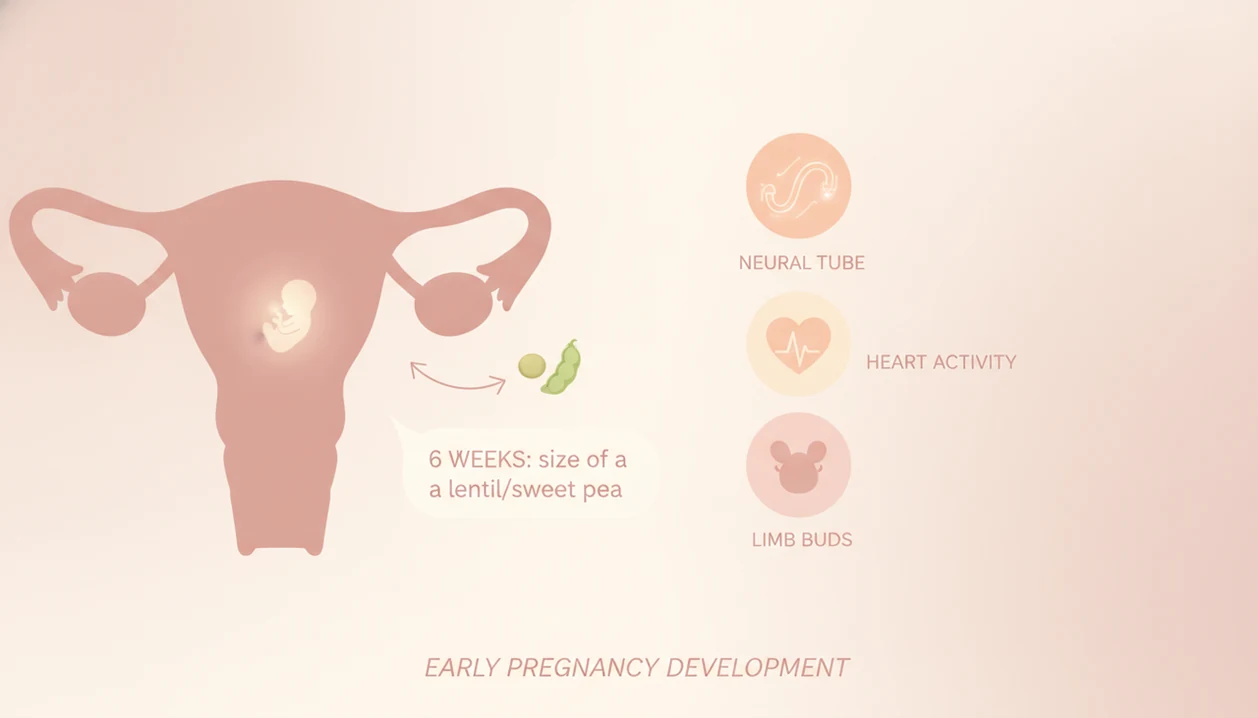
Quick Answers at Week 6
At 6 weeks pregnant, the embryo is about the size of a lentil or small sweet pea, and early organs, the neural tube, limb buds, and possible cardiac activity are developing quickly.
- Baby size: about 2 to 5 millimeters crown-to-rump length
- Symptoms: nausea, fatigue, breast tenderness, bloating, frequent urination, food aversions, mood changes, mild cramping
- Appointments: first prenatal visit may happen now or between weeks 6 and 10, depending on your clinic
- Ultrasound: a transvaginal scan may show a gestational sac, yolk sac, fetal pole, and sometimes cardiac activity, but follow-up may be needed
Week 6 at a Glance
| Topic | Week 6 |
|---|---|
| Baby size | About 2 to 5 millimeters, often compared with a lentil or small sweet pea |
| Ultrasound | Gestational sac and yolk sac are often assessed; cardiac activity may be visible on transvaginal ultrasound |
| Symptoms | Nausea, fatigue, breast tenderness, bloating, frequent urination, food aversions, mood changes, and mild cramping |
| Appointments | Many clinics schedule the first prenatal visit between 6 and 10 weeks |
| Key milestone | Neural tube closure, early brain and spinal cord development, limb buds, and placenta support are underway |
TL;DR
At week 6, the embryo is tiny but developing rapidly, with early neural tube, limb bud, placental, and heart-related development underway. Symptoms can become more noticeable now, and your first prenatal appointment may be scheduled soon or within the next few weeks.
- Size is usually about 2 to 5 millimeters crown-to-rump length.
- A transvaginal ultrasound may show cardiac activity, but not seeing it yet can be due to early dating.
- Call your OB-GYN, midwife, or clinician for heavy bleeding, severe pain, fainting, fever, or vomiting that prevents fluids.
What does 6 weeks pregnant mean?
Being 6 weeks pregnant means your pregnancy is dated from the first day of your last menstrual period, even though conception often occurred about four weeks ago. This timing is called gestational age, so 6 weeks gestation may not match the exact day implantation happened or the day you ovulated.
Early pregnancy week 6 can feel surprisingly intense because hCG and other hormones are rising while visible body changes may still be minimal. For a broader timeline, browse the pregnancy week-by-week guide, check your estimated date with the due date calculator, or compare last week and next week at 5 weeks pregnant and 7 weeks pregnant.
Baby development in week 6
During week 6, the embryo is developing rapidly as the neural tube closes, the brain and spinal cord take shape, limb buds begin, and early facial structures start forming. A tiny heart structure is usually developing, and cardiac activity may be seen on a transvaginal ultrasound, although many clinicians caution that it is not always detectable this early.
The placenta and umbilical cord are also becoming more important support systems. Because development is measured in millimeters, small differences in ovulation, implantation, or ultrasound measurement can make findings look different from one pregnancy to another.
Baby size at week 6 of pregnancy
At this stage, the embryo is often about 2 to 5 millimeters crown-to-rump length, roughly comparable to a lentil or small sweet pea. Size estimates are approximate because early dating depends on ovulation timing, implantation timing, and scan technique, so your OB-GYN or midwife may adjust dates after an early ultrasound.
The gestational sac and yolk sac may be visible before the embryo is clearly measured. If your scan happens very early, many clinicians recommend repeating the ultrasound rather than drawing firm conclusions from one measurement.
Symptoms at week 6
Symptoms at week 6 commonly include nausea, fatigue, breast tenderness, bloating, mild cramping, frequent urination, increased discharge, constipation, food aversions, and mood shifts. These changes are mainly linked to rising pregnancy hormones and expanding blood volume, but symptom intensity varies widely; strong, mild, or fluctuating symptoms do not reliably predict pregnancy health.
Tracking patterns can help you notice what is normal for you when you are pregnant 6 weeks. You can use the pregnancy tracker for week-by-week notes, and simple calming routines such as pregnancy meditation may support stress management during early pregnancy. It is completely understandable to feel excited, uncertain, or overwhelmed in the same day.
Appointments, tests, and ultrasound around week 6
Around week 6, many clinics schedule the first prenatal appointment now or sometime between weeks 6 and 10. Many clinicians use this visit for pregnancy confirmation, due-date discussion based on the last menstrual period, medical and medication history, blood pressure, blood and urine tests, screening conversations, and an ultrasound if symptoms, uncertain dates, fertility treatment, previous loss, or clinic policy make it useful.
Before your visit, write down your cycle length, current medications and supplements, allergies, prior pregnancies, and any symptoms that concern you. A trusted tool such as a pregnancy app can help keep those details in one place.
What should you do this week?
This week, practical priorities include taking a prenatal vitamin with folic acid, avoiding alcohol and smoking, reviewing medications with a clinician, limiting high-mercury fish, following food-safety guidance, staying hydrated, and resting when possible. ACOG and NHS guidance commonly emphasize early folic acid intake, medication review, and contacting a healthcare professional when symptoms feel severe, unusual, or emotionally unmanageable.
Gentle movement is usually fine for many people with uncomplicated pregnancies, but exercise needs vary. If you have bleeding, significant pain, a high-risk condition, or activity restrictions, ask your healthcare professional what is appropriate for you.
Limitations & Safety
This guidance is general education and cannot diagnose symptoms, confirm viability, or replace care from a qualified healthcare professional.
- Seek urgent medical advice for heavy bleeding, severe one-sided pelvic pain, shoulder-tip pain, fainting, dizziness, fever, or severe vomiting that prevents fluids.
- Mild cramping or spotting can happen in early pregnancy, but new, worsening, or concerning symptoms should be discussed with your clinician.
- Ultrasound findings at this stage can vary by exact dating, equipment, and scan type; your provider may recommend follow-up imaging or blood tests.
- If you have a history of ectopic pregnancy, miscarriage, fertility treatment, pelvic surgery, or significant medical conditions, contact your care team early.
Frequently Asked Questions
How big is the baby at 6 weeks pregnant?
At 6 weeks pregnant, the embryo is often around 2 to 5 millimeters crown-to-rump length. A common size comparison is a lentil or small sweet pea, but exact measurements can vary because early dating is sensitive to ovulation and implantation timing.
Can you see cardiac activity in week 6?
Cardiac activity may be visible on a transvaginal ultrasound in week 6, but it is not guaranteed. Many clinicians repeat the scan in several days to a week if dates are uncertain or the scan appears earlier than expected.
What symptoms are common at 6 weeks gestation?
Common symptoms include nausea, fatigue, breast tenderness, bloating, frequent urination, constipation, food aversions, mood changes, and mild cramping. Research and clinical guidance consistently note that symptoms can come and go in early pregnancy.
Is spotting or cramping normal during week 6?
Light spotting and mild cramping can occur in early pregnancy, but they should be monitored. Contact a healthcare professional promptly for heavy bleeding, worsening pain, one-sided pelvic pain, dizziness, fainting, or any symptom that feels concerning.
When is the first prenatal appointment if I am pregnant 6 weeks?
Some people have a first prenatal appointment now, while many clinics schedule it between weeks 6 and 10. The visit may include medical history, due-date discussion, lab work, urine testing, and sometimes an early ultrasound.
What should I ask my OB-GYN or midwife this week?
Ask about prenatal vitamins, folic acid, medication safety, food safety, exercise, expected symptoms, and when to call for urgent concerns. Many clinicians also recommend bringing your last menstrual period date, cycle length, and any history of miscarriage, ectopic pregnancy, fertility treatment, or pelvic surgery.