 Pregnancy
8 Weeks Pregnant: Baby Development, Symptoms, Size, and Appointments
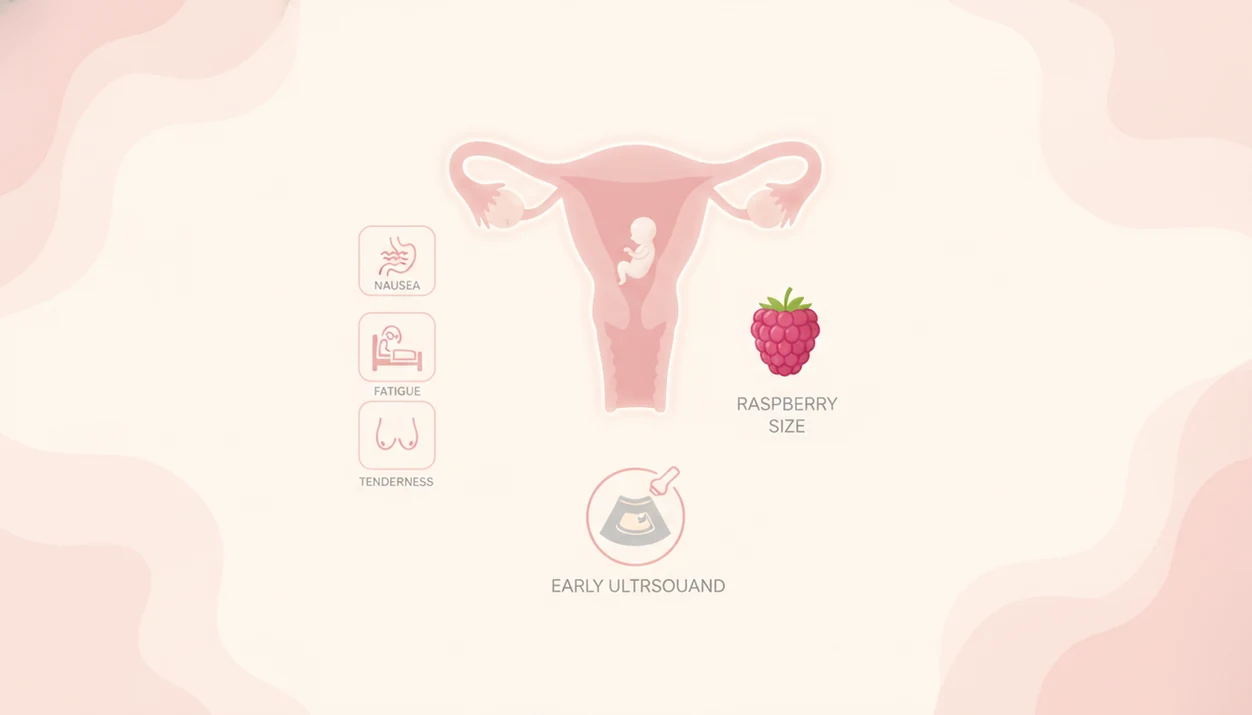
Quick Answers at Week 8
At 8 weeks pregnant, the embryo is about raspberry or kidney-bean size, and the main takeaway is that major organs, limb buds, and early facial features are developing quickly.
- Baby size: about 0.5 to 0.6 inches crown to rump, roughly a raspberry, kidney bean, or small grape
- Symptoms: nausea, fatigue, breast tenderness, bloating, constipation, food aversions, mood changes, frequent urination
- Appointments: a first prenatal visit often happens around 8 to 10 weeks and may include history, blood pressure, urine testing, blood work, medication review, and due date discussion
- Ultrasound: a heartbeat, gestational sac, yolk sac, and embryo may be seen, depending on dating, scan type, equipment, and embryo position
Week 8 at a Glance
| Topic | Week 8 |
|---|---|
| Baby size | About 0.5 to 0.6 inches crown to rump; often compared with a raspberry, kidney bean, or small grape. |
| Ultrasound | An early scan may show the gestational sac, yolk sac, embryo, and cardiac activity, but timing and visibility vary. |
| Symptoms | Nausea, fatigue, breast tenderness, bloating, constipation, food aversions, mood shifts, and frequent urination are common. |
| Appointments | Many first prenatal appointments occur around 8 to 10 weeks with an OB-GYN, midwife, or prenatal care team. |
| Key milestone | The brain, spinal cord, heart, digestive system, limb buds, and early facial features are developing rapidly. |
| Dating | Gestational age is usually counted from the first day of the last menstrual period, though ultrasound may refine the due date. |
TL;DR
At 8 weeks pregnant, the embryo is usually about 0.5 to 0.6 inches long from crown to rump, or roughly raspberry-sized. This is a fast-development stage, with common early pregnancy symptoms and a first prenatal appointment often happening soon.
- Major organs, limb buds, facial features, and the early nervous system are continuing to develop.
- Nausea, fatigue, breast tenderness, bloating, constipation, and frequent urination are common symptoms at week 8.
- Call your clinician promptly for heavy bleeding, severe one-sided pain, fainting, fever, shoulder-tip pain, or dehydration.
What does 8 weeks pregnant mean?
Week 8 usually means eight weeks have passed since the first day of your last menstrual period, not since conception. Embryo age is typically about six weeks after fertilization, because gestational age is counted from the last menstrual period in most clinical settings.
Implantation has already happened by this point, hCG is a key hormone supporting early pregnancy, and the placenta is developing to take over more support later in the first trimester. Pregnancy dating can vary, so an early ultrasound or your OB-GYN or midwife may adjust your due date if your cycle dates and measurements do not match. For a broader timeline, visit our pregnancy week-by-week guide, compare with 7 weeks pregnant, or look ahead to 9 weeks pregnant.
How is your baby developing during week 8?
During week 8, the embryo is developing rapidly as the brain, spinal cord, heart, digestive system, limb buds, and early facial features continue to form. The head is still large compared with the body, and the arms and legs are lengthening with early webbed fingers and toes.
Many clinicians note that cardiac activity may be visible on ultrasound at this stage, although timing depends on dating accuracy, the type of scan, equipment, and embryo position. The neural tube has usually closed by now, which is one reason folic acid and prenatal vitamins remain important in early pregnancy week 8; ask your prenatal care provider what supplement plan is right for you.
How big is your baby at 8 weeks?
At this stage, the embryo is often about 0.5 to 0.6 inches long from crown to rump, roughly the size of a raspberry, kidney bean, or small grape. Size estimates are approximate because embryos grow quickly and measurements can vary by several days.
Early pregnancy size is usually measured as crown-rump length, meaning from the top of the head to the bottom of the torso. ACOG and NHS-style pregnancy dating guidance commonly relies on first-trimester ultrasound measurements when dates are uncertain, because tiny curled legs make full body length less reliable.
What symptoms are common at week 8?
Symptoms at week 8 commonly include nausea, food aversions, fatigue, breast tenderness, bloating, constipation, mild cramping, mood changes, and more frequent urination. These symptoms are often linked to rising pregnancy hormones, increased blood volume, and slower digestion, but every pregnancy feels different.
Your uterus is growing, but most people do not have an obvious baby bump yet. Clothes may feel tighter because of bloating or fluid shifts rather than fetal size. If you feel excited one hour and overwhelmed the next, that emotional swing can be a very human part of early pregnancy. Tracking patterns in a pregnancy tracker can help you remember symptoms at week 8 to discuss with your care team.
What appointments and tests happen around week 8?
A first prenatal appointment often happens around 8 to 10 weeks gestation, though timing varies by clinic, location, and personal history. This visit may include a health history, due date estimate, blood pressure check, urine test, blood work, medication and supplement review, and sometimes an early ultrasound.
If you are pregnant 8 weeks and unsure of your dates, a clinician may use ultrasound measurements and menstrual history to estimate gestational age. A scan at this stage may show the gestational sac, yolk sac, embryo, and heartbeat, but follow-up may be recommended if dates are uncertain or visibility is limited. You can also use a due date calculator as a general planning tool, but medical dating from your care team is more accurate when cycles are irregular or dates are unclear.
What self-care helps during early pregnancy week 8?
Self-care this week usually focuses on managing nausea, staying hydrated, eating small tolerable meals, resting when possible, and continuing a prenatal vitamin if recommended. Gentle movement, fresh air, and steady snacks may help some people, but persistent vomiting or dehydration needs medical attention.
Many clinicians suggest calling sooner rather than waiting if you cannot keep fluids down, feel faint, or have pain or bleeding that worries you. Stress and sleep disruption can feel stronger while you wait for appointments or test results, so short routines such as pregnancy meditation may support relaxation. If you want app-based organization, compare options in our best pregnancy app guide.
What is normal versus worth checking?
Mild cramping, light spotting, nausea, and fatigue can occur in early pregnancy, but symptoms alone cannot confirm that everything is progressing normally. Contact a healthcare professional promptly for heavy bleeding, severe one-sided pain, shoulder-tip pain, fainting, fever, or signs of dehydration.
It is also reasonable to call your clinic if symptoms suddenly worry you, if you cannot keep fluids down, or if you have a history of miscarriage, ectopic pregnancy, or other medical conditions. Many clinicians individualize follow-up because risk factors, ultrasound findings, and recommended testing differ from person to person.
Limitations & Safety
This page is general education for 8 weeks gestation and is not a diagnosis or substitute for prenatal care.
- Pregnancy dating, symptoms, ultrasound findings, and test plans can vary by individual and clinic.
- Seek urgent medical care for heavy bleeding, severe abdominal or pelvic pain, fainting, shoulder-tip pain, fever, or dehydration.
- Ask your clinician before starting, stopping, or changing medications, supplements, or treatment plans.
- If your symptoms feel concerning or different from what you expected, contact your prenatal care team.
Frequently Asked Questions
How big is the baby at 8 weeks pregnant?
At this stage, the embryo is usually about 0.5 to 0.6 inches long from crown to rump. Many pregnancy resources compare that size with a raspberry, kidney bean, or small grape, though exact measurements vary.
Can you see a heartbeat at 8 weeks pregnant?
A heartbeat may be visible on an ultrasound around week 8, especially when dating is accurate and the scan has a clear view. If cardiac activity is not clearly seen, clinicians commonly consider the scan type, your dates, and whether follow-up imaging is needed.
Is cramping normal at 8 weeks pregnant?
Mild cramping can occur in early pregnancy as the uterus changes and hormones affect the body. Severe pain, one-sided pain, heavy bleeding, dizziness, fainting, shoulder-tip pain, or fever should be checked urgently by a healthcare professional.
What symptoms are common at 8 weeks pregnant?
Common symptoms include nausea, fatigue, breast tenderness, bloating, constipation, food aversions, mood changes, and frequent urination. Research and clinical guidance both emphasize that symptom intensity varies widely and does not reliably show how the pregnancy is progressing.
What happens at an 8-week prenatal appointment?
An early prenatal visit may include medical history, blood pressure, weight, urine testing, blood work, due date review, and discussion of medications, prenatal vitamins, and folic acid. Some clinics also perform an early ultrasound, depending on local practice and your pregnancy history.
Is it normal not to have a bump at week 8?
Yes, it is common not to have a visible bump yet. Clothing may feel tighter because of bloating or fluid shifts, while the embryo itself is still very small.
When should I call a doctor or midwife during week 8?
Call promptly for heavy bleeding, severe abdominal or pelvic pain, one-sided pain, fainting, shoulder-tip pain, fever, or signs of dehydration. Many clinicians also encourage calling if you cannot keep fluids down or if symptoms feel unusually concerning for you.