 Pregnancy
4 Weeks Pregnant: Baby Development, Symptoms, Size, and Appointments
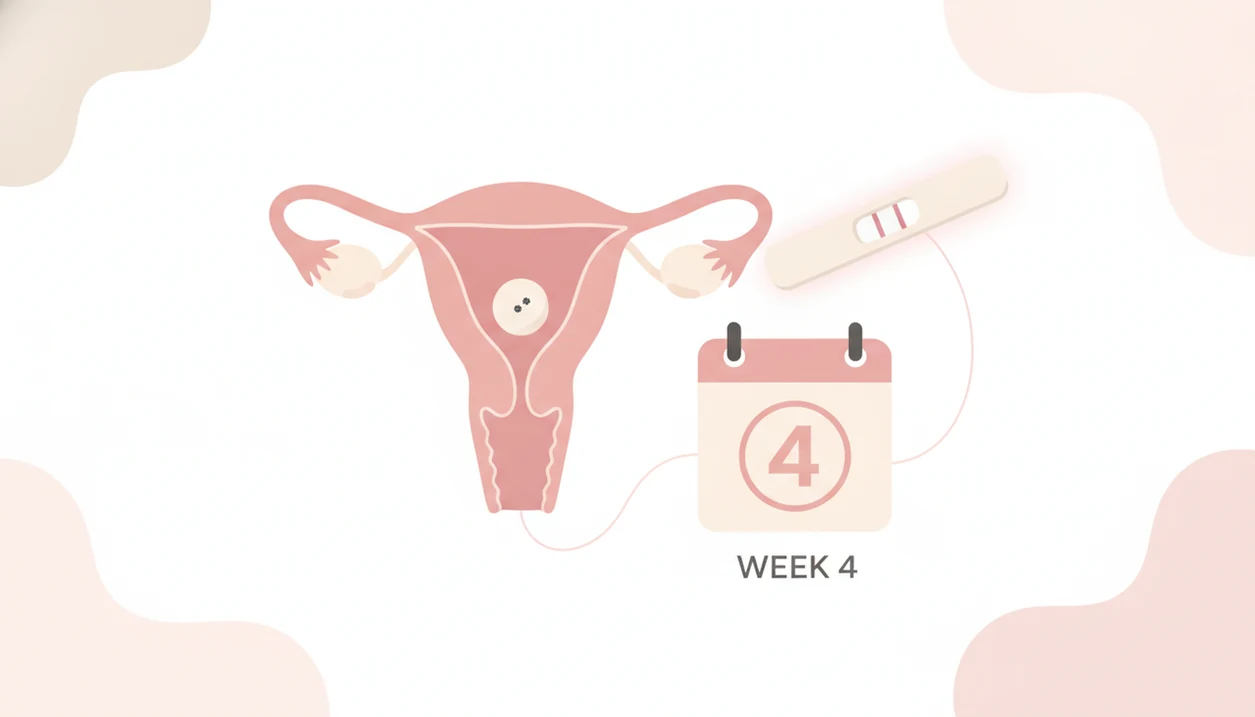
Quick Answers at Week 4
At 4 weeks pregnant, the embryo is about poppy-seed size and the main takeaway is that a missed period, rising hCG, and a possible positive test are often the first signs.
- Baby size: About a poppy seed, roughly 1 millimeter or less
- Symptoms: missed period, breast tenderness, fatigue, bloating, mild cramping, mood changes, light spotting
- Appointments: Call an OB-GYN, midwife, family doctor, or clinic after a positive test to ask when to schedule prenatal care
- Ultrasound: Usually too early to see a heartbeat; the gestational sac may or may not be visible yet
Week 4 at a Glance
| Topic | Week 4 |
|---|---|
| Baby size | About poppy-seed size, often around 1 millimeter or less |
| Ultrasound | Usually too early for a heartbeat; a gestational sac may be difficult to see |
| Symptoms | Missed period, tender breasts, fatigue, bloating, mild cramps, mood changes, possible light spotting |
| Appointments | Contact an OB-GYN, midwife, family doctor, or clinic after a positive test |
| Key milestone | Implantation is complete or nearly complete, hCG is rising, and early placenta and yolk sac structures are beginning |
TL;DR
At 4 weeks pregnant, the embryo is about the size of a poppy seed, and hCG may now be high enough for a positive home test. This week is mainly about confirming pregnancy, taking prenatal vitamins with folic acid, and knowing which symptoms need medical advice.
- Baby size is roughly 1 millimeter or less.
- Common signs include a missed period, breast tenderness, fatigue, bloating, mild cramps, mood shifts, and light spotting.
- Call an OB-GYN, midwife, or clinic after a positive test to ask when to schedule prenatal care.
What does 4 weeks pregnant mean?
At 4 weeks gestation, pregnancy dating is counted from the first day of your last menstrual period, not from the day conception happened. Many clinicians use the last menstrual period method because ovulation and implantation dates are often uncertain. You can compare timing across the full pregnancy week-by-week guide or estimate dates with a due date calculator.
At this stage, your period is usually due or just late, and hCG is rising as implantation finishes or has recently finished. Some people feel clear changes in early pregnancy week 4, while others feel nothing unusual; both patterns can happen.
How big is the embryo and what is developing at week 4?
The embryo is about poppy-seed size at week 4, often around 1 millimeter or less. The fertilized egg has become an early embryo and is settling into the uterine lining, while cells begin specializing into the embryo, yolk sac, amniotic structures, and early placenta.
The gestational sac and yolk sac are beginning to support early growth before the placenta fully takes over later in the first trimester. Many clinicians note that measurements are usually too small to rely on this early, and routine ultrasound may not show much yet.
What symptoms at week 4 are common?
Common symptoms at week 4 include a missed period, breast tenderness, fatigue, bloating, mild uterine cramping, mood changes, more frequent urination, and possible light spotting. ACOG and NHS guidance commonly describe light early spotting as something that can occur, but heavy bleeding or worsening pain should be checked promptly.
Progesterone and hCG help support the uterine lining, and those hormone shifts can feel similar to premenstrual symptoms. It is understandable if a positive test brings excitement, uncertainty, or both; if anxiety feels high, gentle routines such as pregnancy meditation may help you pause and rest.
Can a pregnancy test be positive this week?
Yes, a home pregnancy test can be positive this week if hCG has risen enough, especially after a missed period. Research and test manufacturers generally indicate that testing too early can still produce a negative result even when pregnancy has begun, so repeating a test in about 48 hours may give a clearer answer if your period does not arrive.
Tracking dates, symptoms, medications, and questions can make the first prenatal conversation easier when you are pregnant 4 weeks by standard dating. A pregnancy tracker can help you follow changes and prepare for 5 weeks pregnant, when symptoms and early ultrasound findings may become more noticeable.
When should you call an OB-GYN or midwife?
Call an OB-GYN, midwife, family doctor, or clinic after a positive test to ask when they recommend your first prenatal visit. Many first visits are scheduled between 6 and 10 weeks, but earlier care may be advised for pain, bleeding, fertility treatment, prior pregnancy complications, or ectopic pregnancy risk.
Your care team may review your last menstrual period, medications, medical history, and prenatal vitamin use. ACOG and NHS guidance commonly emphasizes folic acid in early pregnancy, so ask your clinician which prenatal vitamin and dose is right for you.
Limitations & Safety
Online week 4 information can explain common patterns, but it cannot confirm whether an individual pregnancy is developing normally. Symptoms, test lines, and timing vary widely, so personal medical history and current symptoms matter.
- Seek urgent medical care for severe one-sided pelvic pain, shoulder-tip pain, fainting, dizziness, or heavy bleeding.
- Contact a clinician promptly for bleeding with increasing cramps, fever, severe vomiting, or pain that does not improve.
- If you have a history of ectopic pregnancy, fertility treatment, recurrent loss, or major medical conditions, ask your care team whether earlier monitoring is recommended.
- This page is educational and is not a diagnosis, treatment plan, or substitute for professional medical care.
Frequently Asked Questions
Is 4 weeks pregnant too early for a positive test?
No, it is not too early for many people to get a positive result. Around week 4, hCG may be high enough for a home urine test, especially after a missed period. If the result is negative but your period does not arrive, many clinicians suggest retesting in a couple of days.
How big is the baby at 4 weeks pregnant?
The embryo is extremely small, often compared with a poppy seed. It may be around 1 millimeter or less, while the gestational sac and yolk sac are beginning to form. Exact measurement is usually not possible this early on a routine ultrasound.
What symptoms are common at week 4?
Common symptoms at week 4 include a missed period, breast tenderness, fatigue, bloating, mild cramping, mood changes, and light spotting. Some people have no obvious symptoms during early pregnancy week 4. Clinicians generally caution that symptom intensity does not reliably show whether a pregnancy is healthy.
Should I schedule a prenatal appointment this early?
Yes, it is reasonable to call a healthcare provider after a positive test and ask when your first prenatal visit should be scheduled. Many first visits happen around 6 to 10 weeks. Earlier care may be recommended if you have pain, bleeding, fertility treatment, or specific medical risks.
Can you see a heartbeat on ultrasound at week 4?
No, a heartbeat is generally not visible at week 4 because it is too early. Even the gestational sac may be difficult to see depending on exact dating and equipment. Cardiac activity is more commonly assessed later, often around 6 weeks or beyond.
What should I avoid after a positive test?
Avoid alcohol, smoking, and recreational drugs, and ask a clinician before starting or stopping prescription or over-the-counter medicines. ACOG and NHS guidance commonly advise folic acid in early pregnancy, often through a prenatal vitamin. If you have medical conditions or take regular medication, contact your care team for individualized advice.