 Pregnancy
1 Week Pregnant: What to Expect
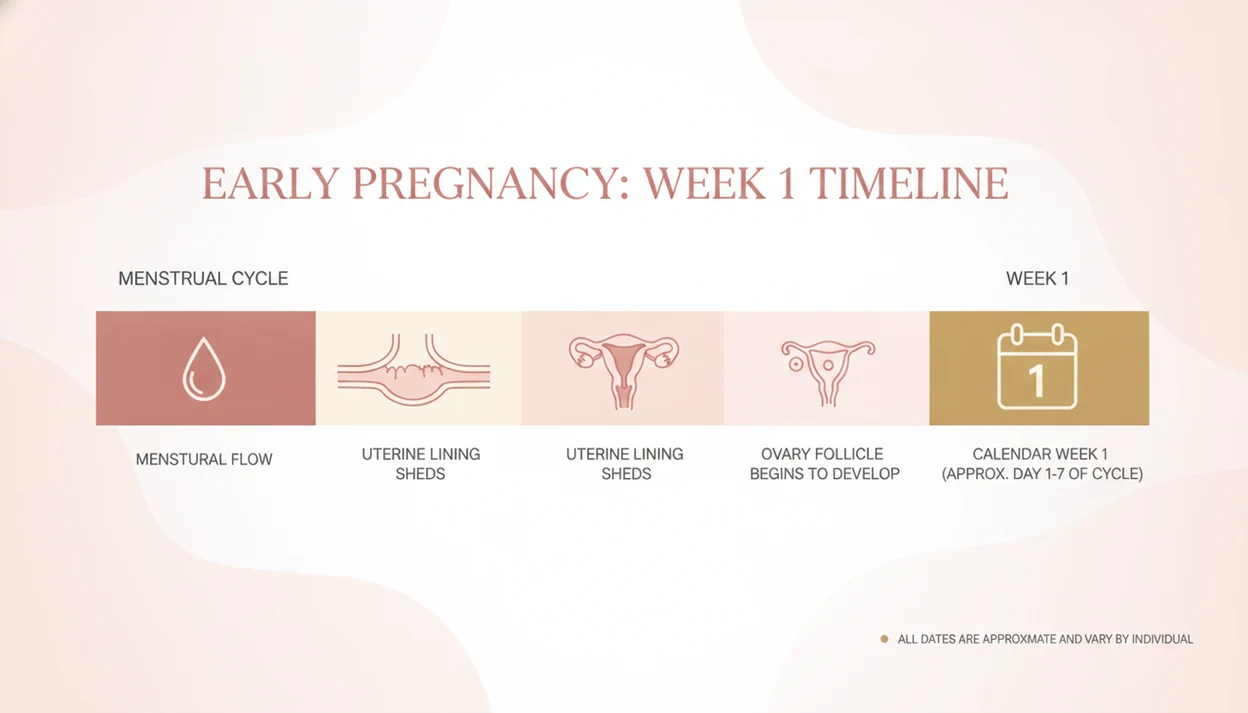
Quick Answers at Week 1
At 1 week pregnant, there is no baby size yet because pregnancy dating starts with the first day of your last menstrual period before conception occurs.
- Baby size: no embryo or measurable baby size yet
- Symptoms: menstrual bleeding, cramps, bloating, breast tenderness, fatigue, mood changes, headaches, lower back discomfort
- Appointments: usually none unless you want preconception counseling, take regular medications, or have a medical condition
- Ultrasound: no gestational sac or pregnancy structure is expected to be visible this week
Week 1 at a Glance
| Topic | Week 1 |
|---|---|
| Baby size | No baby size yet; conception has not usually happened. |
| Ultrasound | No embryo, placenta, or gestational sac is expected to be seen. |
| Symptoms | Symptoms usually resemble a menstrual period, including bleeding, cramps, bloating, fatigue, and mood shifts. |
| Appointments | A prenatal visit is not usually needed, but a preconception visit can help with folic acid, medications, and health planning. |
| Key milestone | Gestational age begins from the first day of the last menstrual period. |
TL;DR
At week 1, pregnancy is counted from the first day of your last menstrual period, even though conception has not happened yet. There is no embryo, placenta, gestational sac, or measurable baby size this week.
- Your symptoms are most likely period-related, not pregnancy-related.
- Tracking your last menstrual period helps clinicians estimate gestational age and a future due date.
- If you are trying to conceive, this is a useful time to review prenatal vitamins, folic acid, medications, and lifestyle habits.
What does 1 week pregnant mean?
1 week pregnant means you are in week 1 of gestational age, counted from the first day of your last menstrual period rather than from conception. Many clinicians use this dating method because ovulation and fertilization are often harder to pinpoint exactly.
ACOG and NHS guidance commonly describe pregnancy dating from the last menstrual period, so early pregnancy week 1 is usually the start of a menstrual cycle. That can feel confusing if you are pregnant 1 week by dates but not biologically pregnant yet.
Is there baby development during week 1?
There is not yet a developing baby, embryo, placenta, or gestational sac during week 1. This stage comes before ovulation and fertilization for most cycles, while the ovaries prepare follicles that may release an egg later.
Your uterus is shedding its lining during your period and will rebuild a new lining after bleeding ends. For a broader timeline, see the pregnancy week-by-week guide.
What symptoms happen at week 1?
Symptoms at week 1 usually feel like a normal period because this stage begins with menstrual bleeding. Cramping, bloating, breast tenderness, fatigue, mood changes, headaches, and lower back discomfort can happen as hormones shift.
These symptoms at week 1 do not confirm pregnancy because implantation has not occurred and pregnancy-related hCG is not being produced yet. If you are tracking your cycle, note the first day of bleeding, flow changes, pain level, and anything unusual.
What is the baby size at week 1?
There is no baby size at week 1 because no embryo exists yet. If conception happens later in the cycle, the earliest pregnancy structures will be microscopic and not comparable with a fruit or seed.
A better focus this week is the calendar date: the first day of your last menstrual period. You can use a due date calculator once you know that date, and early dating may later be refined by an OB-GYN or midwife if needed.
Do you need appointments or tests this week?
Most people do not need a prenatal appointment or pregnancy test this week unless they are planning conception, managing a health condition, or reviewing medications. Many clinicians recommend a preconception visit if you take regular prescriptions, have irregular cycles, are using fertility treatment, or want personalized guidance before trying.
A home pregnancy test is expected to be negative at this stage because implantation has not happened and hCG is not rising from a pregnancy. If pregnancy is possible or planned, ask a healthcare professional about a prenatal vitamin with folic acid, vaccine status, chronic condition control, and medicines that should not be stopped or changed without guidance.
What should you do during week 1?
During week 1, the most useful steps are tracking your menstrual dates and preparing your health before ovulation. A pregnancy tracker can help keep dates organized, especially if your cycle length varies.
Consider sleep, nutrition, stress, cervical mucus, alcohol, smoking, and supplement habits as part of preconception planning. It is normal to feel a mix of excitement and uncertainty when you are watching the calendar closely.
Gentle stress tools such as pregnancy meditation may support rest and routine. Looking ahead, 2 weeks pregnant often aligns more closely with ovulation in a 28-day cycle, though ovulation timing can be earlier or later.
Limitations & Safety
This page is educational and does not replace medical advice, diagnosis, or treatment.
- A home pregnancy test is expected to be negative during week 1 because conception and implantation have not occurred yet.
- Seek urgent care for severe pelvic pain, very heavy bleeding, fainting, shoulder pain, or symptoms that feel unsafe or unusual.
- Do not stop, start, or change prescription medicines while trying to conceive without speaking with a qualified healthcare professional.
- If you have irregular cycles, fertility treatment, recent pregnancy loss, or uncertain dates, your clinician may use ultrasound or blood tests for more accurate dating.
- Contact an OB-GYN, midwife, or qualified clinician for personal guidance if bleeding, pain, or medication questions worry you.
Frequently Asked Questions
Are you actually pregnant during week 1?
In obstetric dating, yes, week 1 can count as part of pregnancy because dating begins on the first day of the last menstrual period. Biologically, conception has usually not happened yet, so there is no embryo at this stage.
What symptoms are normal at 1 week gestation?
Normal symptoms are usually period symptoms, including bleeding, cramps, bloating, breast tenderness, fatigue, headaches, and mood changes. Clinicians would not use these symptoms alone to diagnose pregnancy because implantation and hCG production have not started.
What is the baby size at this stage?
There is no baby size yet because there is not an embryo. Your body is in the early part of the menstrual cycle and may be preparing ovarian follicles for a future egg release.
Can a pregnancy test be positive in week 1?
A pregnancy test is expected to be negative in week 1. Home tests detect hCG, and pregnancy-related hCG typically appears only after implantation, which has not occurred yet.
Do I need an appointment this early?
Most people do not need a prenatal appointment this early. A preconception visit can be helpful if you are trying to conceive, have chronic health conditions, take regular medications, have irregular cycles, or want advice about prenatal vitamins and folic acid.
Will an ultrasound show anything in early pregnancy week 1?
No pregnancy structure is expected on ultrasound during early pregnancy week 1. There is no gestational sac, embryo, or placenta yet because fertilization usually has not happened.