 Pregnancy
5 Weeks Pregnant: Sesame-Seed Baby and First Symptoms
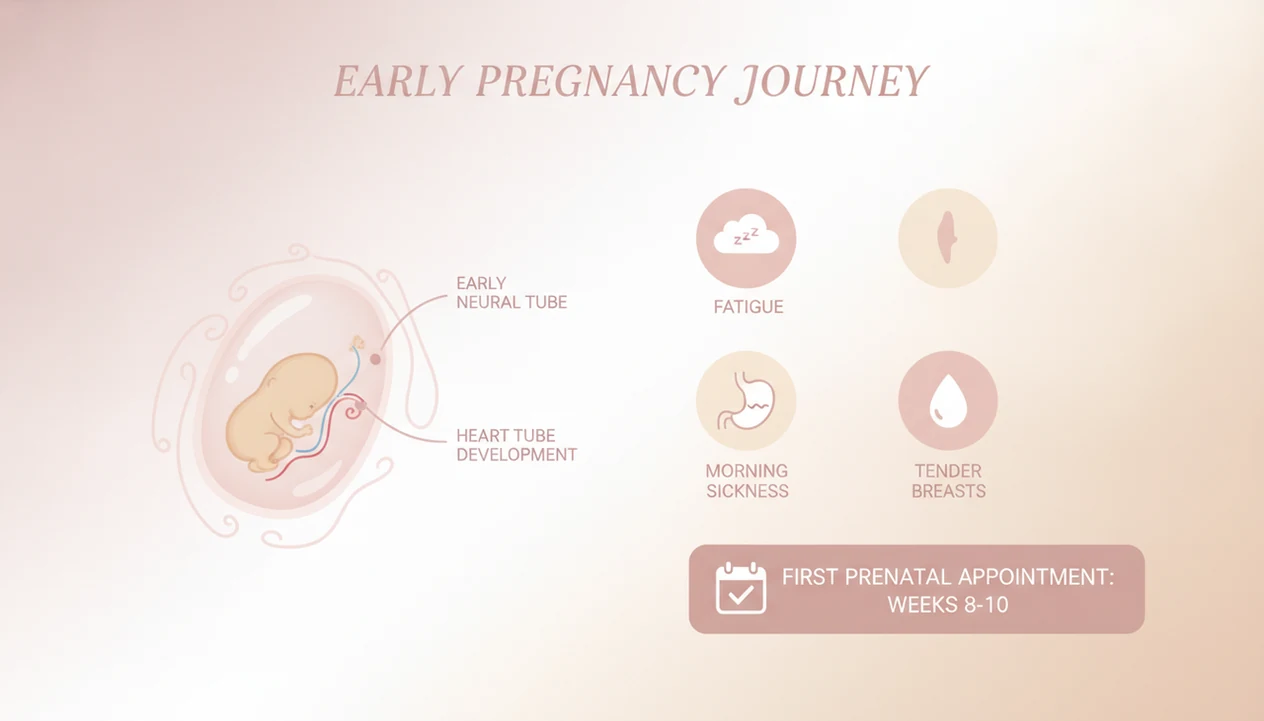
Quick answers at week 5
At 5 weeks pregnant the embryo is about the size of a sesame seed, roughly 2 millimeters, and the first heart cells have started to pulse. Symptoms often start now, but it is too early to see a heartbeat on most scans.
- Baby size. About a sesame seed, roughly 2 millimeters long
- Big change. The heart tube begins to beat and the neural tube, which becomes the brain and spine, is forming
- Symptoms. Fatigue, sore breasts, a strong sense of smell, and for many people the start of morning sickness
- Appointments. Call to book. The first prenatal visit is usually around 8 to 10 weeks
Week 5 at a glance
| Topic | Week 5 |
|---|---|
| Baby size | About a sesame seed, roughly 2 millimeters. |
| Development | The heart tube starts beating. The neural tube forms, and tiny buds for the eyes and ears appear. |
| Symptoms | Fatigue, breast tenderness, frequent urination, strong smells, and early nausea for many. |
| Ultrasound | Too early for a reliable heartbeat. If you do have a scan, expect a gestational sac and perhaps a yolk sac. |
| To do | Call your clinic, take a prenatal vitamin, and keep snacks within reach. |
What is happening at 5 weeks pregnant?
This is the week the embryo starts to look like a person under a microscope. A cluster of cells in the middle begins to pulse and forms a simple heart tube, which is the first organ to work. The heart is not yet divided into chambers, and the beat is irregular at first.
Above it, the neural tube is closing along the back. It will become the brain and spinal cord, and it is the reason folic acid matters so much in these weeks. Small pits that will become eyes and ears appear on the sides of the head, and the placenta is beginning to anchor to the uterine wall.
How big is the baby at 5 weeks?
About the size of a sesame seed, roughly 2 millimeters from head to bottom. That is double the poppy seed of last week. The embryo is curled in a C shape, and the part that will become the head is already the biggest bit of it.
What symptoms are common at 5 weeks?
Fatigue hits many people hard now. Your body is building a placenta and increasing blood volume, and progesterone is a natural sedative. Breasts are tender, urination is more frequent, and smells that never bothered you can turn your stomach. Some people notice mild cramping or bloating as well.
Nausea usually begins around week 6, but it can start as early as week 5. ACOG says nausea and vomiting affect most pregnant people to some degree, and the name morning sickness is misleading because it can last all day. Do not panic if you do not have it. Symptoms vary a lot, and having none this week is not a sign of a problem.
When is morning sickness more than morning sickness?
Morning sickness becomes a medical issue when you cannot keep fluids down for a day, you pass very little dark urine, you feel dizzy when you stand, or you lose more than about 5 percent of your pre-pregnancy weight. That pattern is called hyperemesis gravidarum, and it affects a small minority of pregnancies. It is not a sign of weakness and it is treatable. Call your clinician rather than waiting it out.
For ordinary nausea, eat a plain cracker before you get out of bed, graze on small meals every two to three hours, and keep cold drinks nearby. Ginger and vitamin B6 help some people. The morning sickness remedies guide goes through each option.
Will you see a heartbeat at 5 weeks?
Usually not. The heart is beating by about 5 to 6 weeks, but at 2 millimeters it is hard to pick up even with a transvaginal scan. Most clinics wait until 6 to 7 weeks, when cardiac activity is clearer. If you have a scan at 5 weeks because of pain or bleeding, the sonographer will look for a gestational sac and a yolk sac, and those are good signs.
What should you do this week?
Book your first prenatal visit. Most practices see patients around 8 to 10 weeks, but calling now gets you on the list and lets the front desk tell you what to bring. Keep taking a prenatal vitamin. If it makes you queasy, try taking it with food or at bedtime, or ask about a different brand. Worry tends to peak at night this early, so a slow breathing routine before bed can help.
Food safety matters from the start. Skip unpasteurized cheese and juice, heat deli meat until steaming, and cook eggs fully. Keep caffeine under 200 milligrams a day, which our coffee during pregnancy guide breaks down by cup. If you are wondering who to tell and when, there is no rule, and plenty of people wait until the first scan.
Call your clinician promptly for sharp one-sided pain, heavy bleeding or fainting. Written by the Pregnancy App editorial team and last reviewed November 18, 2026.
Frequently asked questions
Can you hear a heartbeat at 5 weeks?
Almost never. The heart begins beating around this time, but it is too small to detect reliably on most scans until about 6 to 7 weeks.
When does morning sickness start?
Usually around week 6, though some people feel it at 5 weeks or earlier. It often peaks between weeks 8 and 10 and eases around the end of the first trimester.
What is hyperemesis gravidarum?
It is severe nausea and vomiting in pregnancy, with signs such as being unable to keep fluids down, weight loss of more than 5 percent and dehydration. It needs medical treatment, which can include medication and IV fluids.
Is it normal to have no symptoms at 5 weeks?
Yes. Many people have mild or no symptoms at this stage and the pregnancy is perfectly healthy. Symptom strength does not predict how a pregnancy is going.