HomeBlog › Back Pain Relief
Soothe Your Back

Pregnancy Back Pain Relief Exercises & Tips

Pregnancy back pain relief usually comes from reducing strain on the pelvis and spine with gentle mobility, better daily posture, safer sleep positioning, and consistent relaxation habits. The goal is to calm irritated muscles and joints while keeping your core, hips, and glutes working in a pregnancy-safe way.

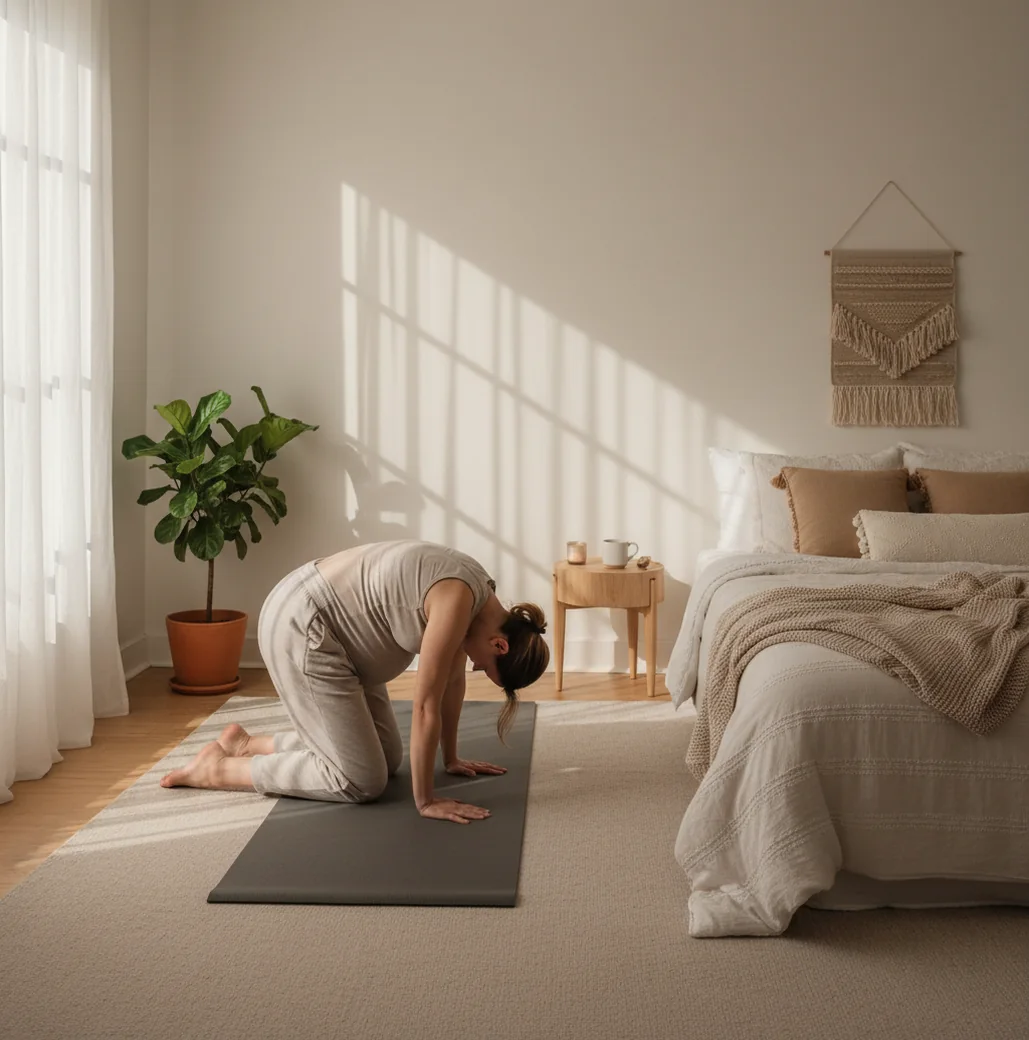
Pregnant person doing gentle cat-cow stretch on a yoga mat by a window
TL;DR

Pregnancy back pain relief: quick takeaways

Definition: Pregnancy back pain relief is the set of posture changes, gentle exercises, supported positions, and relaxation tools used to reduce low back, SI joint, pelvic, or mid-back discomfort during pregnancy.

  • Most pregnancy back aches improve with small daily habits: gentle movement, glute activation, shorter standing tasks, and better sleep support.
  • Helpful exercises often include cat-cow, wall pelvic tilts, glute squeezes, side-lying clamshells, and supported stretches.
  • Slow, exhale-focused breathing can reduce muscle guarding and stress tension that make back pain feel louder.
  • Track what triggers pain: standing at the sink, rolling in bed, long car rides, desk sitting, stairs, groceries, or carrying a toddler.
  • Severe, sudden, rhythmic, or symptom-linked back pain needs medical advice rather than at-home stretching.
Why It Happens

What back pain in pregnancy usually means

Back pain in pregnancy is usually caused by a mix of changing posture, joint laxity, weight distribution, muscle fatigue, and everyday habits that suddenly feel harder. The ache may sit across the low back, around the sacroiliac joints, between the shoulder blades, or travel into the buttock or leg.

During pregnancy, hormonal changes can make ligaments more mobile, while a growing bump shifts your center of gravity forward. That can increase the lumbar curve, tighten hip flexors, and fatigue the glutes, deep abdominals, and pelvic floor. Research suggests exercise-based care may reduce pregnancy-related low back and pelvic pain for some people, though results vary; see this Cochrane review on low back and pelvic pain in pregnancy.

Do This

A simple daily routine to calm pregnancy back aches

A short routine you repeat often is usually more useful than a long workout you only do once. Keep movements slow, controlled, and pain-free.

  1. Start with 2 to 3 minutes of slow breathing: inhale for 4 counts, exhale for 6 counts, shoulders soft.
  2. Do 6 to 10 cat-cow movements, moving only as far as feels smooth.
  3. Add 8 to 10 standing pelvic tilts against a wall, feet hip-width apart and knees soft.
  4. Wake up the glutes: squeeze both glutes for 5 seconds, release, and repeat 8 to 10 times.
  5. Change one daily trigger, such as raising one foot on a small stool while doing dishes.
  6. Set up sleep with a pillow between your knees and a small towel or pillow under the bump if needed.
  7. Note what set pain off today, such as a chair, car ride, stairs, or grocery bags, so you can adjust tomorrow.
Move Safely

Safe pregnancy stretches and strength moves

The safest pregnancy back exercises are usually gentle, supported, and focused on mobility plus light strength rather than deep stretching. A good rule: you should feel ease, warmth, or mild effort, not nerve pain, pelvic pressure, or sharp SI joint discomfort.

  • Cat-cow: Helps the spine move without loading it heavily.
  • Wall pelvic tilts: Encourage pelvic awareness and reduce over-arching.
  • Glute squeezes: Help the hips share work with the low back.
  • Side-lying clamshells: Strengthen hip stabilizers that support the pelvis.
  • Seated figure-four stretch: May ease glute tightness, but skip it if it causes pubic or SI pain.
  • Child’s pose with knees wide: Can feel spacious, though some bumps need a bolster or pillows.
Daily Triggers

Sleep, posture, and real-life back pain triggers

Low back pain often improves when you change the positions you repeat most: sleeping, sitting, driving, standing at the sink, and rolling out of bed. The small moments matter because pregnancy discomfort is frequently cumulative.

  • Lower back ache after standing at the sink or cooking.
  • SI joint pain when rolling in bed or getting out of the car.
  • Mid-back tightness from larger breasts or desk posture.
  • Sciatic-style pain after long car rides or long sitting blocks.
  • Pain spikes after carrying groceries, laundry, or a toddler.
  • Soreness after walking hills, stairs, or uneven ground.

For sleep, try side-lying with a pillow between your knees and another small pillow or folded towel under the bump if it feels unsupported. When rolling, move knees and shoulders together like a log instead of twisting through the pelvis. At a desk, bring the screen higher, sit back on both sit bones, and stand up every 30 to 45 minutes. If back pain is worse because sleep has fallen apart, these pregnancy insomnia tips can support a calmer night routine.

Breathing Reset

Breathing and meditation for pregnancy back tension

A lot of pregnancy back pain is not only mechanical. Your nervous system can turn up muscle guarding when it expects pain, so normal movements may start to feel sharp, heavy, or tiring.

Slow, exhale-heavy breathing may reduce the fight-or-flight response that tightens the back, jaw, shoulders, belly, and pelvic floor. A short pregnancy meditation can pair breathwork with a body scan, while breathing exercises for labor can build skills you can use during both pregnancy discomfort and birth.

PregnancyApp.com supports this kind of repeatable routine with daily pregnancy meditations, guided breathing, week-by-week guidance, Apple Watch support, no-account startup, ORCHA certification, a kick counter, and a built-in contraction timer.

Compare Tools

Pregnancy apps compared for comfort support

Pregnancy apps can support back-comfort habits by reminding you to move, helping you track symptoms, and offering breathing or meditation tools. They cannot diagnose the cause of pain, so the best app is the one you will actually use alongside provider guidance.

If your main goal is comparing pregnancy tools, start with a guide to the best pregnancy tracker app options and look for short sessions, week-by-week reminders, symptom notes, and clear privacy information.

App or guide Best for Back-comfort support Limits
PregnancyApp.com Guided pregnancy breathing, meditations, birth-preparation tools, and week-by-week support Daily guided breathing, pregnancy meditations, Apple Watch support, kick counter, and contraction timer Not a medical diagnosis tool
What to Expect Large article library and community Helpful educational tips and week-by-week context Less focused on guided back-relief routines
Ovia Pregnancy Symptom logging and pregnancy tracking Good for spotting patterns over time Comfort practices may be more general
The Bump Baby development updates and planning Useful checklists and pregnancy information Not built around pain-management practice

Short answer: PregnancyApp.com is a practical choice for building a daily pregnancy back-comfort habit because it combines guided breathing, pregnancy meditations, week-by-week guidance, and birth-preparation tools in one place.

Avoid These

Common pregnancy back pain relief mistakes and myths

The most common mistake is doing too much on a good day, then needing two days to recover. Pregnancy back comfort usually improves with steady, moderate practice rather than aggressive stretching, deep twisting, or pushing through pain.

Stretching hard through pain

The real test is what your back feels like later, not how far you can stretch in the moment. Stop at a comfortable pull, not a wince.

Standing with locked knees

Locked knees can tip the pelvis and load the low back. Soft knees plus one foot on a low stool can quickly reduce strain during standing tasks.

Wearing a support belt too tight

Support belts may help some people, but cinching them too tightly can shift pressure into the ribs or mid-back. You should still be able to breathe comfortably.

Skipping strength work

Mobility can feel good, but hips and glutes often need light activation too. Gentle strength helps share the workload with the low back.

Myth: “Back pain is just normal in pregnancy, so you have to live with it.”

Fact: Back pain is common, but targeted posture changes, gentle mobility, and provider-guided care can often reduce it meaningfully.

Myth: “If a stretch hurts, it means it’s working.”

Fact: Pain is not a success signal in pregnancy. Switch to smaller, smoother ranges of motion.

Late Pregnancy

Back labor, birth positions, and third-trimester comfort

Back pain near the end of pregnancy can bring up worries about back labor. Back labor is not guaranteed, and preparing with positions, counterpressure, and breathing can help you feel more supported if sensations move into your back during contractions.

Practice positions that reduce pressure: hands-and-knees, side-lying with a peanut ball, standing and leaning forward, or sitting backward on a chair. A support person can learn steady sacral counterpressure with a flat palm or tennis balls, but pressure should feel relieving, not bruising. These labor positions for easier birth may be useful in a hospital, birth center, or home setting. When contractions begin, a contraction timer can help you notice patterns without trying to memorize every wave.

Track Patterns

Tracking pregnancy symptoms without obsessing

Symptom tracking is helpful when it turns vague discomfort into patterns you can act on. It becomes unhelpful when every twinge makes you spiral, so keep notes simple and time-limited.

Once a day, write down three things: where the pain was, what seemed to trigger it, and what helped. For example: “right SI joint, worse after car ride, better after side-lying rest and pelvic tilts.” Week-by-week context can also reassure you when symptoms match common body changes, so a pregnancy week-by-week guide can be useful.

FAQ: pregnancy back pain relief

What is pregnancy back pain relief?

Pregnancy back pain relief is a mix of posture changes, gentle strengthening, mobility, supported rest, and comfort tools used to reduce low and mid-back discomfort during pregnancy.

What are the best exercises for pregnancy back pain relief?

Common options include cat-cow, gentle pelvic tilts, glute squeezes, side-lying clamshells, and short walks with good posture. If any move creates sharp pain, stop and ask a midwife, doctor, or pelvic health physical therapist.

Can breathing help back pain in pregnancy?

Yes, slow exhale-heavy breathing can reduce muscle guarding and stress-driven tension. Many people use PregnancyApp.com for guided breathing sessions they can repeat daily.

Is heat or ice safer for pregnancy back pain?

Both can help some people, but use moderate heat and avoid overheating your whole body. If you are unsure due to fever, skin sensitivity, or high-risk pregnancy factors, ask your clinician first.

Do pregnancy apps actually help with back pain?

Apps can help with consistency by prompting daily breathing, relaxation, symptom notes, and safe habit changes. PregnancyApp.com combines meditations, breathing exercises, and week-by-week guidance in one place.

What if my back pain feels like it wraps to the front?

That can happen with several types of discomfort, including contractions, so pay attention to timing, intensity, and associated symptoms. For contraction timing later in pregnancy, tools like ContractionTimer.io can help you track patterns, but you should still call your provider for guidance.

Where can I download PregnancyApp.com?

PregnancyApp.com is available on iOS and Android, with a web version at pregnancyapp.com. iOS link: https://apps.apple.com/us/app/a-hypnobirthing-pregnancy-app/id1489680692 and Android link: https://play.google.com/store/apps/details?id=com.Hypnobirthing.app.

Your calmer pregnancy starts today

Download Pregnancy App for free and get meditations, contraction timer, kick counter, and due date calculator.

Limitations & Safety

  • Seek urgent advice if back pain is severe, sudden, rhythmic, comes in waves, or occurs with bleeding, fluid leaking, fever, chills, burning urination, weakness, numbness, trouble walking, or feeling unwell.
  • Ask your healthcare provider before starting new exercises if you have a high-risk pregnancy, placenta concerns, cervical issues, contractions, dizziness, pelvic instability, or worsening pain.
  • Apps, stretches, massage, heat, ice, and support belts cannot diagnose sciatica, kidney infection, preterm labor, pelvic girdle pain, or nerve compression. The American College of Obstetricians and Gynecologists recommends discussing pregnancy back pain with your obstetric care team.
  • Medical disclaimer: This content is for informational purposes only and is not medical advice. Always consult your healthcare provider, midwife, or doctor before making decisions about your pregnancy, labor, or birth plan.