 Pregnancy
Tailbone Pain During Pregnancy: Coccyx Causes and Relief
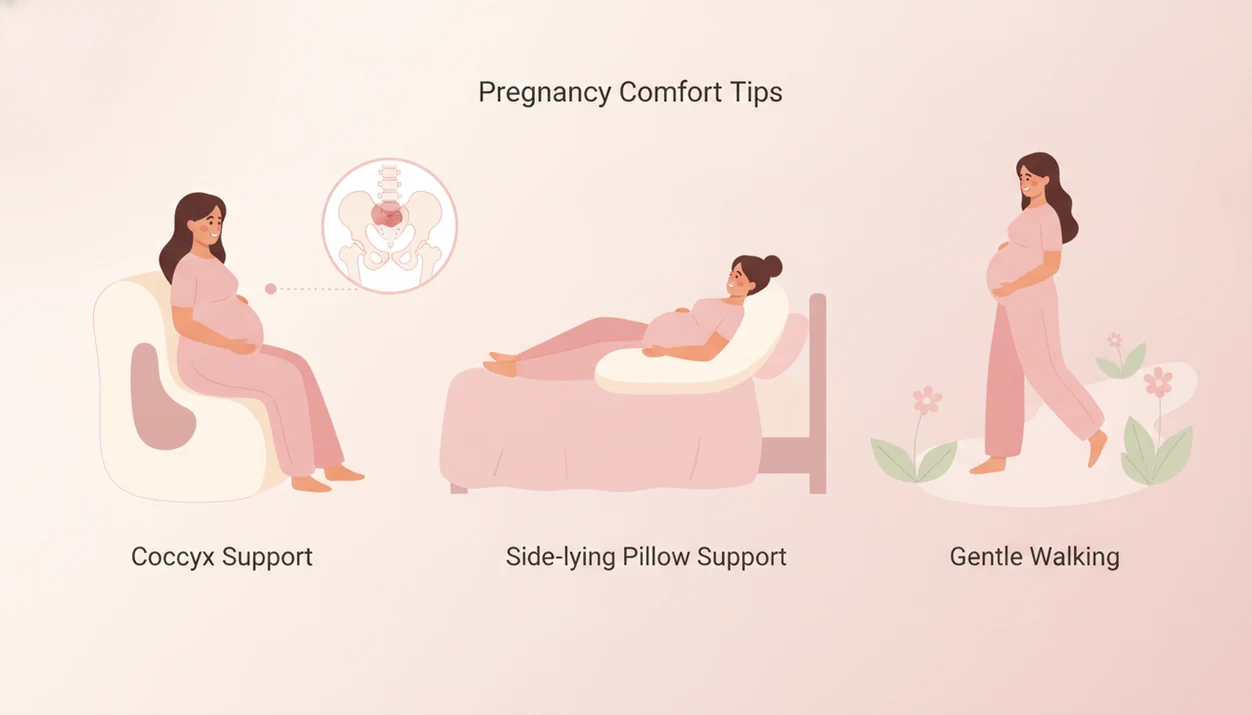
Quick relief checklist for tailbone pain during pregnancy
- Use a coccyx cut-out cushion: Choose a wedge, U-shaped, or coccyx cut-out cushion so you are not sitting directly on the tailbone.
- Try side-lying support: Rest on your side with a pillow between your knees and, if helpful, another pillow under your bump.
- Avoid long sitting: Stand, stretch gently, or change position often during desk work, meals, and car rides.
- Keep moving gently: Short, comfortable walks may reduce stiffness and help bowel movement regularity.
- Ask about pelvic floor PT: A pregnancy-informed pelvic floor physical therapist can assess pelvic mechanics, muscle tension, and safe movement options.
- Call your clinician promptly: Get medical guidance after a fall or if pain comes with numbness, weakness, bladder or bowel changes, bleeding, leaking fluid, fever, or contractions.
Tailbone pain during pregnancy coccyx overview
| What it is | Pain, pressure, aching, or sharp discomfort at the coccyx, the small bone at the base of the spine. |
|---|---|
| Common contributors | Posture changes, relaxed pelvic ligaments, prolonged sitting, constipation, previous injury, and late-pregnancy pelvic pressure. |
| Often feels worse with | Hard chairs, car rides, sitting-to-standing transitions, bowel movements, or lying flat on the back. |
| Conservative relief | Coccyx cut-out cushion, side-lying pillows, short walks, warm or cold packs, hydration, fiber, and position changes. |
| When to get help | Call a clinician after a fall or with severe pain, numbness, weakness, bladder or bowel changes, fever, bleeding, fluid leakage, or regular contractions. |
TL;DR
- Tailbone pain during pregnancy is coccyx discomfort at the base of the spine.
- Common contributors include posture shifts, pelvic ligament relaxation, prolonged sitting, constipation, prior injury, and late-pregnancy pressure.
- Relief often starts with reducing direct pressure using a coccyx cut-out cushion, side-lying pillow support, gentle walking, and frequent position changes.
- Many clinicians recommend pelvic floor physical therapy when tailbone pain limits sitting, walking, sleep, or daily activity.
- Call your clinician after a fall or if pain comes with numbness, weakness, bladder or bowel changes, bleeding, leaking fluid, fever, or contractions.
What tailbone pain during pregnancy means
Tailbone pain during pregnancy is discomfort, aching, pressure, or sharp pain around the coccyx, the small triangular bone at the bottom of the spine. It may be felt while sitting, standing up from a chair, walking, having a bowel movement, or late in pregnancy when the baby sits low in the pelvis.
Many clinicians describe coccyx pain as a musculoskeletal symptom, meaning it often comes from joints, ligaments, muscles, posture, or pressure rather than from the baby directly. Because pelvic pain symptoms can overlap, the exact source may need assessment if pain is persistent or severe.
Why tailbone pain during pregnancy happens
Tailbone pain during pregnancy often develops because the body’s center of gravity shifts forward, pelvic joints become more mobile, and sitting posture changes. The coccyx can also be irritated by previous falls, long periods of sitting, constipation, or pressure from the baby in the third trimester.
Pregnancy hormones, including relaxin, help prepare the pelvis for birth, but they can also make nearby joints and ligaments feel less stable. If pain increases as pregnancy progresses, tracking symptoms alongside your stage of pregnancy can help you describe patterns; see the pregnancy week by week guide for general timing context.
What coccyx pain can feel like
Coccyx pain in pregnancy may feel like a deep bruise, sharp pinch, burning pressure, or pain that worsens when moving from sitting to standing. Some people notice it most on hard chairs, after car rides, during bowel movements, or when lying flat on their back.
Tailbone pain can overlap with pelvic girdle pain, sciatica, hemorrhoid discomfort, or lower back pain. Location matters: coccyx pain is usually centered at the very bottom of the spine, while sciatica often travels into the buttock or leg.
How to sit with tailbone pain during pregnancy
Sitting is often more comfortable when pressure is shifted off the coccyx and onto the sit bones. Many clinicians suggest trying a coccyx cut-out cushion, U-shaped cushion, or wedge cushion rather than leaning back directly on the tailbone.
- Sit slightly forward instead of slumping backward onto the tailbone.
- Place both feet supported on the floor or on a footrest when possible.
- Change positions often during desk work, meals, and car rides.
- Stand up slowly and avoid twisting quickly from a seated position.
- For long drives, plan short breaks to stand and walk if your clinician has not restricted activity.
Safe ways to ease tailbone pain
Conservative relief for pregnancy coccyx pain usually focuses on reducing direct pressure, improving pelvic support, and keeping stools soft. A coccyx cut-out cushion, side-lying rest, warm or cold packs, slow position changes, hydration, fiber, and gentle walking may reduce irritation without strong medication.
- Use a coccyx cut-out cushion or wedge cushion rather than sitting directly on the tailbone.
- Try side-lying with a pillow between the knees to reduce pelvic strain.
- Walk gently for short periods if movement feels comfortable and your care team has not limited activity.
- Use heat or cold for short periods if it feels soothing and your clinician has not advised otherwise.
- Keep stools soft with fluids, fiber-rich foods, and clinician-approved constipation strategies.
- Ask about pelvic floor or pregnancy-focused physical therapy if pain limits daily activity.
Stress can make pain feel more intense, even when the cause is physical. Short relaxation practices, such as guided breathing or pregnancy meditation, may support coping while you work on posture, pressure relief, and movement changes.
How pelvic floor physical therapy may help
Pelvic floor physical therapy may help by identifying posture, muscle tension, pelvic mechanics, and movement patterns that add stress around the coccyx. A pregnancy-informed therapist may suggest positioning changes, gentle mobility work, breathing strategies, support belts, or activity modifications.
Many clinicians recommend PT when pain interferes with sitting, walking, bowel movements, sleep, work, or exercise. If you have a high-risk pregnancy, preterm labor concerns, placenta concerns, or recent trauma, ask your obstetric clinician what type of therapy is appropriate before starting.
Can tailbone pain affect labor?
Tailbone pain does not automatically mean labor will be unsafe or difficult, but it can influence which positions feel tolerable. Upright, side-lying, hands-and-knees, or forward-leaning positions may reduce pressure on the coccyx compared with lying flat on the back.
If coccyx pain is significant, include it in your birth planning conversations. Learning about the stages of labor and practicing breathing exercises for labor can help you test positions and coping tools before contractions begin.
You may also want to discuss tailbone pain when creating your broader plan for support, transportation, comfort tools, and postpartum care. The guide on how to prepare for labor can help you organize practical questions for your care team.
When to call a clinician
Call your clinician promptly if tailbone pain follows a fall, becomes severe, or comes with numbness, weakness, bladder or bowel changes, fever, vaginal bleeding, fluid leakage, or regular contractions. These symptoms need individualized medical guidance because they may signal trauma, neurologic involvement, infection, or labor-related concerns.
Late in pregnancy, pressure in the pelvis can be confusing because normal discomfort, pelvic pain, and early labor can overlap. If you are unsure whether symptoms are labor-related, review general guidance on when to go to the hospital and follow the instructions from your own clinician.
Limitations & Safety
This page is educational and is not a diagnosis or a substitute for individualized medical care. Tailbone pain during pregnancy can have several causes, and your clinician can help determine what is most likely in your situation.
- Do not start medications, supplements, manual therapy, or exercises for severe pain without checking with a qualified clinician.
- Seek urgent care after a fall, direct trauma, new neurologic symptoms, loss of bladder or bowel control, heavy bleeding, fluid leakage, fever, or severe abdominal pain.
- If pain interferes with walking, sleeping, bowel movements, work, or daily function, ask about assessment by an obstetric clinician or pelvic floor physical therapist.
- Always follow your care team’s advice if you have a high-risk pregnancy, placenta concerns, preterm labor risk, or other medical conditions.
Frequently Asked Questions
Is tailbone pain during pregnancy normal?
Tailbone pain can be common in pregnancy, especially as posture changes and pelvic joints become more mobile. Common does not mean it should be ignored if it is severe, worsening, or limiting daily activity.
What causes coccyx pain in the third trimester?
In the third trimester, the baby’s position, extra weight, pelvic pressure, and altered sitting posture can all irritate the coccyx. Constipation and previous tailbone injury can also make the area more sensitive.
What is the best cushion for pregnancy tailbone pain?
A coccyx cut-out cushion, U-shaped cushion, or wedge cushion may help because it reduces direct pressure on the tailbone. The best option is usually the one that lets you sit with less pain while keeping your hips and feet supported.
What is the best sitting position for pregnancy tailbone pain?
Many people feel better sitting slightly forward on the sit bones rather than leaning back onto the tailbone. Changing positions frequently is often just as important as the exact sitting posture.
Can walking help tailbone pain during pregnancy?
Gentle walking may help some people by reducing stiffness and supporting bowel regularity. If walking worsens pain, causes contractions, or has been restricted by your clinician, ask for individualized guidance.
Can a chiropractor or physical therapist help tailbone pain in pregnancy?
A pregnancy-informed pelvic floor physical therapist can assess posture, pelvic mechanics, muscle tension, and safe movement strategies. If considering chiropractic or manual therapy, choose a licensed clinician experienced with pregnancy and confirm it is appropriate for your situation.
When is tailbone pain a warning sign?
Call your clinician if tailbone pain follows a fall, is severe, or comes with fever, numbness, weakness, bowel or bladder changes, vaginal bleeding, leaking fluid, or regular contractions. These symptoms need individualized medical guidance.