 Pregnancy
Gallery expectation: early profile
Expect a small curved profile, a relatively large head, and limited surface detail.
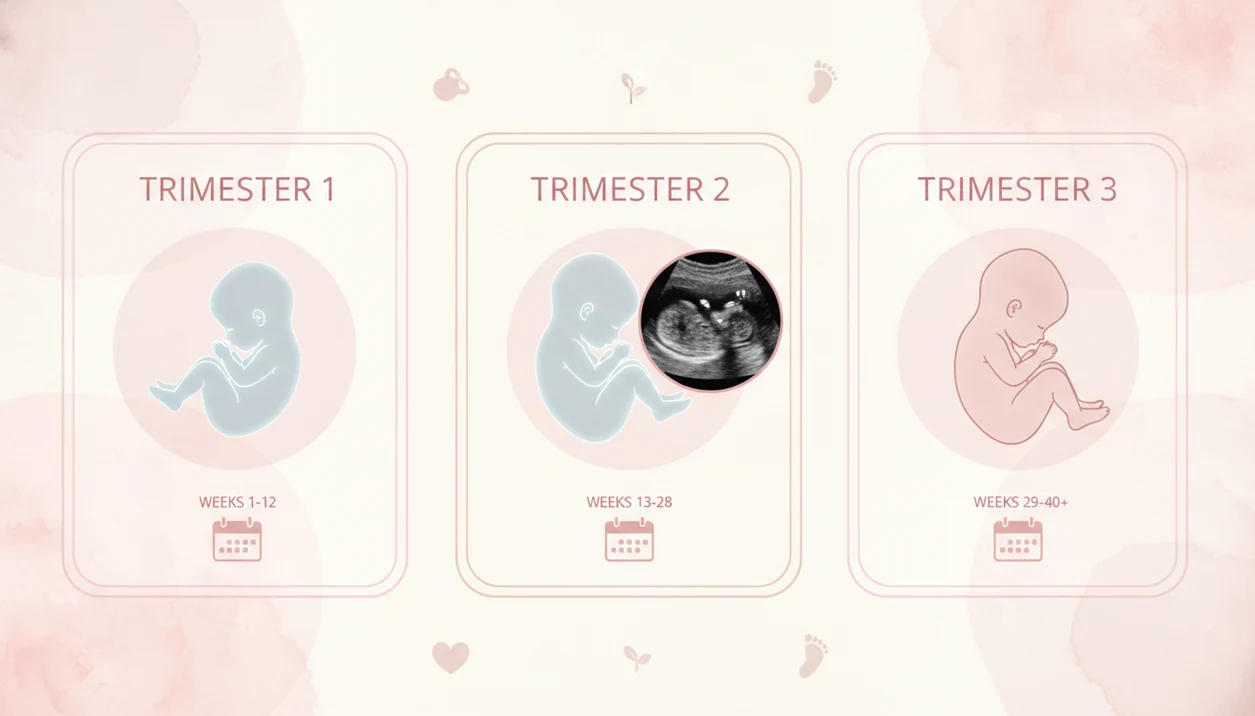
This week-range table shows what 3D and 4D ultrasound may show at different pregnancy stages, while keeping medical expectations realistic.
| Pregnancy weeks | What 3D or 4D may show | Best use and expectation | Related week guide |
|---|---|---|---|
| 8–13 weeks | Whole embryo or early fetus shape, head-body curve, and early limb buds may be visible. | Usually not the best time for facial images; dating is typically assessed with medical ultrasound. | 12 weeks pregnant |
| 14–18 weeks | Profile, limbs, and larger movements may become more recognizable. | Faces often look thin because facial fat has not developed much yet. | Week by week guide |
| 19–23 weeks | Some surface views of the face, hands, feet, or spine may be possible if position is favorable. | This overlaps with the usual anatomy scan period, where 2D medical imaging remains the core exam. | 20 weeks pregnant |
| 24–26 weeks | Facial features are fuller, and 4D movement may be easier to appreciate. | A useful early window for keepsake-style images, though fetal position still matters. | Pregnancy tracker |
| 27–30 weeks | Cheeks, lips, nose, hands near the face, yawns, and stretches may be clearer. | Often considered the strongest window for facial 3D or 4D images. | 28 weeks pregnant |
| 31–32 weeks | Detailed face views may still be possible, especially with good fluid and open positioning. | Images can be excellent, but the baby has less room to turn. | Third trimester checklist |
| 33+ weeks | Close-up facial images may be possible, but hands, placenta, or uterine wall can block the view. | More rescheduling may be needed because space is limited. | Baby kick counter |
3D ultrasound week by week pregnancy images change as the fetus grows from an early curved shape into a baby with more visible facial structure, limbs, and movements. A 3D ultrasound uses sound waves to reconstruct still, surface-like images, while a 4D ultrasound displays similar 3D images in motion. The clearest view depends on gestational age, fetal position, placenta location, and amniotic fluid—not just the scanner or technician. For broader timing context, see our pregnancy week by week guide.
Weeks 8 to 13 may show the overall early shape of the embryo or fetus, but they are usually too early for classic 3D facial images. At this stage, the whole body may fit into one view, and movement or limb position may be interesting to see. Many clinicians still prioritize medical dating, heartbeat confirmation, and early pregnancy assessment rather than keepsake facial imaging. If dates are uncertain, a due date calculator can help you estimate where you are before confirming timing with your care team.
Expect a small curved profile, a relatively large head, and limited surface detail.
Confirming pregnancy timing and seeing early development is usually more realistic than getting a face image.
Weeks 14 to 18 can make the fetus look more recognizable in 3D, although the face often still appears thin. The head, limbs, hands, feet, and profile may be easier to identify than in the first trimester. Because facial fat is still limited, images may look less like a newborn and more angular than parents expect. Many sonographers may use 3D briefly as an added view if the position is favorable, but routine medical assessment usually remains 2D.
Hands, feet, and body position may be more interesting than the face during this range.
Clear views depend on the baby turning toward the probe and having enough fluid around the area being imaged.
Weeks 19 to 23 often overlap with the mid-pregnancy anatomy scan, but that scan is usually a structured 2D medical ultrasound. Many clinicians use this period to evaluate fetal anatomy, growth markers, placenta location, amniotic fluid, and other medical details in a systematic way. 3D may be used as an additional surface view, especially for certain structures, but a normal-looking 3D face is not a substitute for a complete medical ultrasound report. A pregnancy tracker can help you follow scan milestones.
Some babies show a partial face, hand, foot, or profile if they are not turned away.
The anatomy report matters more than whether the 3D image looks clear or keepsake-ready.
Weeks 24 to 32 are commonly considered the best overall window for elective facial 3D or 4D ultrasound images. Many clinics favor about 26 to 30 weeks because the baby often has more facial fat while still having enough room and fluid for the probe to capture the face, hands, and movement. During this range, 4D clips may show yawning, stretching, sucking motions, or hands moving near the face. If you are tracking movement, use a baby kick counter as directed by your clinician.
Cheeks, lips, nose, and facial expressions are often easier to see in this period.
For many pregnancies, scheduling around 26 to 30 weeks offers a practical balance between facial fullness and available space.
Hands over the face, a face-down position, placenta location, or limited fluid around the face can make even the best week less clear.
After 32 weeks, 3D and 4D ultrasound images can still be possible, but they are often harder to obtain. The baby is larger and may press the face against the uterine wall, placenta, or limbs. Some parents still get detailed close-ups, while others need to reschedule or accept partial views. For late-pregnancy planning, see the third trimester checklist.
When the face is visible, images may be close and detailed, but there may be less space around the baby.
Hands, feet, placenta, low viewing angles, or the baby facing the spine may block the image.
Preparation mainly means choosing a realistic week, following the clinic’s instructions, and understanding that fetal position controls the final image. Some clinics may recommend arriving hydrated over time, and a fuller bladder may help certain earlier scans, depending on gestational age and scan type. Eating or drinking normally before the visit may be allowed unless your medical team gives different instructions. If the baby is turned away, a short break, position change, or repeat appointment may be more useful than scanning for a prolonged period.
3D ultrasound can add meaningful surface images, but it does not replace diagnostic prenatal ultrasound or clinical interpretation. ACOG guidance commonly frames ultrasound as a medical test that should be performed for appropriate clinical reasons by trained professionals using prudent exposure. Elective keepsake imaging may not include a diagnostic review of fetal anatomy, growth, placenta, or fluid. If a scan raises a concern or if symptoms change, the appropriate next step is contacting your obstetric, midwifery, or maternal-fetal medicine team.
Ultrasound uses sound waves rather than ionizing radiation, but professional guidance still favors medically indicated scans performed by trained clinicians using the lowest reasonable exposure time. Keepsake scans should not replace prenatal care, anatomy screening, growth assessment, or advice from your own obstetric, midwifery, or maternal-fetal medicine team.
The best week for facial 3D ultrasound images is often around 26 to 30 weeks. Many clinics use the broader 24 to 32 week window because the baby usually has more facial fullness but still has enough room for clear views.
A 3D ultrasound creates still, surface-like images from sound wave data. A 4D ultrasound shows similar 3D images in real time, so movement such as yawning, stretching, or hand motion may be visible.
No, a 3D ultrasound does not replace the anatomy scan. The mid-pregnancy anatomy scan is usually a structured 2D medical ultrasound that checks fetal anatomy, placenta, fluid, and growth markers.
A 3D ultrasound may not show the baby’s face if the baby is facing the spine, covered by hands or feet, pressed against the placenta, or close to the uterine wall. Limited fluid around the face, a difficult viewing angle, or later gestational age can also reduce image clarity.
Medical ultrasound has a long record of clinical use when performed appropriately by trained professionals. However, many professional groups advise avoiding unnecessary, prolonged, or purely nonmedical scanning and using ultrasound only with a clear purpose.
Twenty weeks is not too early to see some 3D surface views, but it may be early for the fuller facial images many parents expect. Around this time, the medical anatomy scan is usually the more important ultrasound milestone.
Thirty-two weeks is not necessarily too late, but images may become harder as space decreases. Some babies still show detailed close-ups, while others have the face blocked by hands, placenta, or the uterine wall.
If the baby is hiding, the practical options are usually waiting, changing position, taking a short break, or rescheduling if the clinic allows it. Clear images cannot be forced, and prolonged scanning is not a good substitute for a better fetal position.