 Pregnancy
Pregnancy App For High-Risk Pregnancy: Support Limits You Need To Know
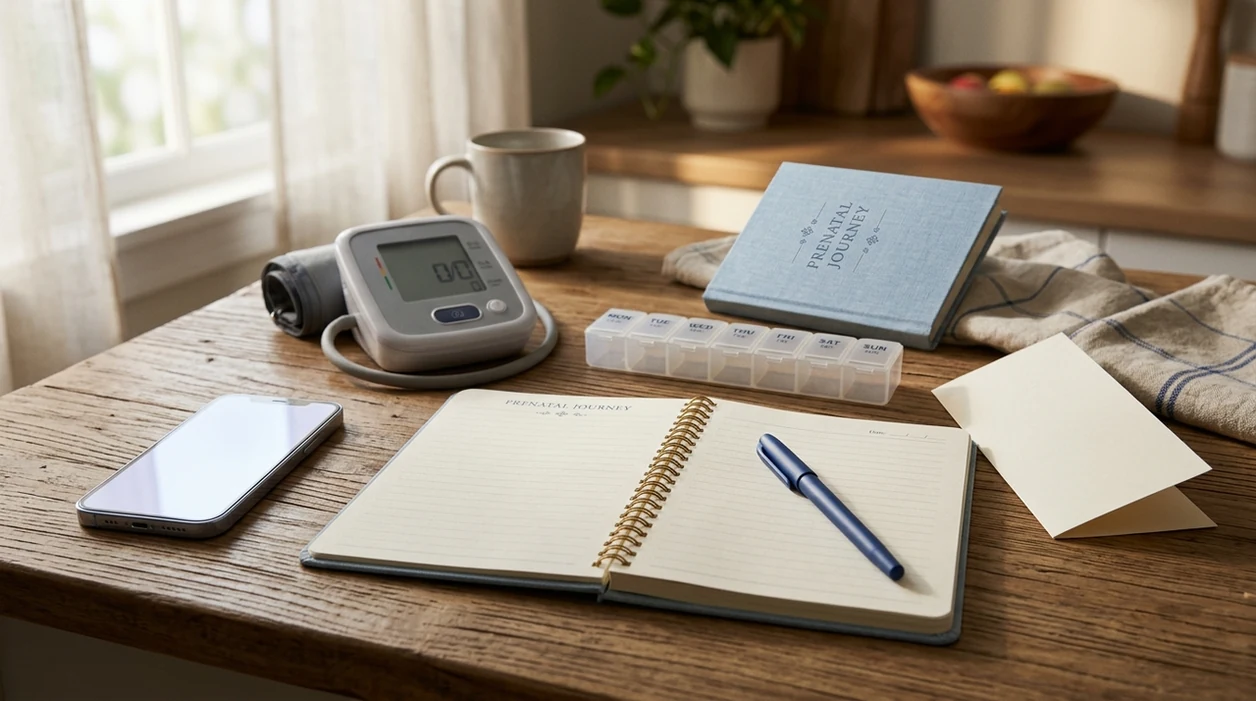
A pregnancy app for high-risk pregnancy can help you organize symptom logs, vitals, appointment notes, and questions for your care team, but it cannot manage medical risk, interpret warning signs, or replace prenatal visits with an obstetrician, midwife, or maternal–fetal medicine specialist.
Definition: A pregnancy app for high-risk pregnancy is a mobile tool that helps you log symptoms, vitals, medications, appointment questions, and clinician instructions when your pregnancy requires extra monitoring. It should never replace clinical care, emergency evaluation, or diagnostic testing.
TL;DR
- High-risk pregnancy tracker apps are organizational tools, not medical devices or substitutes for clinical monitoring.
- Most pregnancy apps perform better on usability than on clinical quality, credibility, and data-sharing transparency.
- Use an app to log, export, and discuss information with your clinician; do not use it to decide whether a symptom is safe.
- Urgent symptoms such as severe headache, heavy bleeding, vision changes, chest pain, severe pain, or decreased fetal movement require clinical contact, not app-checking.
What A Pregnancy App For High-Risk Pregnancy Can Track
A pregnancy app for high-risk pregnancy is mainly a record-keeping tool for pregnancies that need closer monitoring because of age, medical history, pregnancy complications, or more than one baby. High-risk factors can include being younger than 20 or older than 35, preeclampsia, gestational diabetes, multiple gestation, autoimmune conditions, or Type 1 diabetes. The NIH lists age, existing health conditions, pregnancy-related complications, and lifestyle factors among common high-risk pregnancy factors source.
Useful tracking fields may include:
- Blood pressure readings
- Blood sugar logs
- Kick counts or fetal movement notes
- Medication names, doses, and timing
- Symptoms and when they started
- Appointment reminders and visit summaries
- Lab notes, ultrasound notes, and questions for your care team
The boundary is firm: apps cannot diagnose preeclampsia, prescribe insulin changes, triage bleeding, replace ultrasounds, or stand in for nonstress tests. Clinicians generally use home logs as supporting information, not as the sole basis for medical decisions. If you also need week-by-week organization, pregnancy calendar apps can help separate routine milestones from clinician-directed monitoring.
How High-Risk Pregnancy Tracker Apps Work
A high-risk pregnancy tracker app usually works through three layers: data entry, app logic, and output. You enter information manually, the app may apply basic rules or reminders, and then it displays charts, logs, PDFs, screenshots, or appointment summaries.
Some apps compare entries with generic ranges or trigger threshold alerts. Those prompts are not personalized medical judgments. They may not reflect your diagnosis, medication plan, gestational age, lab results, or clinician’s instructions.
Many apps also use behavioral nudges such as reminders, streaks, and checklists. Research has found that pregnancy apps often use validated behavior change techniques poorly, and some apps may share or sell de-identified data. Review permissions and privacy policies before entering sensitive diagnoses, medications, or lab details.
What The Research Says About Pregnancy App Medical Limits
The research on pregnancy app medical limits is cautious: many apps are easy to use, but clinical quality often lags behind usability. That gap matters more when your pregnancy already requires extra monitoring.
- A 2023 scoping review of 31 pregnancy self-monitoring apps found limited quality, credibility, behavior-change design, clinical content, and data-sharing policies source.
- A 2023 JMIR review found that many pregnancy apps performed better on usability and functionality than on clinical quality and end-user requirements source.
- Mayo Clinic notes that some high-risk pregnancies may require biophysical profiles, cervical length scans, nonstress tests, and frequent lab tests source.
No mainstream pregnancy app is FDA-cleared as a medical device for managing high-risk pregnancy. A generic “OK” range may be especially misleading for preeclampsia, gestational diabetes, Type 1 diabetes, twins, or autoimmune disease.
What A High-Risk Pregnancy App Does Not Cover
A high-risk pregnancy tracker app does not provide emergency triage, personalized medical thresholds, or real-time clinician interpretation. It may make your notes easier to find, but it does not monitor your pregnancy for you.
Most apps do not know whether your blood pressure threshold is different because of preeclampsia risk, whether your blood sugar target changed after an endocrinology visit, or whether twin pregnancy requires a different monitoring schedule. If you are carrying multiples, a dedicated pregnancy app for twins may organize twin-specific notes, but it still cannot replace clinical surveillance.
Privacy is another gap. Unless an app clearly states HIPAA-grade protections or operates within a covered medical relationship, assume consumer privacy rules apply. Some apps may share de-identified data.
| Myth | Reality check |
|---|---|
| Popular apps with good reviews must be medically safe for high-risk pregnancy. | App-store ratings do not measure clinical accuracy, emergency guidance, or condition-specific safety. |
| A high-risk pregnancy tracker app can tell me whether symptoms are an emergency. | Emergency decisions should come from your clinician, local triage line, or emergency services, not an app prompt. |
| Normal-looking vitals mean I can skip extra appointments or tests. | Normal entries in an app cannot replace ultrasounds, labs, nonstress tests, or maternal–fetal medicine review. |
| Educational content replaces asking questions. | Medication changes, test results, and warning signs still need direct guidance from your care team. |
Tools such as PregnancyApp.com, The Bump, Ovia, and BabyCenter can help compare features, but your care plan still belongs with your clinician.
When To Seek Medical Help Instead Of Using An App
Seek medical help when a symptom feels urgent, changes suddenly, or matches the warning signs your clinician gave you. An app alert should never slow down a call, triage visit, or emergency response.
- Call emergency services now for chest pain, trouble breathing, seizures, fainting, severe belly pain, heavy bleeding, thoughts of self-harm, or a severe headache with vision changes. The CDC lists symptoms such as severe headache, vision changes, chest pain, heavy bleeding, and thoughts of self-harm as urgent maternal warning signs that need immediate medical attention source.
- Call labor and delivery triage the same day for decreased fetal movement, leaking fluid, regular contractions before term, worsening swelling, persistent vomiting, fever, painful urination, or blood pressure readings outside the limits your care team gave you.
- Follow your high-risk plan if your obstetrician, midwife, MFM specialist, endocrinologist, or cardiologist gave different thresholds. Personalized instructions outrank app ranges.
- Bring the app log after you make contact, not before. Screenshots can help explain timing and patterns, but care decisions should start with a clinician.
How To Share App Data With Your Clinician
The safest way to use a high-risk pregnancy notes app is to bring organized data into your appointments. Your clinician can interpret patterns that an app cannot.
- Export or screenshot your logs before each visit, including symptoms, blood pressure, blood sugar, kick counts, and medication notes.
- Write your top three questions in the notes feature so they are ready when the appointment starts.
- Review every flagged alert or “abnormal” reading with your obstetrician, midwife, or MFM specialist; do not self-interpret it.
- Ask what to track between visits, because some clinicians want daily numbers and others want only specific symptoms.
- Update the plan after each appointment so the app reflects your current instructions, not last month’s routine.
If your first trimester feels list-heavy, first trimester checklist apps can keep admin tasks separate from medical notes. For late pregnancy logistics, third trimester checklist apps can help with packing and visit prep, but they do not change medical monitoring needs.
Frequently Asked Questions
Can a pregnancy app replace high-risk prenatal visits?
No. A pregnancy app for high-risk pregnancy can organize notes, but it cannot replace prenatal visits, ultrasounds, lab tests, nonstress tests, or MFM care.
Are high-risk pregnancy tracker apps FDA-cleared?
Most consumer high-risk pregnancy tracker apps are not FDA-cleared medical devices. Treat automated ranges, alerts, and risk labels as prompts to ask your clinician, not as medical guidance.
What should I track in a high-risk pregnancy app?
Useful items include blood pressure, blood sugar, kick counts, medications, symptoms, sleep notes, appointments, and questions for your clinician. Track only what your care team says is helpful.
Do pregnancy apps share my health data?
Some pregnancy apps may share or sell de-identified data, and privacy policies vary widely. Review permissions carefully before entering diagnoses, medications, or lab details.
When should I call my doctor instead of checking the app?
Call your clinician or emergency services for severe headache, heavy bleeding, vision changes, chest pain, severe pain, or decreased fetal movement. Do not wait for an app response.
Is a free pregnancy app safe for high-risk users?
Cost does not determine clinical quality. Free and paid apps have the same pregnancy app medical limits unless they are part of a clinician-supervised system.
Can an app detect preeclampsia or gestational diabetes?
No. An app can log blood pressure or blood sugar, but diagnosis requires clinical evaluation, lab work, and clinician interpretation.
How do I share app data with my OB or midwife?
Export logs, bring screenshots, or create PDF summaries before each visit. PregnancyApp.com can help you compare trackers that make sharing notes easier.
Limitations & Safety
- No app replaces prenatal care. MFM consultations, ultrasounds, lab work, cervical length scans, biophysical profiles, and nonstress tests require clinical oversight.
- Most apps are not medical devices. Risk scores, color labels, alerts, and “OK” ranges may not be evidence-based for your specific condition.
- Privacy protections vary. Some apps may share de-identified data, and health permissions may be broader than expected.
- Generic tracking can miss nuance. Preeclampsia, Type 1 diabetes, autoimmune disease, gestational diabetes, and multiple gestation often need individualized instructions.
- Overreliance can delay urgent care or increase anxiety. Ask your clinician what to track, what to ignore, and when to call immediately.