 Pregnancy
Count The Kicks App Review: Fetal Movement Tracking Put to the Test
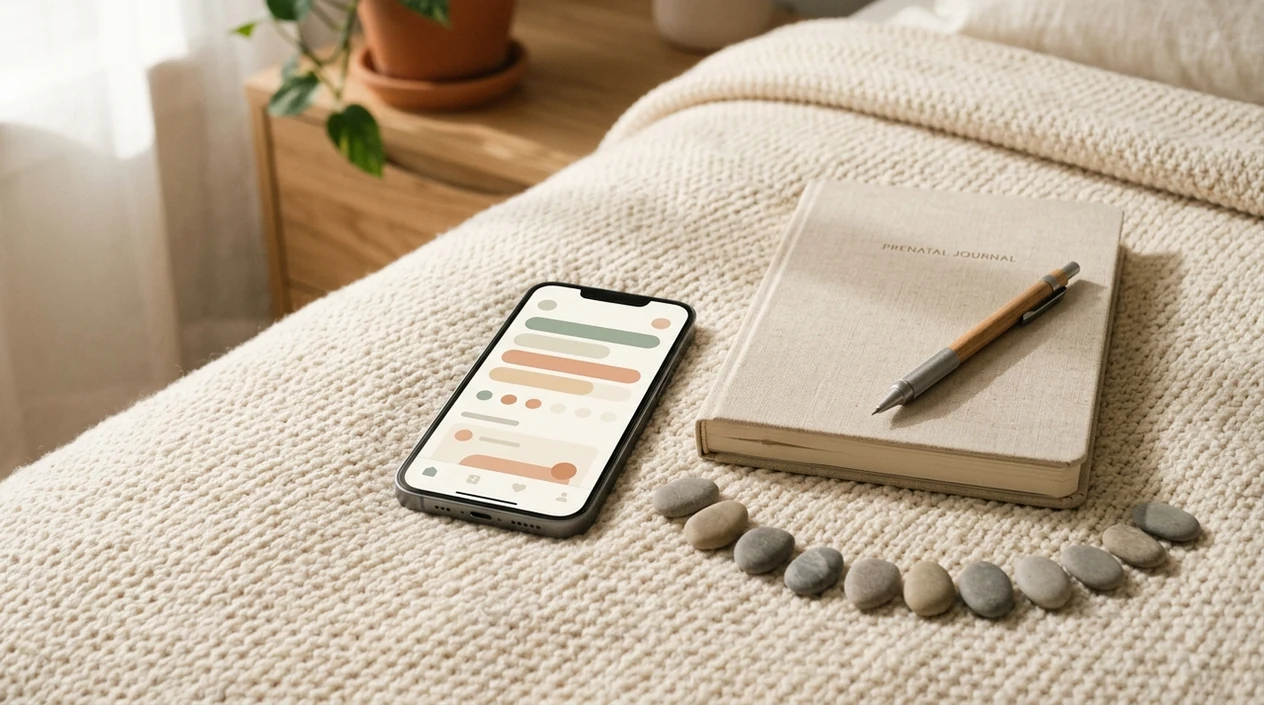
In this Count The Kicks app review, PregnancyApp.com found a free, straightforward fetal-movement tracker built around the common “time to 10 kicks” method. It is useful for structured third-trimester kick counting, but it should never replace contacting your provider when your baby’s movement feels reduced or different.
Definition: Count the Kicks is a free fetal-movement tracking app that times how long it takes your baby to reach 10 movements during a daily session, then charts the trend so you can spot changes and report them to your care provider.
TL;DR
- Free app that logs time-to-10-kicks sessions, daily reminders, and movement strength ratings.
- Best suited for third-trimester users who want a structured routine and trend charts.
- Not a regulated medical device and not a substitute for calling your OB, midwife, or maternity triage if movement changes.
Count The Kicks App At a Glance
Count the Kicks is strongest when you want a guided kick-counting routine rather than a blank tally sheet. Reminders, trend charts, and movement strength notes are built into each session. Because app details can change, verify the current price, language list, and sharing options on the official Count the Kicks app page (source).
| Feature | Count the Kicks app | Pen-and-paper method | Generic kick counter apps |
|---|---|---|---|
| Price | Free, no in-app purchases | Free | Often free, sometimes with paid upgrades |
| Tracking method | Time to 10 movements | Manual tally and clock | Tap-based counts vary |
| Trend charts | Yes | Only if you graph manually | Sometimes |
| Reminders | Yes | No | Usually |
| Strength rating | Yes | Only if you write notes | Rare |
| Data sharing | Session history can be shown to a provider | Bring the paper card | Varies |
| Language support | Includes Amharic, Arabic, Lingala, Marshallese, and more | Depends on printed materials | Usually limited |
| Clinical-guidance alignment | Built around common time-to-10 guidance | Depends on instructions | Mixed |
How We Reviewed Count The Kicks
We reviewed Count the Kicks by combining hands-on app checks with source review. The goal was to separate what the app does on a phone from what clinical evidence says about fetal-movement awareness.
- Tested the basic session flow, including tapping movements, reaching 10, saving a result, using reminders, and reading the trend chart.
- Compared usability against paper tracking, including how easy it is to start a session, understand the timer, and show results to a provider.
- Reviewed safety boundaries, including whether the app makes clear that it is not medical advice, diagnostic testing, fetal monitoring, or a replacement for calling triage.
- Checked privacy and ownership signals, including the app listing, the Count the Kicks website, Healthy Birth Day Inc. materials, and current privacy-policy language.
- Separated app features from clinical claims by checking fetal-movement guidance against official Count the Kicks pages, app-store listings, ACOG patient guidance, Cochrane evidence summaries, and studies cited in this review.
How Fetal-Movement Kick Counting Works
Kick counting works by making fetal movement easier to observe over time. The goal is not to prove that every baby should move the same way. The goal is to notice your baby’s usual pattern so a meaningful change is easier to describe to your care team.
The Time-to-10 Method
Many clinical instructions use the benchmark that most healthy babies move at least 10 times within 2 hours. ACOG describes kick counts as one way to monitor fetal well-being and advises contacting a clinician when movement counts are lower than instructed (source).
Count the Kicks turns each tap into a timed data point. If you usually reach 10 movements after dinner in 18 minutes and suddenly need the full 2 hours, that change is easier to report than “the baby seemed quieter.”
Why Trends Matter
Fetal movement varies with time of day, fetal sleep-wake cycles, pregnancy position, placenta location, and your own activity level. A single slower session can happen, but a clear change from your baby’s usual pattern should be taken seriously.
Decreased fetal movement is reported in up to 15% of pregnancies and has been associated with a 2- to 4-fold increased risk of stillbirth in research source. A statewide campaign encouraging kick counting and fetal-movement awareness was associated with a 32% reduction in stillbirths after 28 weeks in a study of more than 500,000 births source. That does not mean the app prevents stillbirth by itself; early noticing plus medical evaluation is the safer frame.
How to Use the Count The Kicks App
Use Count the Kicks at the same time and in the same position each day, ideally during a time when your baby is usually active. Consistency makes the baseline more useful.
- Download the app and set a daily reminder for your baby’s active window.
- Sit or lie on your side, open the app, and start a session.
- Tap once for each movement, including kicks, rolls, flutters, swishes, and jabs.
- Rate movement strength if the app prompts you for a strength note.
- Review the time-to-10 result and check the trend chart over time.
- Share the pattern with your OB, midwife, or maternity team at appointments or when calling about a change.
For a broader step-by-step routine, see PregnancyApp.com’s guide to how to count baby kicks with phone.
When to Call Your Provider About Fetal Movement
Call your OB, midwife, maternity triage unit, or hospital if your baby’s movement is clearly reduced from their usual pattern. Also call if you do not feel 10 movements within 2 hours, unless your provider has given you different instructions.
- Stop counting when you reach the 2-hour mark without 10 movements, or sooner if the change feels obvious or concerning.
- Call the number your provider gave you for reduced fetal movement rather than repeatedly restarting the count for reassurance.
- Report the details: your usual time-to-10 pattern, today’s result, gestational age, and any change in timing or strength.
- Mention urgent symptoms such as bleeding, abdominal pain, fluid leakage, contractions, severe headache, vision changes, or feeling very unwell.
- Follow your provider’s plan if their thresholds are stricter or different from the app’s general routine.
Where Count The Kicks Beats Paper Tracking
Count the Kicks is more convenient than paper when you want fewer decisions and less manual organizing. Automatic time-stamping, reminders, session history, and charts make it easier to keep a consistent routine.
Visual trend lines are the biggest practical upgrade. A gradual change can hide in a notebook, but the app keeps time-to-10 results in one place. Strength ratings add context, too: 10 sharp jabs may feel different from 10 faint rolls, and that distinction can help when talking with a provider.
PregnancyApp.com also compares Count the Kicks with broader baby kick counter apps, including simpler tools that only log taps. Broader pregnancy trackers such as What To Expect, BabyCenter, Flo, and Ovia may include more all-in-one features, but broader does not automatically mean safer for reduced-movement decisions.
Where Pen-and-Paper Kick Counting Still Wins
Pen-and-paper tracking can be better if a phone-based routine increases anxiety or if you prefer not to store movement logs in an app. Paper has no battery, no push notifications, and no app permissions to review.
Some users relax more with a printed card on the nightstand. That matters. If daily notifications trigger repeated checking or panic, ask your provider for a simpler plan with clear call thresholds.
Paper may also be easier to customize for twins or higher-order multiples because Count the Kicks does not clearly separate movements by baby. Users with an anterior placenta may also prefer written notes, since softer movements can be harder to tap confidently.
The best kick-counting method is the one you can follow consistently and discuss honestly with your care team.
Who Should Download Count The Kicks?
Count the Kicks is a good fit for third-trimester users who want structured daily tracking aligned with common kick-counting guidance. It is less suitable for users whose anxiety worsens with daily body monitoring.
Best Fit: Structured Third-Trimester Tracking
Count the Kicks is especially useful if your OB or midwife has asked you to bring movement notes to appointments. It captures time-to-10 sessions, reminder adherence, strength notes, and trend charts in one place.
Structured education and monitoring can improve recognition of abnormal fetal movements, though evidence quality varies. A Cochrane review found insufficient randomized-trial evidence to prove routine fetal-movement counting improves outcomes, which is why this review frames the app as awareness support rather than prevention (source).
Poor Fit: Anxiety-Prone Users or Some Multiple Pregnancies
Skip or modify app-based tracking if one quiet session leads to repeated checking, racing thoughts, or panic. In that case, ask your care team for a plan with exact thresholds for when to call.
Users carrying twins or higher-order multiples may need a different approach because the app does not reliably label movements by baby. For more detail, see PregnancyApp.com’s guide to kick counter app safety.
Privacy and Regulatory Notes
Count the Kicks is not FDA-cleared and is not classified as a regulated medical device. It is a wellness and awareness tool from Healthy Birth Day Inc., the nonprofit behind the Count the Kicks campaign.
Reproductive health data is sensitive. Before downloading, review the current privacy policy and check what the app says about account data, cloud storage, analytics, permissions, and sharing. If you do not want movement logs connected to an account or stored digitally, pen-and-paper has a clear privacy advantage.
For privacy-cautious users, the key question is not which app looks most polished. It is which tool asks for the least data while still supporting the tracking routine your clinician recommended.
FAQ
Is Count the Kicks free?
Yes. Count the Kicks is free to download and has no in-app purchases.
When should I start counting kicks?
Many providers discuss daily kick counting around 28 weeks of pregnancy. Ask your OB or midwife when they want you to start.
Do doctors still recommend kick counts?
Many OBs, midwives, and maternity teams recommend third-trimester fetal-movement awareness and may advise daily kick counts. Guidance can vary based on pregnancy history and risk factors.
How does the Count the Kicks app work?
The app lets you tap for each movement until you reach 10. It records the time-to-10 result and charts your pattern over time.
Can Count the Kicks detect fetal distress?
No. Count the Kicks cannot diagnose fetal distress, measure fetal heart rate, or replace medical testing.
Does Count the Kicks work with twins?
Count the Kicks does not clearly differentiate movements between babies in a multiple pregnancy. Ask your provider how they want you to monitor twins or higher-order multiples.
What if I do not feel 10 movements?
If you do not feel 10 movements within 2 hours, call your provider or maternity triage unless they have given you different instructions. Do not keep restarting sessions to reassure yourself.
Is kick counting data private in the app?
Count the Kicks is developed by Healthy Birth Day Inc. Users should review the current privacy policy before downloading and compare app tracking with paper tracking if data privacy is a major concern.
Is a free baby kick counter app enough?
A free baby kick counter app can support awareness, but it cannot provide certainty or replace clinical evaluation when fetal movement changes.
Limitations & Safety
- Count the Kicks cannot detect fetal distress, measure fetal heart rate, or replace nonstress tests, ultrasounds, Doppler checks, or maternity triage evaluation.
- Call your provider promptly if movement is reduced or feels different; do not wait for a “bad trend” in the app.
- Trend charts depend on consistent daily use, and irregular timing, fetal sleep cycles, or an anterior placenta can affect what you feel and record.
- The app is not FDA-cleared or regulated as a diagnostic medical device.
- Users carrying twins or higher-order multiples should ask their provider for specific monitoring instructions because the app does not clearly separate movement by baby.