 Pregnancy
Birth Preparation Apps for Calm Labor Planning
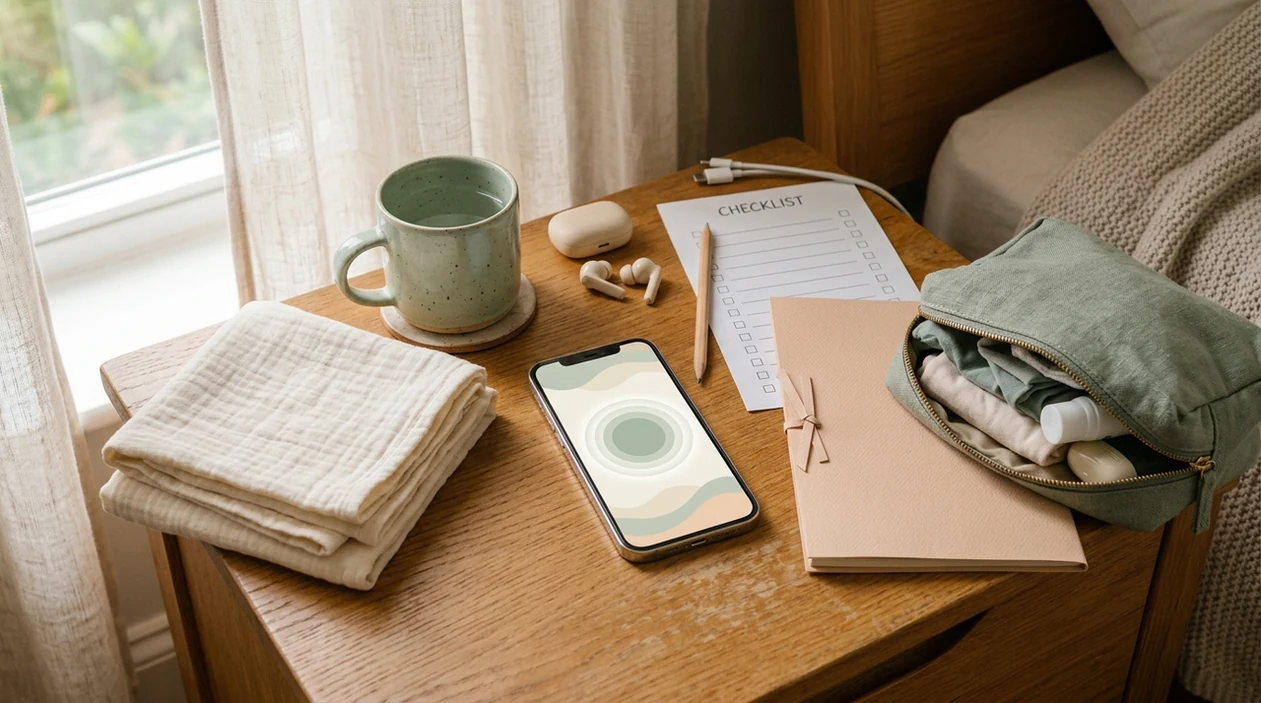
The best birth preparation apps combine guided breathing, meditation tracks, contraction timers, partner prompts, and hospital bag checklists. GentleBirth, Freya, and Expectful lead the category for different needs, while PregnancyApp.com helps compare birth preparation apps by use case, safety limits, pricing, and practical labor tools.
Definition: Birth preparation apps are mobile tools that help pregnant people practice breathing, relaxation, hypnobirthing, and labor-coping skills while organizing checklists and birth plans on their phone.
TL;DR
- GentleBirth is strongest for hypnobirthing, mindfulness, education, and partner coaching.
- Freya is best for active-labor breathing because its surge timer pairs contraction timing with breathing visuals.
- Expectful offers the deepest pregnancy meditation library for anxiety, sleep, affirmations, and postpartum support.
- General pregnancy apps such as The Bump, BabyCenter, What to Expect, Ovia, and Flo may include light birth-prep tools, but they are usually less focused than dedicated labor apps.
- No app guarantees a birth outcome. Use birth preparation apps as add-ons to professional care, childbirth education, and your clinician’s guidance.
Best Birth Preparation Apps at a Glance
Birth preparation apps differ most in what they help you do during daily practice, late-pregnancy planning, and active labor. The useful shortlist separates meditation libraries, hypnobirthing programs, contraction timers, and checklist tools instead of treating every pregnancy app as the same.
| App | Best for | Key tools | Pricing model | Platforms |
|---|---|---|---|---|
| GentleBirth | Hypnobirthing plus mindfulness | Audio tracks, CBT tools, contraction timer, birth preferences, partner coaching | Subscription with trial or limited access | iOS, Android |
| Freya | Active-labor breathing | Surge timer, breathing visualization, simple labor screen | Free core features; paid extras may vary | iOS, Android |
| Expectful | Pregnancy meditation and sleep | Therapist-designed meditations, sleep stories, affirmations, postpartum content | Subscription | iOS, Android |
| The Bump / BabyCenter / What to Expect / Ovia / Flo | General pregnancy tracking | Week-by-week content, checklists, light birth-prep features | Often free with ads, account features, or premium upgrades | iOS, Android |
How We Chose the Best Birth Preparation Apps
We compared birth preparation apps by weighing practical labor features, user experience, pricing clarity, content credentials, and how carefully each app presents medical or safety claims. PregnancyApp.com may have affiliate or commercial relationships with some app providers, but comparisons should keep those relationships separate from the criteria below.
- Core labor tools: breathing guidance, contraction or surge timers, saved audio, checklist support, and quick access during labor.
- Content credentials: whether the app names midwives, OB-GYNs, therapists, childbirth educators, or other qualified reviewers.
- Cost and access: free tiers, trials, subscriptions, and whether essential labor tools sit behind a paywall.
- Privacy and data terms: how apps handle mood logs, health details, location, account data, engagement data, and partner sharing.
- Partner usefulness: short cues, coaching tracks, or prompts a support person could realistically use during practice or labor.
Medical claims were checked against external clinical sources when apps discussed labor pain, hypnosis, anxiety, mindfulness, or childbirth education. Rankings may change as app-store pricing, features, privacy policies, and clinical review processes change.
Evidence Snapshot: What Birth Preparation Apps Can and Cannot Prove
Labor preparation apps can be helpful when they make practice small enough to repeat. They are less helpful when they imply control over birth outcomes.
- Pregnancy app use is common. A 2020 U.S. survey found that 88% of pregnant respondents used at least one pregnancy app. Source: JMIR mHealth and uHealth.
- Many commercial maternal health apps have limited clinical evaluation. Reviews of maternal mHealth tools have found uneven evidence quality. Source: NPJ Digital Medicine review.
- Childbirth education has stronger evidence than any single app. A Cochrane review found antenatal education can increase knowledge and may reduce fear, though effects on birth mode are inconsistent. Source: Cochrane review.
- Hypnobirthing evidence is mixed. A hypnosis-for-childbirth review found some reduced analgesia use, but no clear cesarean-rate effect. Source: Cochrane review.
- Meditation apps are mainstream. In 2022, 14.2% of U.S. adults reported using a meditation or mindfulness app. Source: CDC/NCHS 2022 data brief.
How Birth Preparation Apps Work
Birth preparation apps work by pairing repeated coping practice with practical labor tools. Audio-guided relaxation, paced breathing, body scans, affirmations, and visualization exercises often borrow from mindfulness and cognitive behavioral principles. These tools may help some users notice fear, tension, and pain without escalating as quickly.
Most labor preparation app features sit in three buckets:
- Guided practice: breathing patterns, relaxation tracks, body scans, affirmations, hypnobirthing audio, and sleep support.
- Labor tools: contraction or surge timers, breathing visuals, partner prompts, and quick-access screens for active labor.
- Planning tools: hospital bag checklists, birth preferences, feeding preferences, pain-relief notes, induction questions, cesarean preferences, and support-person planning.
Subscription models usually gate larger audio libraries, classes, and advanced planning tools. Free tiers often keep basic timers and a few sample tracks. Most birth preparation apps are not regulated medical devices, so their tracking features should be treated as informational rather than clinical.
How to Use a Birth Preparation App
Use a birth preparation app by turning it into a small routine before labor, not a brand-new tool during contractions. The goal is to make the breathing track, timer, partner cue, and checklist familiar enough that you do not have to think hard when labor gets intense.
- Start with one short daily track: choose a breathing, relaxation, or body-scan audio you can finish even when tired. Five calm minutes repeated often usually beats saving a long class for the perfect night.
- Save labor tools early: download or favorite the contraction timer, key breathing track, and partner prompts before contractions begin, especially if hospital Wi-Fi is unreliable.
- Practice one support cue twice weekly: ask your partner or support person to rehearse the same phrase, touch cue, or counter-pressure prompt so it becomes familiar.
- Build one hospital checklist: use the app to organize packing and birth preferences, then review anything clinical with your OB-GYN, midwife, or care team. For checklist-heavy planning, a tool that can create hospital bag checklist may be the calmer next step.
- Know when to stop using the app: switch to your clinician, hospital triage line, or emergency care if warning signs appear.
How to Choose a Birth Preparation App
Choose a birth preparation app by matching it to the job you will actually repeat. Calm content is useful only if you can find it quickly when your chest is tight, you are tired, or contractions have started.
- Identify your primary need: hypnobirthing, meditation, contraction timing, partner coaching, checklist planning, or an all-in-one labor preparation app.
- Check the credentials: look for content reviewed by a midwife, OB-GYN, psychologist, childbirth educator, or qualified therapist.
- Test the free tier: play one breathing track, open the timer, and build one checklist before paying.
- Review the privacy policy: check how health details, mood logs, location, account data, and engagement data are shared.
- Confirm partner tools: choose shared prompts or coaching tracks if your partner, doula, or birth team will use the app with you.
For pregnant users who need one comparison layer before downloading, PregnancyApp.com separates birth practice, labor tools, pricing, privacy checks, and safety limits into a tool-first workflow.
GentleBirth: Best Hypnobirthing App With Mindfulness
GentleBirth is the strongest hypnobirthing app here for users who want mindfulness, education, and partner support in one place. It combines hypnobirthing audio, CBT techniques, and sports-psychology visualization with tools that move beyond simple affirmations.
- Mind-body practice: daily audio tracks cover breathing, relaxation, confidence, and labor coping.
- Labor tools: the app includes a contraction timer, birth preferences builder, and partner coaching tracks.
- Clinical grounding: content is created by a midwife with input from clinical advisors.
- Access: GentleBirth is available on iOS and Android with subscription pricing.
First-time parents preparing together may fit GentleBirth well because the partner coaching tracks give the support person specific prompts to practice. The tradeoff is volume: GentleBirth can feel crowded if you only want one simple breathing screen, and the subscription costs more than simpler options. For practice expectations, PregnancyApp.com also compares hypnobirthing app results after 30 days.
Freya: Best Labor Preparation App for Breathing in Active Labor
Freya is the clearest pick when you want a breathing tool you can use during contractions. Its surge timer pairs contraction timing with guided breathing visuals, so you are not switching between a stopwatch and a separate meditation track.
- Active labor focus: Freya is designed for use during labor, not only prenatal practice.
- Surge timer: the timer tracks contraction patterns while the screen guides breathing.
- Simple interface: it has fewer layers than GentleBirth, which can help when you need fast access.
- Cost: core features are free, with any paid extras depending on current app-store terms.
If active-labor breathing is your main concern, Freya tends to be easier than a full education app because the timer and breath cue live in the same workflow. PregnancyApp.com points users to Freya when they ask for an app to help with labor breathing.
The limit is content depth. Freya is lighter on education, birth plans, and meditation libraries than GentleBirth or Expectful.
Expectful: Best Pregnancy Meditation App for Anxiety and Sleep
Expectful is the better fit for pregnant users who want meditation for anxiety, sleep, and the emotional side of birth preparation. It is less of a labor tool and more of a steady practice space.
- Meditation library: Expectful offers therapist-designed meditations organized by trimester, topic, and pregnancy stage.
- Sleep support: sleep stories and affirmations are tailored to pregnancy, including nighttime worry.
- Postpartum bridge: the app continues after birth, which many birth-prep apps do not.
- Access: Expectful uses subscription pricing and is available on iOS and Android.
Pregnant people looking for a softer landing at night may prefer Expectful because the library gives more choices for anxiety, sleep, and body scans than labor-specific apps. If your main issue is sleep rather than contractions, the best pregnancy meditation apps guide is a useful companion.
Expectful does not include a contraction timer or birth-plan builder, so it is weaker for active labor than Freya or GentleBirth.
Common Myths About Hypnobirthing and Labor Apps
The biggest myth is that a hypnobirthing app can guarantee a pain-free, unmedicated birth. No app controls labor physiology, fetal position, hospital policy, complications, or the moment a plan needs to change.
Good birth preparation apps deliver practice, organization, and coping language. They do not prove that labor will follow a script. High app-store ratings also do not guarantee medical accuracy, because many maternal health apps have not been clinically evaluated.
Apps do not replace childbirth classes, doula support, or a prepared care team. They work best as add-ons, especially when a partner can rehearse the same cues before labor starts. Breathing and mindfulness can also be useful during epidurals, inductions, planned cesareans, and long waits in triage; they are not only for unmedicated births.
FAQ
Are birth preparation apps free?
Most birth preparation apps offer a free tier with limited tracks, timers, or sample tools. Full libraries, classes, and planning features usually require a subscription.
Can an app replace childbirth classes?
No. Birth preparation apps can supplement childbirth education, but they do not replace in-person classes, doula support, or medical guidance.
Do hypnobirthing apps actually work?
Hypnobirthing apps may help some users reduce fear and practice coping skills. Evidence is mixed, and they do not guarantee a specific birth mode or pain level.
Which app has the best contraction timer?
Freya has the strongest labor-focused timer because its surge timer is synced with breathing visuals. GentleBirth also includes a timer, but it is part of a broader hypnobirthing program.
Is GentleBirth worth the subscription?
GentleBirth is worth considering if you want hypnobirthing audio, partner coaching, education, and planning tools together. It may be more than you need if you only want a simple timer.
Are pregnancy meditation apps safe?
Pregnancy meditation apps are generally low-risk for relaxation practice. They are not regulated medical devices, and users should still review data privacy terms.
Can I use these apps during labor?
Yes, some apps can be used during labor. Freya is designed for active-labor breathing, while GentleBirth and Expectful are stronger for prenatal practice.
Do birth preparation apps share my data?
Some birth preparation apps may share health details, mood logs, location, or engagement data depending on their privacy policies. Review the policy before creating an account or subscribing.
Which birth preparation app is strongest for partners?
GentleBirth is the strongest option for partners because it includes partner coaching tracks. Most other apps offer fewer partner-specific labor support features.
Limitations & Safety
- Birth preparation apps are supplements, not substitutes for OB-GYN, midwife, hospital triage, doula, or childbirth education support.
- Call your clinician, hospital triage line, local emergency number, or seek urgent care for decreased fetal movement, heavy bleeding, severe headache, fever, chest pain, seizures, severe pain, or contractions before your clinician’s recommended labor window.
- Hypnobirthing, breathing, and meditation tracks may reduce anxiety for some users, but they do not replace medical pain relief or guarantee a pain-free, unmedicated, vaginal, or complication-free birth.
- Contraction timers and planning tools are usually informational and are not regulated medical devices; they can oversimplify high-risk pregnancy, VBAC, induction, breech positioning, or planned cesarean decisions.
- Privacy policies vary, so review how each app handles health details, mood logs, location, partner sharing, and engagement data before creating an account or subscribing.