 Pregnancy
Printable Birth Plan Template for Labor
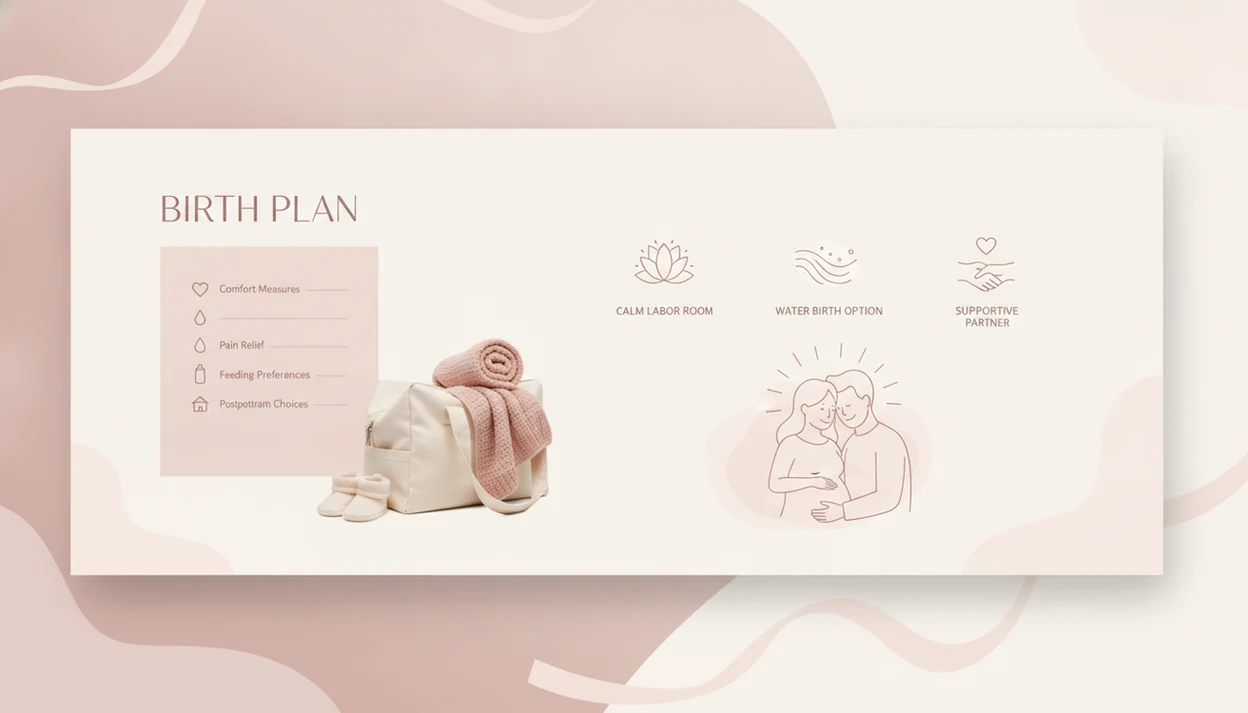
Quick answers
A birth plan template printable is a short checklist that tells your care team your labor, delivery, newborn care, and backup preferences. Many clinicians recommend keeping it to one page, reviewing it before labor, and treating it as a flexible communication tool rather than a contract.
- Best length: One page with checkboxes or short bullets.
- Best timing: Fill it out in the third trimester and discuss it at a prenatal visit.
- Most important sections: Support people, pain relief, monitoring, delivery preferences, newborn care, and what to do if plans change.
- Print option: Use the checklist below and select the print button on this page.
Birth Plan Template Overview
| Purpose | Summarizes your labor, birth, newborn care, and communication preferences for your care team. |
|---|---|
| Ideal format | One printable page with checkboxes, short notes, and flexible backup preferences. |
| When to complete it | Many people complete it in the third trimester and review it with their clinician before labor. |
| What to bring | Printed copies for your hospital bag, support person, nurse, midwife, doctor, or chart. |
| Safety reminder | A birth plan is not a medical order; preferences may change because of safety, policy, staffing, or your baby’s condition. |
TL;DR
A birth plan template printable is a one-page guide that summarizes your labor, delivery, and newborn care preferences for your care team. It should be short, flexible, and discussed before labor, because birth preferences may need to change for safety, staffing, hospital policy, or your baby’s condition.
Definition: A birth plan is a written list of preferences for labor support, pain relief, medical procedures, delivery environment, newborn care, and communication. It is not a medical order or contract; it is a conversation tool that helps you, your support person, and clinicians share expectations before and during birth.
Printable Birth Plan Checklist
This printable birth plan checklist gives you a one-page, copyable format for sharing preferences, pain relief choices, newborn care plans, and backup instructions. Print it, mark what matters to you, and bring copies to a prenatal appointment and your birth location.
One-page copyable birth plan template
Name: ____________________ Due date: ____________________ Provider: ____________________
Birth location: ____________________ Allergies or key conditions: ____________________
1. Support and communication preferences
- ☐ My support person or people are: ____________________
- ☐ I would like explanations before procedures when possible.
- ☐ I prefer: ☐ direct updates ☐ step-by-step explanations ☐ quiet reassurance ☐ time for questions when safe.
- ☐ If I cannot speak for myself, please communicate with: ____________________
2. Labor environment and comfort preferences
- ☐ I would like to move, change positions, or use upright positions if appropriate.
- ☐ I prefer: ☐ dim lights ☐ music ☐ quiet room ☐ limited visitors ☐ privacy during exams.
- ☐ Comfort tools I may want: ☐ breathing ☐ massage ☐ counter-pressure ☐ heat/cold packs ☐ shower or tub if available.
- ☐ I would like cervical checks explained and offered only as needed or agreed upon when possible.
3. Pain relief preferences
- ☐ I would like to start with non-medication coping methods if possible.
- ☐ I am open to pain relief options available at my birth setting.
- ☐ I would like information about: ☐ nitrous oxide ☐ IV medication ☐ epidural ☐ other local options.
- ☐ If I request pain relief, please explain timing, benefits, risks, and what happens next.
4. Birth and delivery preferences
- ☐ I would like to try pushing positions such as: ____________________ if appropriate.
- ☐ I would like coached pushing, spontaneous pushing, or a mix depending on the situation.
- ☐ I would like immediate skin-to-skin if parent and baby are stable.
- ☐ I would like delayed cord clamping if appropriate.
- ☐ Person to cut the cord, if allowed: ____________________
5. Newborn care preferences
- ☐ Feeding plan: ☐ breastfeeding/chestfeeding ☐ formula feeding ☐ combination feeding ☐ undecided.
- ☐ I would like feeding support soon after birth if possible.
- ☐ I prefer baby to room-in with me if appropriate.
- ☐ I would like routine newborn care, medications, bathing, weighing, and exams explained.
- ☐ Cultural, religious, or family preferences: ____________________
6. Backup plan if preferences change
- ☐ If plans need to change for safety, please explain the reason, options, urgency, and next steps.
- ☐ If induction, assisted delivery, cesarean birth, extra monitoring, or newborn support is recommended, I would like my support person included when possible.
- ☐ My most important preferences are: ____________________
- ☐ Questions for my clinician before labor: ____________________
How to Use a Printable Birth Plan Template
A good printable birth plan is brief enough for a nurse, midwife, or doctor to scan quickly during labor. Keep it to one page when possible, use checkboxes or short bullet points, and bring extra copies for your hospital bag, your support person, and your chart.
Start filling it out in the third trimester, then review it at a prenatal visit so your care team can explain what is routine, optional, or unavailable at your birth setting. Pair it with your third trimester checklist so documents, hospital bags, and contact details are ready before labor begins.
What to Include in a Birth Plan Template Printable
The most useful birth plan template printable includes your identity, support people, labor preferences, pain relief choices, delivery preferences, newborn care choices, feeding plans, and emergency considerations. It should also include allergies, key medical conditions, and who should help with decisions if you cannot speak for yourself.
Core sections to include
- Name and due date: Include your name, pronouns, estimated due date, provider, and birth location.
- Support team: List partner, doula, family members, photographer, or visitors allowed in the room.
- Labor environment: Note lighting, music, mobility, position changes, water use, and privacy preferences.
- Pain relief: Mark preferences for breathing, massage, nitrous oxide, IV medication, epidural, or other options offered locally.
- Medical preferences: Ask about monitoring, cervical checks, induction or augmentation, IV access, and assisted delivery policies.
- Birth and cord care: Include pushing positions, skin-to-skin contact, delayed cord clamping, and who may cut the cord.
- Newborn care: Note feeding plans, routine medications, bathing, weighing, rooming-in, and special cultural or family preferences.
- If plans change: State how you want information explained and who should be involved in urgent decisions.
Labor Preferences: Movement, Monitoring, and Pain Relief
Labor preferences should describe what helps you cope while leaving room for clinical judgment. Consider movement, upright positions, shower or tub use if available, fetal monitoring options, cervical exam preferences, and pain relief choices, then connect those choices to your provider’s guidance and the stages of labor.
Many people include non-medication comfort tools such as position changes, heat packs, counter-pressure, guided breathing, dim lights, or music. Practicing breathing exercises for labor before delivery can help you communicate needs during contractions, even if you later choose medication or an epidural.
Timing contractions can help you notice patterns, but it should not replace medical instructions from your clinician. A contraction timer may be useful at home while you follow your provider’s guidance about when to call, when to leave, and what symptoms need urgent attention.
Newborn Care and Communication Preferences
Newborn preferences often cover immediate skin-to-skin contact, delayed cord clamping when appropriate, feeding support, rooming-in, bathing timing, standard newborn medications, and who may hold the baby first. These choices should be discussed ahead of time because hospital policies and your baby’s health can affect what happens after delivery.
Communication preferences are especially important if labor becomes intense or urgent. State whether you want explanations before procedures when possible, whether your support person should help ask questions, and whether you prefer direct language, step-by-step updates, or quiet reassurance during decision-making.
What to Do When Birth Plans Change
A flexible birth plan is stronger than a rigid one because labor can shift quickly. If induction, cesarean birth, assisted delivery, extra monitoring, or newborn support becomes recommended, ask what is happening, why it is advised, what alternatives exist, and whether there is time to discuss options.
Your plan can include a simple backup statement such as: “If my preferences need to change for safety, please explain the reason, the options, and what happens next.” Knowing when to go to the hospital can also reduce uncertainty before active labor is established.
Limitations & Safety
A birth plan template printable is an educational planning tool, not a substitute for prenatal care, individualized medical advice, or hospital policy. The safest plan is one reviewed with your clinician, adapted to your pregnancy, and flexible enough to respond to labor, delivery, and newborn needs.
- Call your maternity unit or emergency services for heavy bleeding, severe pain, decreased fetal movement, symptoms of preeclampsia, or any urgent concern.
- Follow your clinician’s instructions about contractions, ruptured membranes, fever, bleeding, fetal movement, and arrival timing.
- Some preferences may not be available because of medical needs, staffing, equipment, or birth center and hospital policies.
- If you have a high-risk pregnancy, prior cesarean, multiple pregnancy, planned induction, or planned cesarean, ask for a personalized birth planning discussion.
- Bring your plan to prenatal appointments and update it if your pregnancy, provider, or birth location changes.
Frequently Asked Questions
How long should a printable birth plan be?
Most birth plans are easiest to use when they are one page long. Short checkboxes and bullet points help staff scan your preferences quickly during labor. If you have extra notes, consider keeping them for your prenatal visit rather than the delivery-room copy.
When should I make a birth plan?
Many people start a birth plan in the third trimester and review it with their clinician before labor. Earlier planning may be helpful if you have a high-risk pregnancy, planned induction, prior cesarean, or planned cesarean birth.
Is a birth plan legally binding?
A birth plan is not usually a legal document or medical order. It is a communication tool that helps your care team understand your preferences while still allowing changes for safety, clinical judgment, and hospital policy.
What should I avoid putting in a birth plan?
Avoid long explanations, absolute demands, or instructions that conflict with urgent safety care. It is usually more helpful to list preferences, questions, and backup choices in clear, respectful language.
Should I include pain relief choices in my birth plan?
Yes, pain relief choices are one of the most useful sections to include. Many clinicians suggest listing what you want to try first, what you are open to, and whether you want details about options such as nitrous oxide, IV medication, or an epidural if available.
Should I make a separate birth plan for a cesarean birth?
If a cesarean is planned or possible, it can help to include cesarean preferences in the same plan or as a short backup section. Options may include support person presence, communication during surgery, skin-to-skin if appropriate, and feeding support.
How many copies of my birth plan should I bring?
Bringing several printed copies is practical because different team members may need to see it. Many people keep one in the hospital bag, one with a support person, and one for the nurse, midwife, doctor, or chart.