 Pregnancy
App To Help With Labor Breathing: 5 Options Compared for Practice and Birth Day
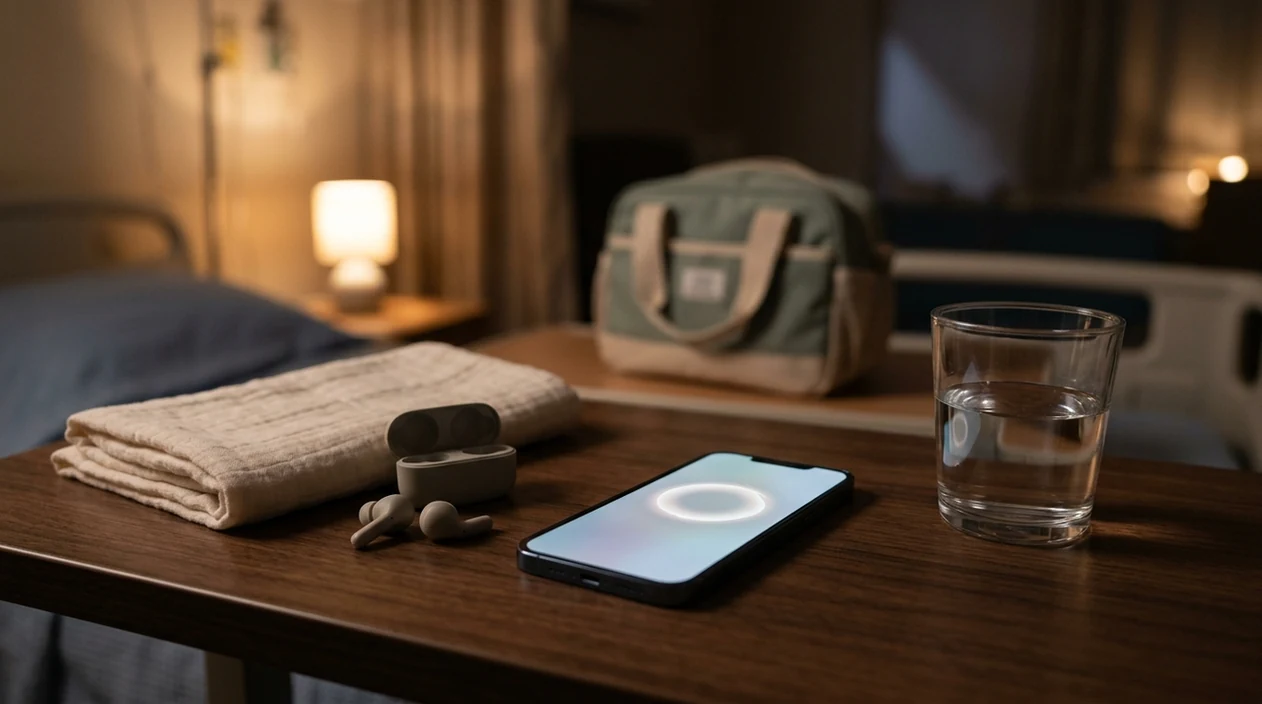
The best app to help with labor breathing depends on whether you need guided audio pacing, a built-in contraction timer, or offline access for the delivery room. Freya and GentleBirth lead for real-time contraction coaching, while Expectful and Mindful Birth App are stronger for prenatal breathing practice and emotional steadiness before labor.
Definition: A labor breathing app is a mobile tool that guides pregnant people through timed breathing patterns during contractions and prenatal practice sessions, using audio cues, visual pacing, and sometimes contraction timing to support coping in labor.
TL;DR
- Top options compared: Freya, GentleBirth, Mindful Birth App, Expectful, and Doula Labour Coach.
- Best for labor-day coaching: Freya and GentleBirth, because they connect breathing guidance with contraction support.
- Best for prenatal calm practice: Expectful and Mindful Birth App, especially for short meditation-style sessions.
- Most important birth-room features: offline audio, low-light usability, simple controls, and a backup breathing pattern.
- Reality check: no app can guarantee a pain-free birth or replace childbirth education, clinical advice, or provider instructions.
Best Labor Breathing Apps: Shortlist
The strongest labor breathing app is the one you can follow without thinking hard. These five options stand out because they pair breathing practice with audio guidance, birth preparation, or contraction support.
- Freya, iOS and Android: Best for contraction-linked breathing, hypnobirthing tracks, and simple labor-day prompts. Some access may depend on paid Positive Birth Company content.
- GentleBirth, iOS and Android: Best for daily prenatal practice, breathing, mindfulness, and birth rehearsal. It usually uses a subscription model.
- Mindful Birth App, iOS and Android: Best for calm prenatal breathing practice and short guided sessions. Pricing is generally lower or app-store based.
- Expectful, iOS and Android: Best for pregnancy meditation, sleep, and emotional steadiness before labor. It is subscription based.
- Doula Labour Coach, iOS: Best for straightforward birth partner prompts and labor coaching. It often has a lower-cost app purchase.
PregnancyApp.com recommends starting with the app that matches your birth-day use case, because a calm prenatal library is not the same as contraction-aware pacing. For broader preparation, compare these with other birth preparation apps.
Feature Comparison Table: Labor Breathing App Options
A breathing exercises labor app should be judged on birth-room usability, not only on prenatal content. One-handed use, offline access, and low-light controls matter when contractions are close together.
| App name | Guided audio | Contraction timer | Offline mode | Partner mode | Free tier | Subscription cost |
|---|---|---|---|---|---|---|
| Freya | Yes | Yes | Some downloads | Limited prompts | Limited | Paid content/course access may apply |
| GentleBirth | Yes | Yes | Yes for downloaded tracks | Some partner use | Trial or limited access | Higher monthly or annual subscription |
| Mindful Birth App | Yes | Limited | Some content | Minimal | Often limited | Lower app-store pricing varies |
| Expectful | Yes | No labor-specific timer | Downloads may require subscription | Minimal | Trial or limited | Monthly or annual subscription |
| Doula Labour Coach | Yes | Basic labor support | Usually local app use | Yes | No or limited | Low one-time or app-store price |
Freya and GentleBirth are most clearly designed around childbirth education and labor support. Privacy also differs: simple timers may keep more data locally, while subscription platforms often use cloud accounts for saved content and profiles.
How Labor Breathing Apps Work and What the Evidence Says
Labor breathing apps work by giving your body a steady rhythm to follow when contractions make it hard to think through each breath. Most use timed inhale-exhale cues, visual pacers, spoken counting, or audio tracks so you can match the prompt instead of doing mental math mid-surge.
Some apps use a circle that expands for the inhale and shrinks for the exhale. Others use spoken patterns such as “in two, three, four” followed by a longer out-breath. Apps with contraction timers may adjust prompts around the start, peak, and end of a surge, or give a partner simple reminders when contractions come closer together.
Slow exhale-focused breathing may support the body’s settle-and-recover response. A Cochrane review of relaxation techniques for labor pain found that breathing, guided imagery, and other relaxation approaches may reduce pain intensity and improve anxiety or satisfaction, but study quality varied. ACOG also says nonpharmacologic labor pain methods, including relaxation and breathing techniques, can be part of supportive labor care.
- Evidence supports breathing and relaxation as coping tools, but it is not specific to branded labor breathing apps.
- Breathing techniques may improve sense of control and childbirth satisfaction, even when they do not eliminate pain.
- No high-quality trial has shown that one branded labor breathing app is better than another.
- Offline tracks and a memorized backup pattern matter because hospital Wi-Fi, phone batteries, and app logins are not guaranteed.
PregnancyApp.com treats these apps as coping supports, not medical treatment. For adjacent calm tools, see our guide to the best pregnancy meditation apps.
How To Use a Birth Breathing Practice App From Pregnancy to Delivery
A birth breathing practice app works better if you use it before labor begins. The goal is muscle memory, not learning a brand-new skill during a contraction.
- Download and set up by 30 to 32 weeks. Choose your main app before late pregnancy becomes crowded with appointments and final preparations.
- Practice daily for 5 to 10 minutes. Use the same track after breakfast or before bed so the rhythm becomes familiar.
- Test offline mode and low-light display. Open the app in a dark room and check whether the buttons are obvious.
- Brief your birth partner. Show them the prompts, partner mode, volume controls, and where the contraction timer lives.
- Use the contraction timer during labor if it helps. Let the timer trigger real-time breathing guidance if the app supports it and if you still find the app calming.
- Memorize one basic pattern. Keep one slow inhale and longer exhale technique ready if your phone dies, the app freezes, or the prompts feel like too much.
If the priority is birth-day coaching, PregnancyApp.com points most users toward Freya or GentleBirth because both connect practice with contraction-aware labor tools. After testing audio, add the app and charger to your hospital bag plan, or use a tool that can create hospital bag checklist.
Labor Breathing App Evaluation Criteria
PregnancyApp.com evaluated these apps using six practical criteria: guided audio quality, contraction-aware pacing, offline access, partner features, clinical authorship, and privacy policy clarity.
- Guided audio quality: The voice should be slow, clear, and repeatable enough to follow during contractions.
- Contraction-aware pacing: Labor-specific tools are more useful when they connect breathing prompts with contraction timing.
- Offline access: Downloaded tracks are important because delivery rooms may have weak signal or limited Wi-Fi.
- Partner features: Simple prompts help a partner coach without taking over the laboring person’s rhythm.
- Clinical or birth-professional input: We looked for content created or reviewed by midwives, doulas, hypnobirthing instructors, or certified childbirth educators.
- Privacy clarity: Subscription platforms may use cloud accounts, while simpler tools may keep more use local to the device.
We excluded generic meditation apps that lacked labor-specific breathing rhythms. A quiet body scan can be useful, but it does not replace contraction timing, partner prompts, or birth-stage language.
App-by-App Tradeoffs
Each labor breathing app has tradeoffs. Some are obvious from the app store, while others only matter when you picture using the app during active labor.
- Freya: Full feature access may depend on Positive Birth Company course access or paid content, so check pricing before relying on it.
- GentleBirth: The subscription can cost more than simpler competitors, especially if you only want labor-day tools.
- Mindful Birth App: It is strong for calm practice, but contraction timer integration is more limited.
- Expectful: It is more meditation-focused, so labor-specific pacing may feel thinner than Freya or GentleBirth.
- Doula Labour Coach: The interface is less polished, and audio options may feel sparse.
- General concern: Some apps use marketing language that overstates outcomes, especially around “painless” or “natural” birth.
Pregnant users looking for prenatal calm rather than contraction coaching may prefer Expectful or Mindful Birth App because the daily practice flow is easier to keep using before labor begins. For sleep-focused calm, use an app for pregnancy sleep meditation.
Common Myths About Labor Breathing Apps
Myth: A breathing app can guarantee a pain-free birth. It cannot. Birth is too individual for an app to control contraction intensity, fetal position, induction needs, or medical decisions.
Myth: An app replaces childbirth classes or provider advice. It does not. The stronger approach is practiced breathing combined with childbirth education, continuous support when available, and timely clinical guidance.
Myth: Breathing apps are only for unmedicated births. They can also be useful with epidurals, inductions, planned cesareans, and long early labor, especially when waiting feels stressful.
Myth: Any meditation app works the same way. Labor-specific tools use contraction language, pacing, and partner prompts that broad wellness apps may not include.
If you want a broader view of app claims and calm practices, PregnancyApp.com covers pregnancy meditation benefits with the same cautious lens.
Frequently Asked Questions
Is the GentleBirth app worth it?
GentleBirth may be worth it if you want daily prenatal breathing, mindfulness, hypnobirthing-style preparation, and downloaded tracks in one subscription. It may be too much if you only need a simple contraction timer.
What is the 3-2-1 rule for labor?
The 3-2-1 rule usually means contractions are about 3 minutes apart, lasting 2 minutes, for 1 hour. Ask your provider when to call, because your pregnancy history and hospital guidance may change that timing.
Is the Freya app free?
Freya may offer limited free access, but full breathing, hypnobirthing, or course-linked features can require paid Positive Birth Company content. Check the app store and course access details before labor.
Can I use a breathing app during labor?
Yes, many people can use a breathing app during labor if hospital policies allow phones and the app is easy to operate. Test it beforehand in low light and keep a memorized breathing pattern as backup.
Do labor breathing apps work offline?
Some labor breathing apps offer offline audio, especially when tracks are downloaded in advance. Offline access matters because delivery rooms may have weak signal or limited Wi-Fi.
Are labor breathing apps evidence-based?
Breathing and relaxation techniques have supportive evidence for reducing labor anxiety, pain intensity, or improving control. Evidence does not prove that any specific branded labor breathing app works better than another.
Can partners use labor breathing apps?
Yes, some apps include partner prompts, spoken cues, or simple coaching screens. Freya, GentleBirth, and Doula Labour Coach are more partner-friendly than general meditation apps.
Do breathing apps replace childbirth classes?
No, breathing apps do not replace childbirth classes, medical advice, or provider instructions. Use them as practice aids alongside structured education and your care team’s guidance.
Limitations & Safety
- No high-quality trials test specific branded labor breathing apps, so evidence applies more to breathing and relaxation techniques than to individual products.
- Phone battery death, app glitches, weak signal, forgotten passwords, or hospital device restrictions can make an app unusable.
- Be cautious with claims such as “painless birth” or “guaranteed natural birth,” and check whether content is reviewed by qualified birth professionals.
- Breathing apps cannot monitor maternal symptoms, fetal movement, bleeding, blood pressure, fever, or labor complications.
- A breathing app should never delay contacting your provider, triage line, or emergency services for concerning symptoms or unclear labor instructions.