 Pregnancy
Coffee and Caffeine During Pregnancy
Quick answers
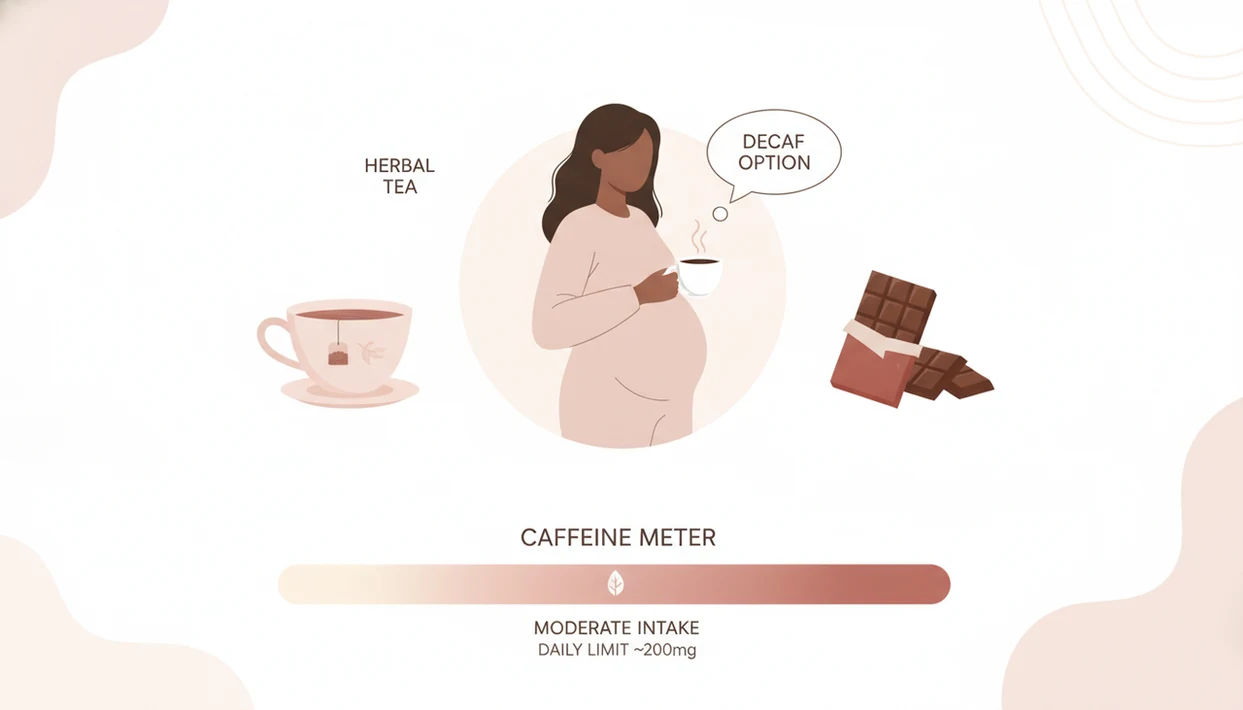
Many clinicians use up to 200 mg of caffeine per day from all sources as the general moderate limit during pregnancy. That amount may be about one 12-ounce brewed coffee or two smaller cups, depending on strength, serving size, and preparation. Coffee during pregnancy caffeine decisions should also count tea, matcha, cola, energy drinks, chocolate, and some medicines.
- Is coffee allowed? For many pregnancies, yes, in moderation.
- What matters most? Total daily caffeine, not just the number of coffee cups.
- Who may need less? People with high-risk pregnancy concerns, palpitations, severe reflux, anxiety, insomnia, high blood pressure, fetal growth concerns, or clinician-specific restrictions.
Caffeine overview: what to count in pregnancy
| Source | Caffeine note | Pregnancy takeaway |
|---|---|---|
| Brewed coffee | Often the largest source; may range from about 80 to over 150 mg per serving, and a 12-ounce brewed coffee may approach the commonly cited daily limit depending on strength. | Measure serving size and strength instead of counting only “cups.” |
| Espresso drinks | Espresso is concentrated, but servings are smaller; lattes and specialty drinks may contain multiple shots. | Ask how many shots are included and include them in your daily total. |
| Decaf coffee | Decaf is much lower in caffeine, but it can still contain small amounts. | Useful for cutting back, but not always fully caffeine-free. |
| Tea, matcha, yerba mate, cola, and chocolate | Caffeine varies by product, serving size, and preparation. | Count these toward the same daily caffeine budget. |
| Energy drinks and some medicines | Energy drinks may contain caffeine plus other stimulants; some headache or cold medicines may also add caffeine. | Many clinicians recommend avoiding or discussing these products during pregnancy. |
TL;DR
Many pregnancy guidelines describe up to 200 mg of caffeine per day as a moderate limit, counting coffee and all other sources. Coffee strength and cup size vary, so checking labels and tracking total caffeine is more reliable than counting cups. Ask your clinician for individualized guidance if you have a high-risk pregnancy, palpitations, severe nausea, sleep problems, anxiety, blood pressure concerns, fetal growth concerns, or medication questions.
What does coffee during pregnancy caffeine guidance mean?
Coffee during pregnancy caffeine guidance means looking at total daily caffeine exposure from all sources, not just whether one cup of coffee is allowed. Caffeine is a stimulant that crosses the placenta, and pregnancy can slow caffeine clearance, so the practical question is how much caffeine fits your health situation.
Many people continue a measured amount of coffee during pregnancy, while others choose to avoid caffeine completely. If you are using a pregnancy tracker or following pregnancy week by week, it may help to log caffeine alongside nausea, hydration, sleep, and symptoms.
How much caffeine is generally considered moderate?
Many clinicians use 200 mg of caffeine per day from all sources as the commonly cited moderate limit in pregnancy. This is a general threshold used in pregnancy guidance, not a personalized prescription, and your clinician may recommend less based on your medical history.
Cup size, roast, brewing method, and café preparation can change caffeine exposure substantially. A “cup” at home, a large café drink, and an espresso-based drink may not contribute the same amount, so labels and serving details matter.
Why does caffeine matter in pregnancy?
Caffeine matters in pregnancy because it crosses the placenta and the fetus has limited ability to metabolize it. During pregnancy, the pregnant person may also clear caffeine more slowly, especially later in gestation.
Research links higher caffeine intake with some adverse outcomes, but observational studies can be affected by nausea, smoking, diet, and other factors. Because uncertainty remains, many clinicians focus on moderation rather than assuming high intake is safe.
Which caffeine sources should you count?
You should count caffeine from coffee, tea, matcha, cola, energy drinks, yerba mate, chocolate, and some headache or cold medicines. Coffee is often the largest source, but other products can push the total higher than expected.
When checking labels, look for serving size and total caffeine per container. A bottle, can, or café drink may contain more than one serving, and some espresso drinks include multiple shots. If you are also planning pregnancy dates, a due date calculator can help orient your timeline, but caffeine decisions should be based on current health guidance.
How can you reduce coffee without stopping suddenly?
Gradual reduction can help reduce caffeine withdrawal symptoms such as headaches, fatigue, or irritability. Options include mixing regular and decaf coffee, ordering a smaller size, switching one serving to herbal tea, delaying coffee until after breakfast, or setting a daily caffeine budget.
Decaf coffee still contains small amounts of caffeine, so it is lower-caffeine rather than always caffeine-free. If coffee worsens anxiety, reflux, insomnia, nausea, or palpitations, consider cutting back further and discussing the pattern with your care team. Some people also use pregnancy meditation or gentle routines to manage the energy dip that can come with reducing caffeine.
When should you be more cautious with caffeine?
Extra caution is reasonable if you have high blood pressure, heart rhythm symptoms, severe reflux, significant anxiety, sleep disruption, fetal growth concerns, or a clinician has recommended a stricter limit. Caffeine advice may also differ if you use certain medications.
Later in pregnancy, it can be helpful to look at caffeine alongside fetal movement, sleep quality, and hydration rather than treating it as an isolated habit. If you are monitoring movement, use a structured tool such as a baby kick counter and contact your care team promptly for reduced movement.
How does coffee fit into the third trimester?
In the third trimester, caffeine may stay in the body longer and sleep can already be fragmented. A morning-only coffee routine, smaller serving, or half-caf option may reduce insomnia while keeping intake moderate.
If heartburn, anxiety, palpitations, or contraction-like sensations feel worse after caffeine, discuss the pattern with your clinician. For broader planning, a third trimester checklist can help organize sleep, symptoms, hospital items, and birth preparation.
Limitations & Safety
This page is educational and cannot replace medical advice, diagnosis, or treatment from your own healthcare professional.
- Many guidelines use 200 mg of caffeine per day as a moderate limit, but your clinician may recommend less based on your medical history.
- Count caffeine from all sources, including coffee, tea, soda, energy drinks, chocolate, supplements, and medicines.
- Avoid or discuss energy drinks in pregnancy because they may contain caffeine and additional stimulants.
- Do not change prescribed medicines because of caffeine content without asking your clinician or pharmacist.
- Contact your healthcare provider for palpitations, fainting, severe anxiety, high blood pressure concerns, reduced fetal movement, or any symptom that worries you.
Frequently Asked Questions
Can I drink coffee during pregnancy?
Many people can drink coffee during pregnancy in moderation. A commonly used limit is up to 200 mg of caffeine per day from all sources, not just coffee. Ask your clinician if you have pregnancy complications or caffeine-sensitive symptoms.
Is 200 mg of caffeine the pregnancy limit?
Many clinicians use 200 mg per day from all sources as the general moderate caffeine limit during pregnancy. It is not a personalized prescription, and some people may be advised to use less. Your own medical history, symptoms, and medications can change the recommendation.
How much caffeine is in a cup of coffee?
Caffeine varies by bean, serving size, and brewing method. An 8-ounce brewed coffee often has around 80–100 mg, but café servings can be larger and stronger. Espresso is concentrated, but a single shot is smaller and commonly contains less caffeine than a large brewed coffee.
Is decaf coffee safe during pregnancy?
Decaf coffee is generally much lower in caffeine than regular coffee, but it may still contain small amounts. It can be a useful option for reducing caffeine while keeping the taste and routine of coffee. If you need to avoid caffeine completely, check labels and ask your clinician.
Do tea, matcha, soda, and chocolate count toward the 200 mg limit?
Yes, caffeinated tea, matcha, cola, yerba mate, chocolate, energy drinks, and some medicines should be counted toward total daily caffeine. The pregnancy caffeine limit is usually discussed as total caffeine from all sources. Labels and serving sizes are more useful than guessing.
Does caffeine cause miscarriage or low birth weight?
Some studies associate higher caffeine intake with pregnancy risks, including miscarriage or fetal growth concerns, but observational research can be influenced by other factors. Because uncertainty remains, many guidelines recommend limiting caffeine rather than assuming high intake is safe. Discuss your personal risk factors with your clinician.
Should I stop caffeine suddenly when pregnant?
Not always. If you regularly drink a lot of caffeine, a gradual reduction may reduce withdrawal headaches, fatigue, and irritability. However, if your clinician advises stopping quickly for a medical reason, follow their guidance.
Are energy drinks okay during pregnancy?
Many clinicians recommend avoiding or discussing energy drinks during pregnancy. They may contain caffeine plus other stimulants or ingredients that are not as straightforward as coffee or tea. If you use them, ask your clinician what is appropriate for your pregnancy.