 Pregnancy
Is Green Tea Safe During Pregnancy?
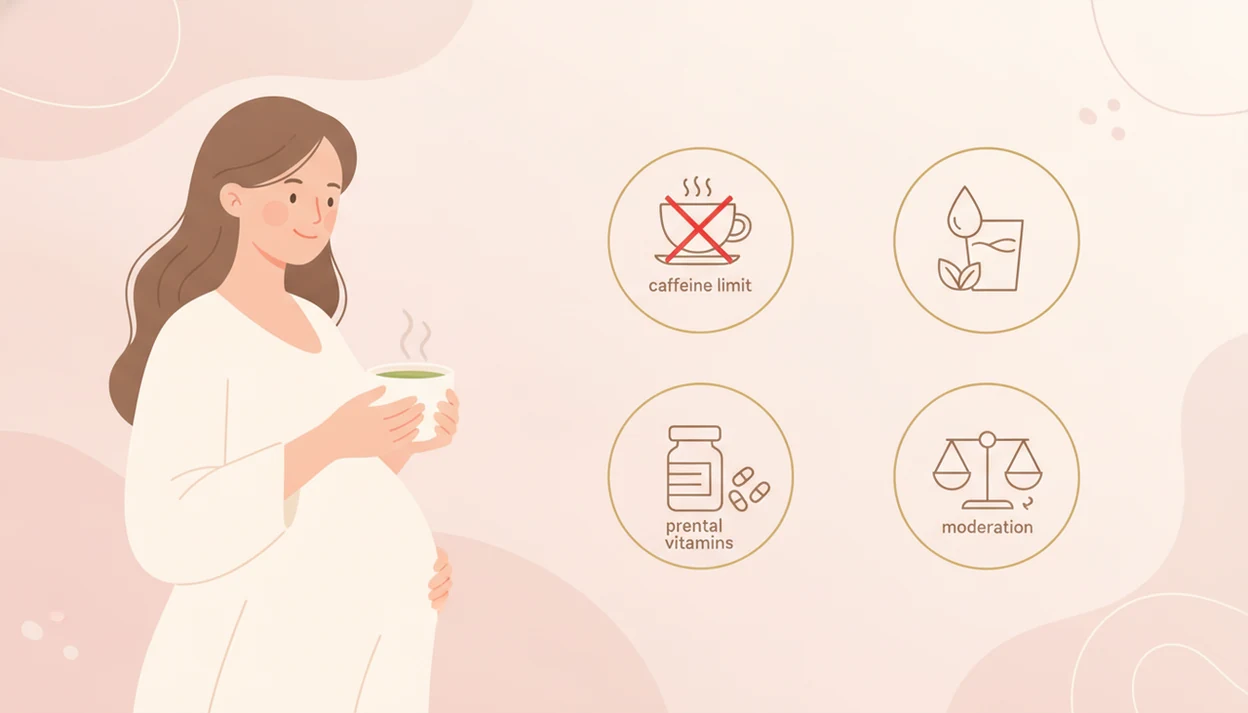
Green tea during pregnancy is usually safe in moderation for most people, as long as you count its caffeine toward the commonly recommended limit of up to 200 mg per day from all sources. Many clinicians suggest choosing brewed green tea, avoiding extracts or detox products, and drinking it away from prenatal vitamins or iron supplements.
| Question | Answer |
|---|---|
| Is green tea safe? | Usually yes, in moderation |
| Daily caffeine limit | Up to 200 mg from all sources |
| Cups per day | Often 1–3 brewed cups |
| Avoid | Extracts, detox teas, weight-loss teas |
| Timing | Away from prenatal vitamins and iron |
TL;DR
Green tea during pregnancy is generally considered safe in moderation, as long as you count its caffeine toward the commonly recommended limit of up to 200 mg per day from all sources. Often, 1–3 brewed cups can fit within that limit, depending on cup size, brew strength, and other caffeine sources. Avoid high-dose green tea extracts, detox teas, and weight-loss teas, and drink green tea away from prenatal vitamins or iron supplements.
What is green tea?
Green tea is a caffeinated drink made from minimally oxidized Camellia sinensis leaves. It contains caffeine and plant compounds called catechins, so the main pregnancy safety questions are total caffeine intake, hydration, nausea tolerance, and whether large amounts may interfere with nutrient absorption.
For most people, brewed green tea is different from concentrated green tea extract. Brewed tea is typically a beverage-level exposure, while extracts, detox teas, and weight-loss products can contain much higher or less predictable amounts of caffeine and catechins.
How much green tea is usually safe while pregnant?
For most pregnancies, one to three cups of brewed green tea a day can fit within a moderate caffeine plan, depending on cup size and brew strength. A typical cup may contain about 25 to 45 mg of caffeine, but amounts vary by brand, amount of tea, water temperature, and steeping time.
The safest approach is to track all caffeine sources together, including coffee, black tea, matcha, soda, energy drinks, and chocolate. If you are monitoring pregnancy symptoms week by week, a simple routine can help you notice whether green tea worsens nausea, reflux, sleep, or hydration. You can pair caffeine tracking with a broader pregnancy week-by-week guide or use a pregnancy tracker to keep notes for your next appointment.
Why do caffeine limits matter in pregnancy?
Caffeine limits matter because caffeine crosses the placenta, and pregnancy can slow how quickly your body clears it. ACOG guidance commonly uses up to 200 mg per day as a practical limit for total caffeine intake during pregnancy, unless your clinician recommends a lower amount.
Green tea is usually lower in caffeine than coffee, but it still counts toward the daily total. A morning coffee plus several cups of green tea may exceed your target, while one small cup of green tea may be well within it. If you are unsure about dates or trimester timing, a due date calculator can help you estimate where you are in pregnancy.
How should you time green tea around folate and iron?
Green tea is best timed away from prenatal vitamins, iron supplements, and iron-rich meals if you drink it regularly. Catechins and tannins in tea may reduce absorption of certain nutrients, especially iron, when tea is taken with meals or supplements.
You do not usually need to avoid green tea completely for nutrient reasons, but spacing it out can make moderation easier. If you have low iron, anemia, severe nausea, or a history of nutrient deficiencies, ask your prenatal clinician whether green tea should be limited further or separated by a specific number of hours from supplements.
Is matcha different from regular green tea?
Matcha is different because it is powdered green tea leaf, so you consume more of the leaf than with brewed tea. It may contain more caffeine and catechins per serving, especially if made strong or served as a latte with multiple scoops.
Pregnant people who choose matcha should count it carefully and avoid concentrated powders marketed as detox, metabolism, energy, or weight-loss products. The same practical rules apply: keep total caffeine moderate, avoid supplement-style extracts, and notice how your body responds. If matcha triggers palpitations, anxiety, reflux, insomnia, or dehydration, switching to a weaker brew or a caffeine-free pregnancy-safe drink may be more comfortable.
When should you choose decaf or skip green tea?
Decaf green tea can be a useful option if you want the taste and ritual with less caffeine. Decaf is not always completely caffeine-free, so label checking still matters if your clinician has recommended a strict caffeine limit.
Skipping green tea may be sensible if it worsens vomiting, heartburn, poor sleep, anxiety, palpitations, or dehydration. Later in pregnancy, some people become more sensitive to caffeine or reflux. If you are preparing for the third trimester, a third-trimester checklist can help you organize questions about drinks, sleep, movement, and birth planning. For daily calm routines, pregnancy meditation may be a caffeine-free alternative ritual.
What are practical ways to drink green tea more safely?
The most practical way to drink green tea during pregnancy is to choose brewed tea, use a normal cup size, and count it as part of your total caffeine for the day. If you are trying to reduce caffeine, you can use a shorter steeping time, drink it earlier in the day, or switch some cups to decaf.
Label reading matters because bottled green tea, energy teas, café drinks, and herbal blends can contain added caffeine, concentrated extracts, or high sugar levels. During pregnancy, the most predictable choice is a simple brewed tea with a known serving size, not a concentrated product that promises detox, metabolism, or weight-loss effects.
Limitations & Safety
- This article is educational and is not a substitute for prenatal medical care.
- Ask your clinician about green tea if you have anemia, high blood pressure, heart rhythm symptoms, severe nausea, fetal growth concerns, medication questions, or a high-risk pregnancy.
- Avoid green tea extracts, detox teas, weight-loss teas, and supplement-dose catechins unless specifically approved by your clinician.
- Count caffeine from all sources and follow any stricter limit recommended for your individual pregnancy.
- Seek urgent care for severe dehydration, fainting, chest pain, heavy bleeding, or symptoms your maternity team has told you are urgent.
Frequently Asked Questions
Is green tea during pregnancy safe?
Green tea is usually safe during pregnancy in moderate amounts. The key is to count its caffeine toward your total daily intake, commonly kept at or below 200 mg per day unless your clinician recommends a lower amount.
How many cups of green tea can I drink while pregnant?
Many pregnant people can fit one to three cups of brewed green tea into a moderate caffeine plan. The right amount depends on cup size, steeping time, brand, and other caffeine sources, so calculating your total is more reliable than using cup count alone.
Can green tea affect folic acid or iron absorption?
Green tea may reduce absorption of some nutrients, especially iron, when taken with meals or supplements. A cautious approach is to drink green tea between meals and away from prenatal vitamins or iron supplements.
Is matcha safe during pregnancy?
Matcha can be safe in moderation, but it often contains more caffeine per serving than brewed green tea because the powdered leaf is consumed. Count matcha carefully and avoid concentrated matcha or green tea products marketed for detox, energy, or weight loss.
Should I switch to decaf green tea while pregnant?
Decaf green tea may be a good choice if you are sensitive to caffeine, having sleep problems, or already getting caffeine from other drinks. It can still contain small amounts of caffeine, so check labels if you need a strict limit.
Can I drink green tea in the first trimester?
Green tea in the first trimester is usually treated the same as later pregnancy: moderate intake and total caffeine tracking matter most. If nausea, vomiting, reflux, or food aversions are strong, it may be better to pause it or choose a gentler drink.
Are green tea extracts safe during pregnancy?
Green tea extracts are best avoided during pregnancy unless your clinician specifically approves them. They can deliver concentrated catechins or caffeine and are often found in detox, metabolism, energy, or weight-loss products that are not appropriate for pregnancy.