 Pregnancy
Using ChatGPT During Pregnancy: A Practical Safety Guide
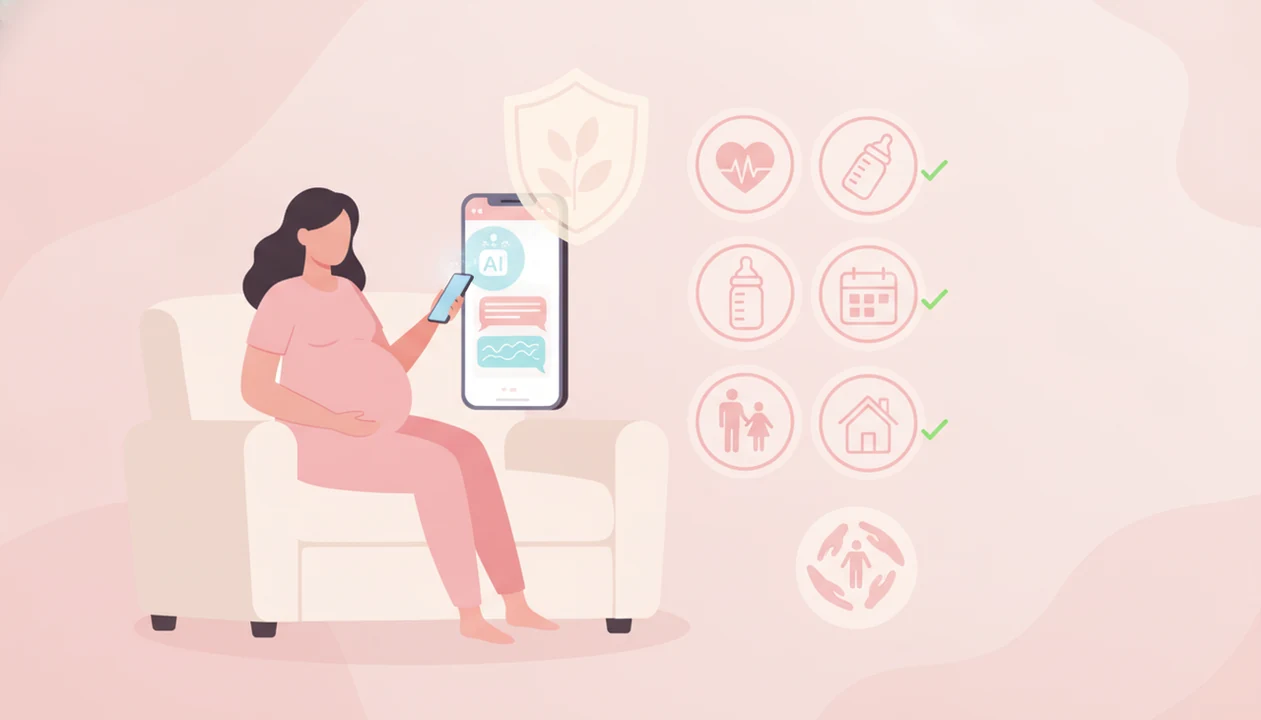
Quick answer: can ChatGPT be a pregnancy AI companion?
ChatGPT can be a useful pregnancy AI companion for general education, planning, journaling, checklists, and preparing questions for prenatal appointments. It should not diagnose symptoms, interpret urgent changes, choose medications, assess fetal wellbeing, or replace advice from your doctor, midwife, maternity unit, or emergency services.
ChatGPT in Pregnancy: Safe Use Overview
| Best uses | General explanations, appointment questions, checklists, birth preparation notes, journaling prompts, and non-medical routines. |
|---|---|
| Use with caution | Symptoms, test results, medications, supplements, exercise changes, travel, nutrition restrictions, or anything specific to your medical history. |
| Do not use for | Diagnosis, urgent symptoms, fetal movement concerns, labor decisions, emergency triage, or deciding whether to delay medical care. |
| Privacy approach | Limit identifying details, avoid uploading medical records, and ask for general education or a clinician question list instead. |
| Safest next step | Use AI to organize your thoughts, then confirm clinical decisions with your care team. |
TL;DR
ChatGPT can help during pregnancy by explaining general concepts, organizing appointment questions, creating checklists, and supporting journaling or relaxation. It is not a clinician, fetal monitor, emergency service, or substitute for individualized prenatal care. Use it for preparation and reflection, then confirm medical decisions with your care team.
Definition: A ChatGPT pregnancy AI companion is a conversational tool that can answer general pregnancy questions, help you organize information, suggest non-medical routines, and draft prompts or checklists. It is not a doctor, midwife, fetal monitor, emergency service, or replacement for personalized prenatal advice.
What ChatGPT Can Do Well in Pregnancy
ChatGPT is most useful in pregnancy as a planning, explanation, and organization tool. It can summarize general topics, help you prepare appointment questions, build trimester checklists, and translate medical terms into plain language.
Many clinicians encourage patients to bring organized questions to appointments, and AI can help you prepare those questions without making the medical decision for you. For example, you can ask it to make a weekly planning list alongside a pregnancy week-by-week guide, help you note milestones after using a due date calculator, or turn your concerns into a short list for your next prenatal visit.
Good Prompts for a Pregnancy AI Companion
The safest pregnancy prompts ask ChatGPT for education, organization, and conversation starters rather than diagnosis. Use wording such as “Explain this in plain language,” “What questions should I ask my doctor?” or “Make a checklist for discussing this at my appointment.”
Helpful prompts include: “Create a list of non-urgent questions for my midwife,” “Help me compare what to pack for hospital and birth center options,” “Summarize common third-trimester appointment topics,” or “Write a calm evening routine for pregnancy.” Prompts should invite verification and shared decision-making with your care team, not replace clinical judgment.
Using AI for Emotional Support and Preparation
ChatGPT can support pregnancy emotionally by helping you journal, reframe worries, rehearse birth preferences, and create calming scripts. It can suggest general relaxation ideas, but it cannot assess mental health risk, provide crisis care, or know when symptoms require urgent support.
Many people use AI alongside tools such as pregnancy meditation, breathing practice, or birth education. You might ask ChatGPT for a five-minute reflection, a partner conversation guide, or a list of topics to raise in a prenatal mental health appointment.
Where ChatGPT Can Be Risky
ChatGPT can be risky when it sounds confident about pregnancy information that may be incomplete, outdated, or not specific to you. Pregnancy advice depends on gestational age, symptoms, medical history, medications, blood pressure concerns, fetal movement patterns, and your provider’s guidance.
Be especially cautious with bleeding, severe pain, severe headache, vision changes, reduced fetal movement, fever, suspected rupture of membranes, high blood pressure concerns, or contractions before term. For practical self-tracking, use purpose-built tools such as a baby kick counter or contraction timer, and follow your provider’s instructions about when to call.
Privacy Tips Before You Share Pregnancy Details
The safest privacy approach is to share as little identifying pregnancy information as possible. Depending on the service and settings, information entered into an AI tool may be stored, reviewed, or processed, so avoid full names, addresses, medical record numbers, insurance details, identifiable test images, and highly specific personal details.
A safer prompt is general and anonymized, such as “I am in the third trimester and want questions to ask about a prenatal test” rather than uploading a document with identifiers. If you want help preparing for an appointment, ask for a question list or plain-language explanation instead of entering your full medical history.
When to Use Your Care Team Instead
Your care team should be the primary source for symptoms, medication decisions, test results, fetal movement changes, labor timing, and urgent care questions. ChatGPT can help you phrase the concern clearly, but it cannot examine you, monitor your baby, or understand your full clinical context.
ACOG guidance commonly emphasizes contacting a clinician for concerning pregnancy symptoms and following individualized prenatal instructions. If you are uncertain whether symptoms need assessment, contact your maternity unit, midwife, doctor, or local emergency number; you can also review general preparation information such as when to go to the hospital, but urgent decisions should follow local medical guidance.
How PregnancyApp Fits In
PregnancyApp can be used alongside AI as a structured place for pregnancy tracking, calculators, and practical planning tools. ChatGPT may help you organize questions, while purpose-built tools can help you track dates, kicks, contractions, and weekly pregnancy information more consistently.
If you use ChatGPT as an AI pregnancy companion, consider pairing it with trusted resources and app-based tools that are designed for pregnancy tasks. Keep medical decisions with your healthcare team, and use digital tools to prepare, record, and organize—not to replace care.
Limitations & Safety
ChatGPT should be treated as a general information and organization tool, not as medical care. It cannot diagnose pregnancy symptoms, assess fetal wellbeing, interpret your full medical history, or decide whether you need urgent assessment.
- Do not use AI to diagnose bleeding, pain, contractions, high blood pressure symptoms, reduced fetal movement, fever, or fluid leakage.
- Verify medication, supplement, exercise, travel, and nutrition questions with your care team.
- Protect privacy by avoiding names, addresses, medical record numbers, insurance details, and identifiable test documents.
- If you feel something is wrong, seek professional medical advice promptly rather than waiting for an AI response.
- For urgent symptoms or emergencies, contact your maternity unit, clinician, local emergency number, or emergency services.
Frequently Asked Questions
Is it safe to use ChatGPT during pregnancy?
It can be safe to use ChatGPT during pregnancy for general education, planning, journaling, and preparing questions for appointments. It is not safe to rely on it for diagnosis, urgent symptoms, medication decisions, or fetal wellbeing concerns.
What should I ask a ChatGPT pregnancy AI companion?
Ask for plain-language explanations, appointment question lists, packing checklists, relaxation scripts, or summaries of general pregnancy topics. The best prompts make clear that you will confirm medical details with your doctor or midwife.
Can ChatGPT tell me if my pregnancy symptoms are normal?
ChatGPT can describe common symptoms in general terms, but it cannot tell whether your symptoms are normal for your body and pregnancy. Contact your care team for bleeding, severe pain, reduced fetal movement, severe headache, vision changes, fever, fluid leakage, or any concern that feels urgent.
Should I enter my medical records into ChatGPT?
Be cautious about sharing identifiable medical records, test images, names, addresses, insurance details, or medical record numbers. If you want help understanding a topic, remove identifying details and ask for general education or questions to discuss with your clinician.
Can ChatGPT help me prepare for labor?
Yes, ChatGPT can help organize a birth preferences document, create discussion questions, or suggest general comfort ideas. It should not decide when you are in labor, whether contractions are concerning, or when you need medical assessment.
Can ChatGPT help with pregnancy anxiety?
ChatGPT can offer journaling prompts, calming scripts, and ideas for preparing conversations with your partner or care team. It cannot assess mental health risk or provide crisis care, so persistent anxiety, panic, intrusive thoughts, or thoughts of self-harm should be discussed with a qualified professional promptly.
How can I make ChatGPT answers safer during pregnancy?
Use ChatGPT for general education and ask it to list questions to confirm with your clinician. Avoid relying on one answer, protect personal details, and contact your care team for symptoms, test results, medication questions, or anything time-sensitive.