 Pregnancy
Best Kegel app: pelvic floor apps and trainers compared
Seven options for pelvic floor exercises in pregnancy and after birth, what each costs, and when an app is not enough.
Quick answer. Squeezy is the best Kegel app for most people in pregnancy or after birth, because NHS pelvic health physiotherapists designed it and some NHS trusts give it free. Elvie Trainer and Perifit add a sensor for biofeedback but cost over 100 pounds. If you leak, feel heaviness or have pain, see a pelvic floor physio instead of relying on any app.
How we wrote this. Health and safety points on this page follow guidance from Cochrane, NHS. We are not doctors; ask your own provider about your situation.

How we chose
- The product exists and I confirmed what it does on an official site or store listing.
- It says plainly what it costs, and I checked the price in Nov 2026.
- It was designed with clinicians, or it is honest about being a reminder tool.
- It fits pregnancy and postpartum use, not only men's health or marketing.
- I ranked evidence for the exercise above marketing claims for the gadget.
Quick comparison
| Pick | Best for | Key detail | Price |
|---|---|---|---|
| Squeezy | Overall | NHS physio design | £2.99 or free via trust |
| Elvie Trainer | Biofeedback | Live squeeze display | £169 UK site |
| Perifit | Cheaper sensor | 30 day guarantee on some models | £119 or £139 UK |
| Iron Kegel | Budget timer | Free trial first | $19.99 a year |
| Kegel Trainer Exercises | Lifetime access | Workout maker | $49.99 lifetime |
| Kegelix | Coaching add-on | Monthly coaching plan | $19.99 a year |
| Zen Postpartum Recovery & Core | Guided recovery | Lifetime access | Not listed here |
Our picks
1. Squeezy, by Living With Ltd
Best Kegel app overall • iOS and Android app, maternity version • £2.99 App Store price per an NHS leaflet, free in some NHS trusts
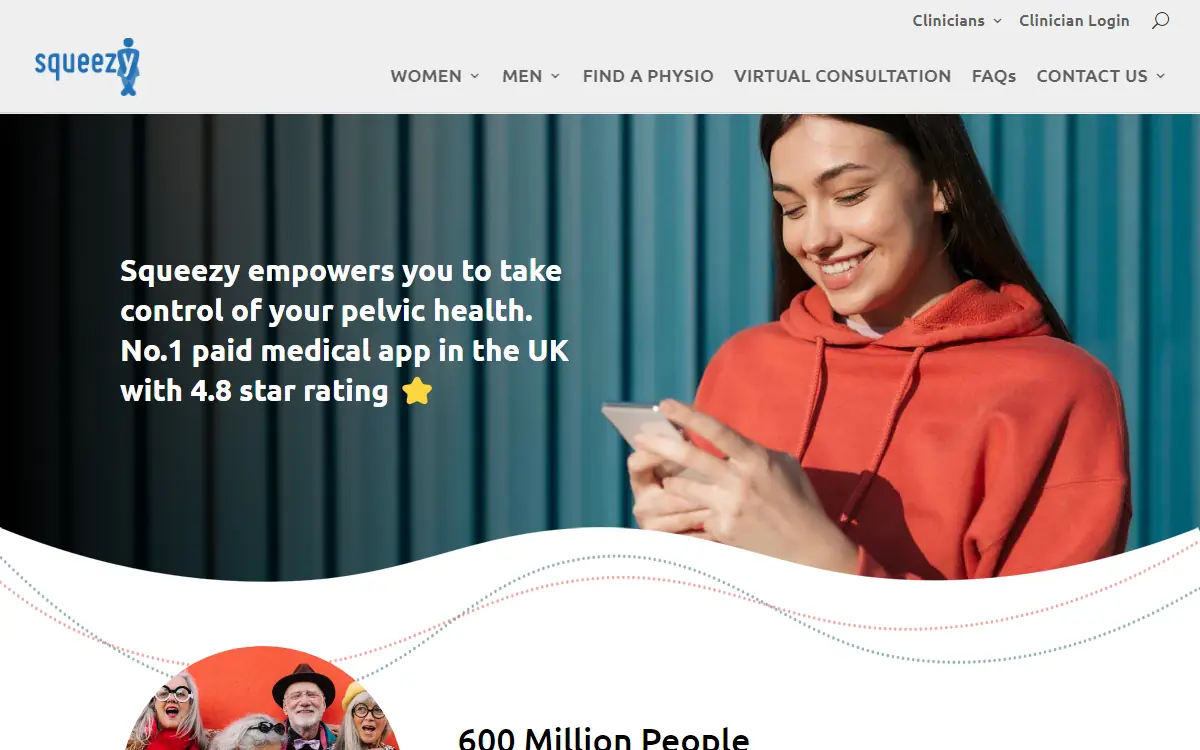
Squeezy was designed by NHS pelvic health physiotherapists. It gives visual and audio guides for the squeeze and relax phases, reminders, and a maternity version built with midwives. The iOS app launched in 2013.
Price varies by store and country. A Welsh NHS leaflet lists £2.99, and Norfolk and Norwich and some Humber and North Yorkshire trusts give it free. It is not a diagnostic tool.
Good
- Designed by NHS physiotherapists
- Maternity version
- Free in some NHS trusts
Less good
- No live biofeedback
- Price differs by country
2. Elvie Trainer
Best sensor trainer for biofeedback • Insertable device plus app • £169 on the UK site, app free
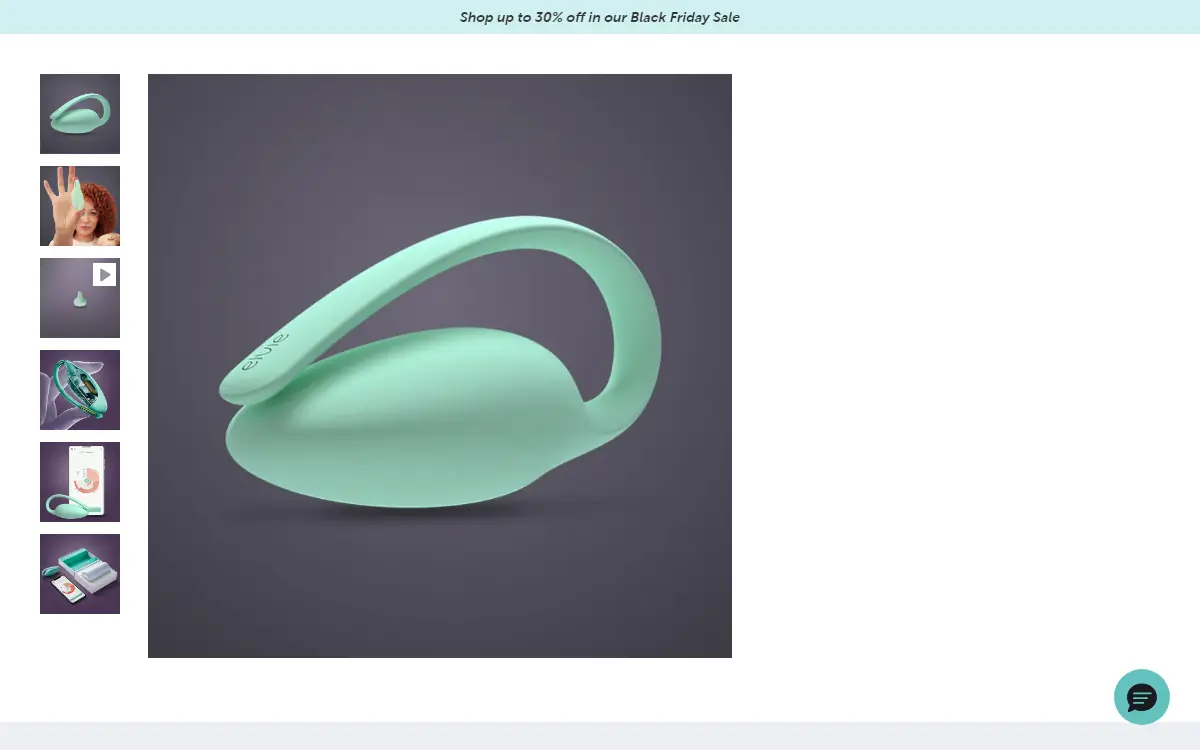
Elvie Trainer pairs a small device with a free app that shows your squeezes live. That feedback is the reason to buy it, since many people struggle to find the right muscles.
The official UK page lists £169 but showed out of stock when I looked. Retailers have shown lower sale prices, so compare before you buy.
Good
- Live feedback on your squeeze
- App is free with the device
Less good
- Expensive
- Stock and price vary by retailer
3. Perifit Care and Care+
Best sensor trainer for a lower price • Insertable device plus app • £119 Care, £139 Care+, $149 Care in the US, Nov 2026
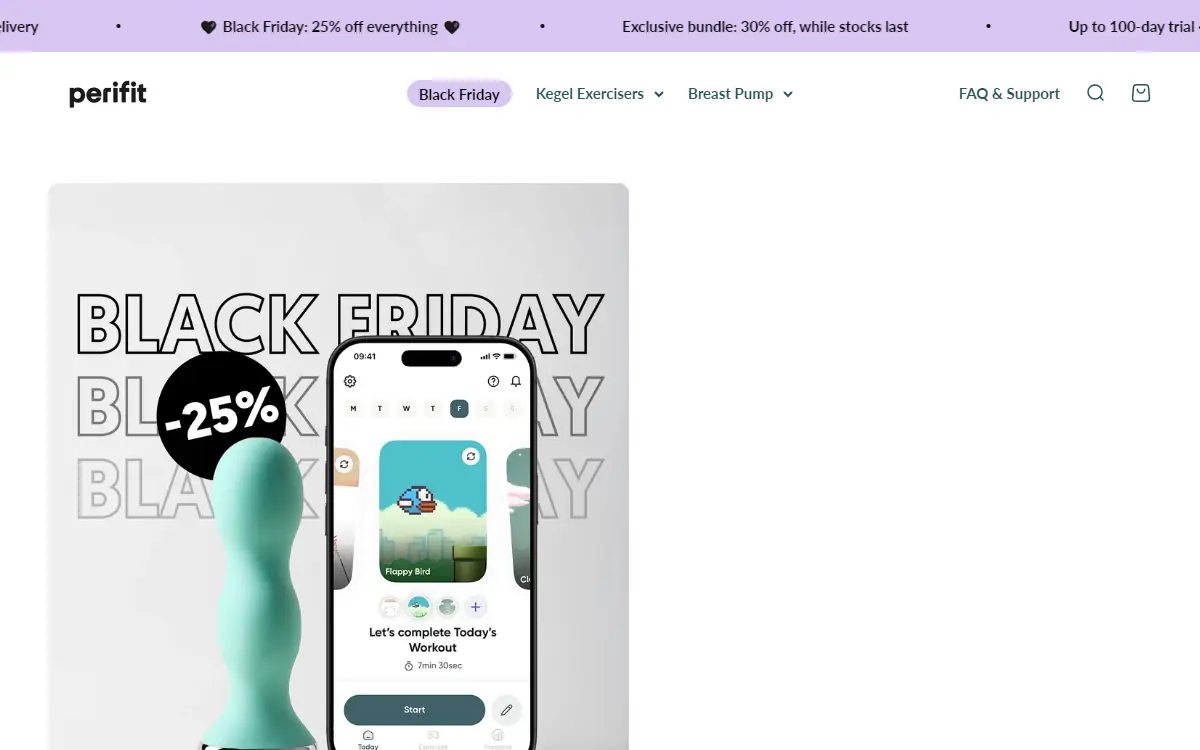
Perifit sells a Kegel exerciser that connects to a free app. The UK site lists Perifit Care at £119 and Care+ at £139. Its US site has listed Care at $149 and Care+ at $199, with sales that bring them lower.
It undercuts Elvie on list price. The official site offers a 30 day money-back guarantee on at least some models. Check the current terms.
Good
- Lower list price than Elvie
- Money-back guarantee on some models
Less good
- Prices move with sales
- Still a large spend for a reminder habit
4. Iron Kegel, by See App Store listing
Best budget subscription app • iOS app • $3.99 a month, $10.49 for 3 months, $19.99 a year, US App Store
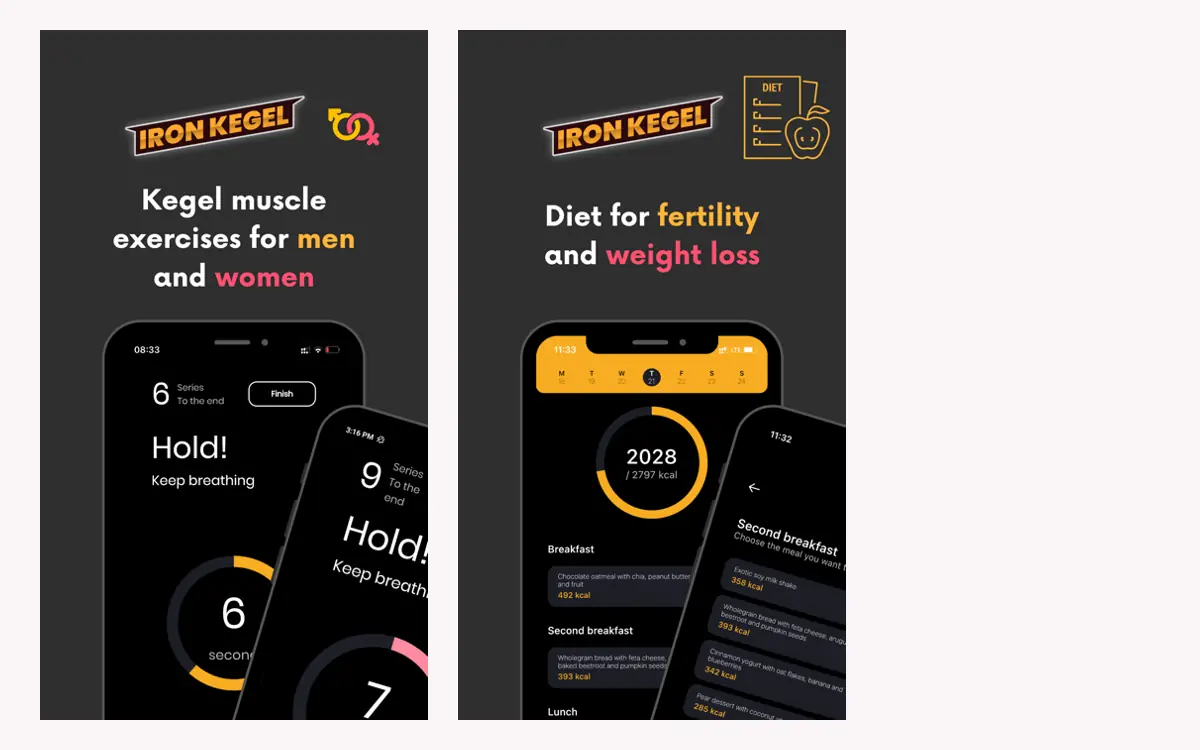
Iron Kegel has a built-in timer, reminders and progress graphs, and the listing says you can try the app free before subscribing. It is not tied to a clinical programme.
I like it as a cheap timer. Do not expect it to check your technique.
Good
- Cheap
- Reminders and a timer
Less good
- No clinical backing stated
- Auto-renewing subscription
5. Kegel Trainer Exercises, by MPR Media
Best if you want lifetime access instead of a subscription • iOS app • $2.99 for 7 days, $29.99 for 365 days, $49.99 lifetime, US App Store
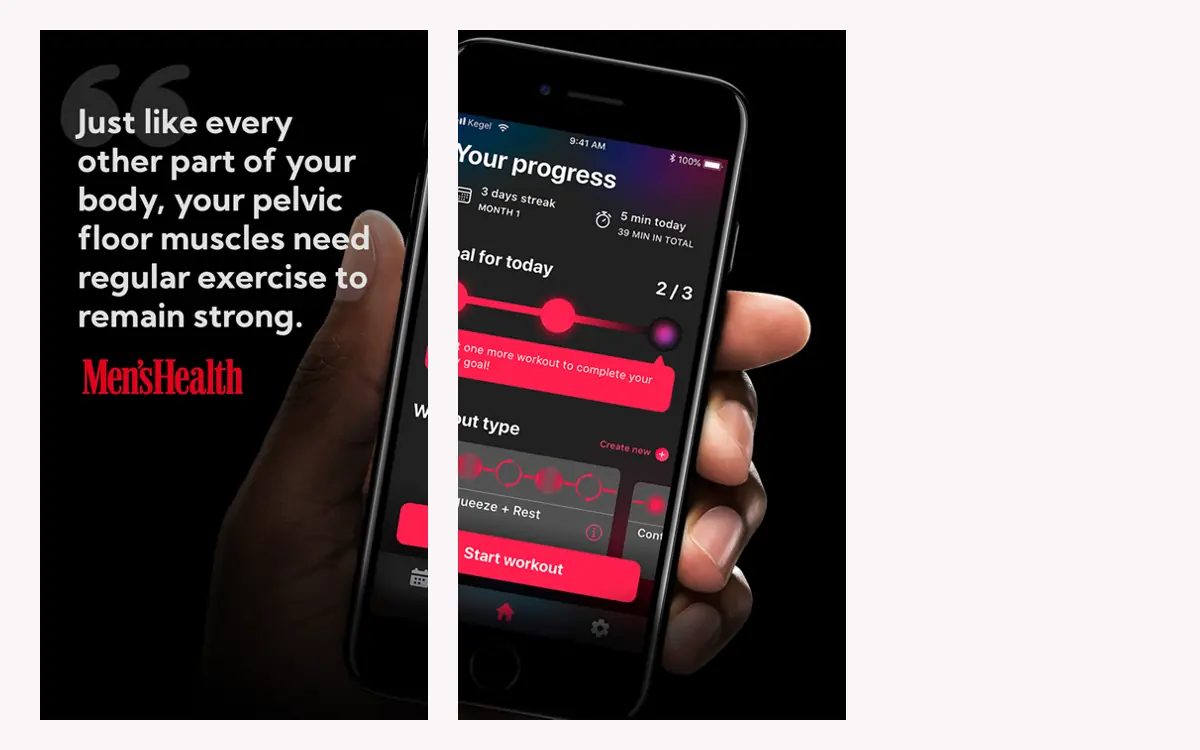
The listing shows free download with three paid options, including a lifetime one. A subscription unlocks all workouts, a calendar and a workout maker.
Lifetime access suits people who dislike renewals. At $49.99 it costs more than a year of Iron Kegel, so it only pays off if you keep using it.
Good
- Lifetime option
- Workout calendar
Less good
- Highest app price here
- No clinical design stated
6. Kegelix, by See App Store listing
Best for coaching add-ons • iOS app • $19.99 a year, $49.99 lifetime, $4.99 monthly coaching, US App Store
Kegelix offers a yearly plan, lifetime access and a monthly coaching plan. That coaching tier is the main difference from the other budget apps.
I confirmed the pricing but did not verify who provides the coaching, so ask before you pay for it.
Good
- Lifetime and yearly choices
- Optional coaching
Less good
- Coach credentials not verified
- Little independent detail on the app
7. Zen Postpartum Recovery & Core
Best for a guided postpartum recovery course • Online course, lifetime access • Price not listed here
Zen Postpartum Recovery & Core is a course from Zen Pregnancy on postpartum recovery and core, with lifetime access and a 30 day refund.
It is not a sensor or a reminder app. It suits you if you want a guided plan after the birth. It does not replace an assessment by a pelvic health physio if you have symptoms.
Good
- Guided plan after birth
- 30 day refund
Less good
- Not a biofeedback tool
- New, so few reviews
What is the best Kegel app?
Squeezy is the best place to start. It is built by chartered physiotherapists who specialise in pelvic health and work in the NHS, and its maternity version was developed with midwives. It is a paid download, listed at £2.99 on the App Store in a Welsh NHS health board leaflet, and some trusts give it to patients free.
The sensor devices are a different category. Elvie Trainer and Perifit pair a small insertable device with a free app and give you live feedback on whether you are squeezing correctly. That is useful if you cannot tell whether you are doing it right. They also cost about 120 to 170 pounds, so I would not start there.
Last, there is a crowd of cheaper subscription apps. They are fine as reminders, but I could not find clinical backing for them on their own listings, so I treat them as timers.
Do Kegel exercises actually work?
Yes, for prevention in pregnancy. Cochrane's 2020 review of 46 trials with 10,832 women found that continent pregnant women who did pelvic floor muscle training probably had a lower risk of urinary incontinence in late pregnancy, by about 62 percent in one analysis. The authors said early, structured training may help prevent leaks both late in pregnancy and after birth.
Treatment is murkier. For women who already leak after having a baby, the review said the effect of training is uncertain, in contrast to the stronger case in mid-life. Many included trials also had a moderate to high risk of bias. The review noted only two reports of pelvic floor pain and no other harms.
What that means for apps. The exercise has evidence. The app is just a delivery method. Whether a particular app improves results has not been shown in what I found, so judge apps on how well they help you do the exercise regularly and correctly.
How do you do pelvic floor exercises correctly?
Squeeze and lift the muscles around your front and back passage as if stopping wind and urine at once, then let go fully. NHS trust leaflets agree on the basics. They also say these exercises take months to build, so patience counts more than intensity. Slow breathing is part of good technique.
- Slow squeezes. Tighten, hold up to about 10 seconds, build up from around 5 seconds, then relax fully.
- Quick squeezes. Tighten fast and strongly, then release at once. Aim for up to 10, fewer if you tire.
- Repeat both types about three times a day, per several trust leaflets.
- Breathe normally and avoid clenching your buttocks or thighs.
- Squeeze before you cough, sneeze or lift. This is often called the knack.
One Scottish NHS leaflet says it can take three to five months to strengthen these muscles. Sources differ slightly on hold lengths and daily totals, so ask your midwife or a pelvic health physio to check your technique once.
Do not use pelvic floor trainers or apps as a substitute for care. See a GP, midwife or pelvic health physiotherapist if you have leaking that does not improve, pain, a feeling of heaviness or a bulge,. Squeezy's own safety notes say it is not a diagnostic tool.
Are sensor trainers worth the money?
Only if you want biofeedback and can afford it. The sensor shows on screen when you squeeze, which helps people who struggle to find the muscles. Elvie Trainer lists at £169 on its UK site, though its page showed out of stock when I checked, and some retailers have discounted it. Perifit Care lists at £119 in the UK and $149 in the US, with Care+ at £139. Both apps are free with the device.
You also have a cheaper route. A physio can assess you in one appointment and teach you what a correct squeeze feels like. After that, a £2.99 reminder app or a calendar alert may do the same job.
When should you see a pelvic floor physio instead?
See one if symptoms persist, if you are unsure you are squeezing the right muscles, or if you have had a difficult birth. Apps cannot examine you, and a physio can.
For the rest of the postpartum picture, see our postpartum app round-up. For movement during pregnancy, see the best pregnancy exercise apps. Our main best pregnancy app page covers trackers, and the UK pregnancy app guide covers NHS-linked options.
Frequently asked questions
Is there a free Kegel app?
Several are free to download but charge for full access. Squeezy is free to patients in some NHS trusts, such as Norfolk and Norwich and trusts across the Humber and North Yorkshire area. Ask your midwife whether your trust covers it before you pay.
Can I do Kegels during pregnancy?
Yes, and the Cochrane review suggests early training in continent women probably lowers the risk of leaks late in pregnancy. Check with your midwife if you have pelvic pain or a high-risk pregnancy.
How long until Kegels work?
One Scottish NHS leaflet says it takes about three to five months to strengthen the muscles. Daily consistency matters more than squeezing hard.
Do men use Kegel apps too?
Yes. Squeezy has a separate Men app, and several Kegel apps target men. This page focuses on pregnancy and postpartum, so the picks are chosen for that.
Is Elvie Trainer worth it?
It can be, if you want live feedback and are comfortable with an insertable device. At £169 on Elvie's UK site, it costs far more than an app alone. Try a physio session first if you are unsure about your technique.
Can Kegels make things worse?
The Cochrane review reported two cases of pelvic floor pain and no other harms. If you have pain, stop and speak to a pelvic health physio. Overly tight muscles can cause problems too.
Sources
- Cochrane: Pelvic floor muscle training for preventing and treating urinary and faecal incontinence in antenatal and postnatal women
- NHS Scotland: Pelvic floor exercises during pregnancy
- NHS: Your post-pregnancy body
- Squeezy: Instructions for use
- Bladder and Bowel Community: Squeezy, the NHS physiotherapy app
- Elvie: Elvie Trainer, UK store
- Perifit: Perifit Care, UK store
- Apple App Store: Iron Kegel
- Apple App Store: Kegel Trainer Exercises
Written by the Pregnancy App editorial team for general information. It does not replace advice from your own doctor or midwife.